
Vandaag of morgen in huis

Kwaliteit gegarandeerd

Welkomstaanbiedingen ontgrendelen: GRATIS bezorging | Tot 80% korting | Gratis 30 dagen JoyPlus-proefperiode
Download de app
A hard-shell suitcase with wheels might seem straightforward to choose at first. However, small differences in dimensions, materials and wheel design can affect how comfortable a suitcase is to use while travelling by air. A model that looks spacious and lightweight on paper, for example, may be too large for cabin baggage. An expandable suitcase may also exceed an airline’s limit once it’s packed.
As Joybuy’s Product Recommendation Officer, I sift through the key product specifications behind the marketing claims. This helps you compare a cabin suitcase, a carry-on case or a large suitcase based on the features that matter in practice.
“Suitable as cabin baggage” doesn’t mean there’s a universal size. Airlines set their own maximum dimensions and weight limits. What’s more, wheels, handles and other protruding parts are often included in the measurements. Always check your airline’s current baggage rules before buying a suitcase.
Don’t just look at the size in inches: check the full external dimensions. For some products, the internal dimensions may differ from the external ones by around 1 to 2 cm.
A lightweight suitcase is useful when your baggage allowance is limited. But a lower weight doesn’t automatically tell you anything about the case’s strength, zips or wheels. Consider the combination of material, construction and load capacity.
An ABS suitcase is generally lightweight and is often used for affordable hard-shell cases. According to the product description, a polycarbonate suitcase or ABS+PC model may combine flexibility with impact resistance. Always check the specific details rather than treating general claims about the material as a guarantee.
360-degree spinner wheels let you move a suitcase forwards, backwards and sideways. That’s handy at stations and airports, as well as on smooth floors. However, the experience can vary depending on the surface and how much you’re carrying.
According to the product information from the brands concerned, the wheels are designed to roll smoothly and quietly. Treat this as a product specification, not a guarantee of performance on every cobbled street or with a full suitcase.
Choose a size to suit the length of your trip and your airline’s baggage rules:
Capacity is a useful guide. For example, a 20-inch Kono model is available with a capacity of 32 or 37 litres, while 24-inch models hold around 58 to 58.7 litres. According to the product information, the 28-inch versions offer around 90 to 91 litres.
ABS stands for acrylonitrile butadiene styrene. This material is often used for affordable hard-shell suitcases because it’s lightweight and holds its shape well.
ABS+PC combines two plastics. According to Kono’s product description, the shell is designed to be lightweight and flexible, while offering resistance to scratches and knocks. These are brand and product claims, so also assess the zips, handle, seams and wheel attachments.
NINETYGO products specify a 100% PC shell. Polycarbonate is flexible and widely used for hard-shell suitcases. Here too, its practical value depends on the overall construction and permitted load weight.
A suitcase with a TSA lock can be opened by authorised staff during certain security checks without forcing the case. The lock won’t stop someone opening the suitcase if they know the code or damage the zip. Set the default code to a personal combination as soon as you can.
Also look for:
An expandable suitcase is handy for extra clothes or souvenirs, but check the permitted dimensions again after expanding it.
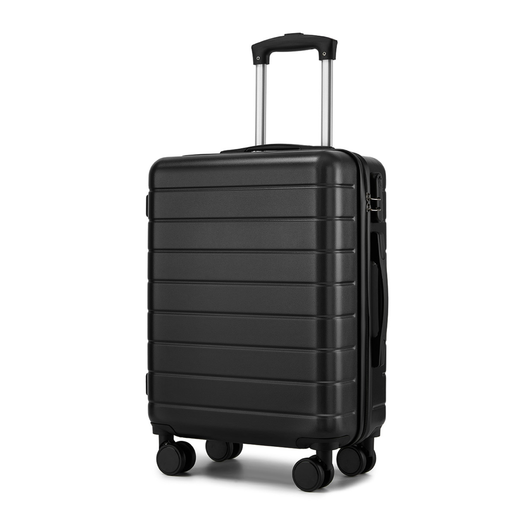
Why it suits this profile: This compact ABS suitcase is designed for short trips and cabin baggage. It has stated dimensions of 55 x 40 x 20 cm, weighs 2,6 kg and has a capacity of 32 litres.
The product information gives the full external dimensions, weight and built-in three-digit combination lock. Still, check your airline’s requirements.
ABS shell, 360° wheels, adjustable handle and an interior with cross straps, mesh divider and zipped pocket.
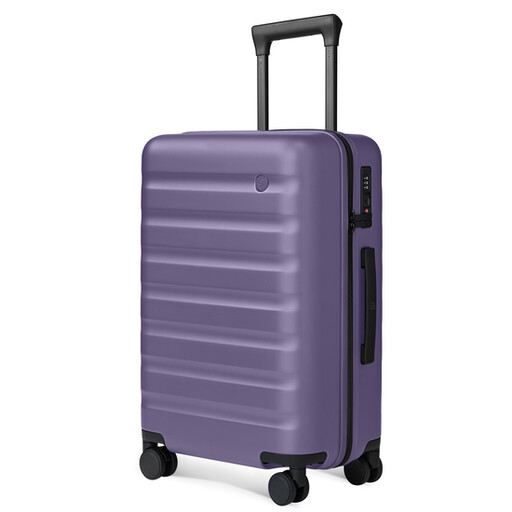
Why it suits this profile: This 20-inch polycarbonate suitcase is aimed at travellers who value details such as a flush handle, interior organisation and fully integrated hardware.
The product description mentions a double zip, a TSA lock and a PVC pouch for keeping wet and dry items separate. This helps you pack in an organised way.
PC hard shell, 360° wheels, compression straps and a handle that, according to the product information, creates a flat top surface.
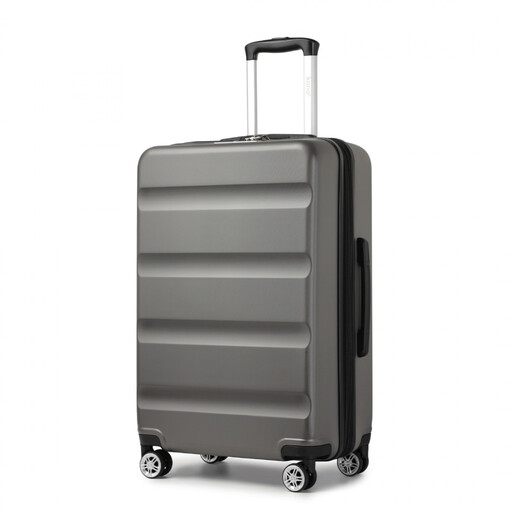
Why it suits this profile: This large suitcase is designed for longer holidays and family trips. It has a stated capacity of 90,3 litres, and the expansion zip adds around 5 cm to its width.
The capacity, external dimensions and weight of 4,22 kg are listed. This makes it easier to estimate in advance how much space and baggage allowance you’ll have left.
ABS+PC shell, expandable design, four 360° double wheels, TSA combination lock and an adjustable aluminium handle.
We’ve put together a complete, up-to-date list of products that meet these strict selection criteria and current European safety regulations.
That depends on the external dimensions and your airline’s rules. A 20-inch model may be suitable, but always check the length, width, depth and permitted weight. A suitcase with an expansion zip must remain within the limits before you check in.
Its lifespan depends on how it’s used, how much it carries, the surfaces it’s used on and how well it’s maintained. Avoid putting too much strain on the handle and wheels, don’t drag the suitcase over rough surfaces unnecessarily, and clean the shell with a soft, damp cloth. Don’t use abrasive products.
The wheels generally need little maintenance. Still, check them regularly for hair, dirt and looseness. A set of 360° wheels can keep turning smoothly as long as you don’t regularly overload the suitcase. If you travel frequently, the wheel attachments, zips and telescopic handle are important features to compare before buying.
