
Vandaag of morgen in huis

Kwaliteit gegarandeerd

Welkomstaanbiedingen ontgrendelen: GRATIS bezorging | Tot 80% korting | Gratis 30 dagen JoyPlus-proefperiode
Download de app
A hard-shell suitcase with a TSA lock might seem like a straightforward purchase. But problems often only arise at the airport: your case turns out to be too large for cabin baggage, the wheels struggle over cobbled streets or there’s less room inside than you expected. Marketing terms such as ‘lightweight’, ‘quiet’ and ‘extra strong’ don’t tell you much if the dimensions, weight and material aren’t clearly stated.
Use this practical guide to focus on the features that really matter to holidaymakers, business travellers and city-breakers in the Netherlands.
A cabin suitcase needs to meet your airline’s size limits. These vary by airline and ticket type. A 55 x 40 x 20 cm case might be accepted as cabin baggage on one flight, while another airline may have a smaller limit or charge you extra.
So always check:
A lightweight suitcase leaves more room for clothes within your baggage allowance. But always compare its actual weight with its capacity. In practice, a hard-shell suitcase weighing 3,9 kg with a capacity of 91 litres may offer more usable space than a very compact case that’s only slightly lighter.
The construction matters, too. A thin shell can reduce weight, but protection and fastening are just as important. Check the material, edges, zip and attachment of the telescopic handle.
A suitcase with a combination lock and TSA function can help with security checks where authorised officials need to open the case without causing visible damage. It’s not a guarantee against theft, and it won’t prevent damage to a zip or shell.
Set your own code rather than using the default 000, and don’t store the combination with your suitcase. When flying, it’s best to keep valuables, medicines and important documents in your cabin baggage, in line with your airline’s rules.
For a short city break or business trip, a 20-inch cabin suitcase with a capacity of around 32 to 38 litres is often practical. For a trip of four to six days, medium-sized 24-inch models generally offer more space, often around 58 litres. So a suitcase for 3-7 days could be a spacious cabin case or a medium-sized model, depending on the clothes, shoes and personal items you’re taking.
For longer holidays or family trips, a 28-inch model with a capacity of around 90 litres may be a better fit. Bear in mind that a large suitcase will usually need to be checked in as hold baggage.
The material you choose partly determines the weight and how the shell responds to pressure.
No material can prevent every scratch or knock. A protective cover, careful packing and avoiding overloading can help keep your suitcase in use for longer.
A suitcase with 360° spinner wheels can be pushed or pulled in several directions. That’s useful in stations, airports and narrow hotel corridors. Double wheels can offer extra stability, but check that they’re securely attached and don’t protrude too far from the shell.
Also look for:
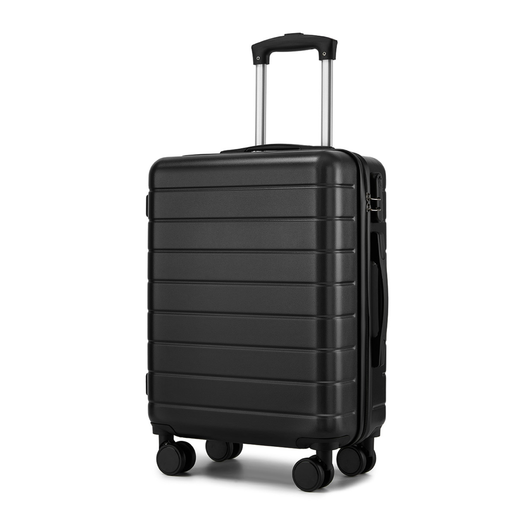
Why it suits this profile: According to the product specifications, the 20-inch version has a capacity of 32 litres, weighs 2,6 kg and is designed as cabin baggage for short trips and business travel, among other uses.
The stated external dimensions of 55 x 40 x 20 cm and weight make it easier to compare the case with airline requirements. Check the current rules before you travel.
ABS shell, three-digit lock, 360° spinner wheels, adjustable handle and interior pockets with packing straps.
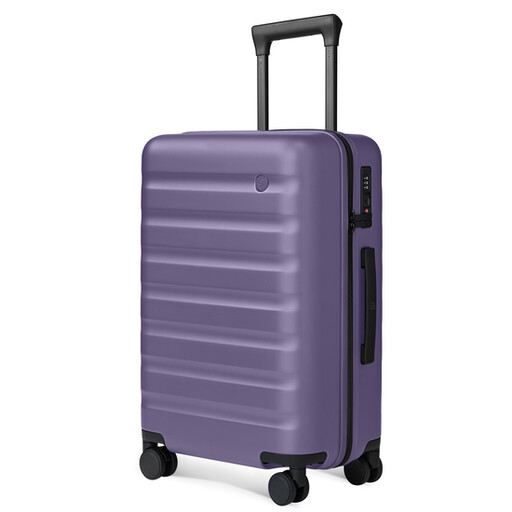
Why it suits this profile: This PC cabin suitcase is designed for travellers who value a well-organised interior, recessed fittings and details suited to frequent travel.
The product information lists dimensions of 56 x 38,5 x 23 cm, a TSA lock, double spinner wheels and a separate PVC compartment for wet items.
PC shell, recessed lock and side handle, compression straps and a stated zip load of 800 N.
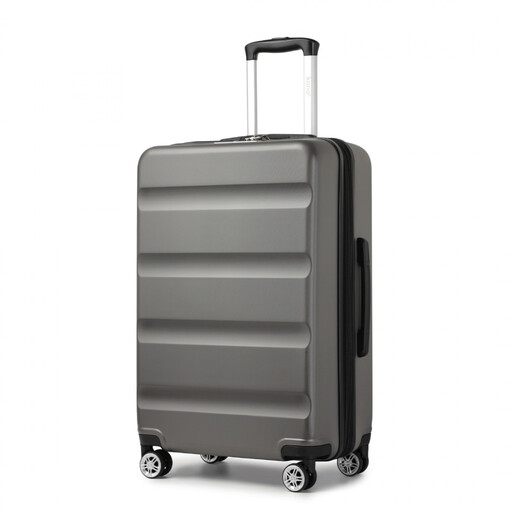
Why it suits this profile: With a capacity of 90,3 litres, an expansion zip adding around 5 cm and a weight of 4,22 kg, this model is designed for longer holidays and hold baggage.
The capacity, external dimensions and expandable design are listed separately, so you can weigh up space, weight and baggage rules.
ABS-PC shell, four double spinner wheels, TSA combination lock, interior divider and packing straps to keep everything organised.
We’ve put together a complete, up-to-date list of products that meet these strict selection criteria and the applicable European safety regulations.
No. A TSA lock is generally not compulsory for air travel. It can be useful if authorised airport officials need to open a checked suitcase. Check your airline’s baggage rules and set your three-digit code before you leave.
Its lifespan depends on how it’s used, how it’s packed, how it’s transported and how well it’s maintained. Avoid putting too much strain on the handle and wheels, don’t drag the case constantly over very rough ground, and clean the shell with a soft, damp cloth. Product information for various models describes specific designs for zips, wheels and shell materials, but this doesn’t guarantee a set lifespan.
As well as the purchase price, you may have to pay for hold baggage, excess weight, a protective cover or replacement wheels and handles. A cabin suitcase can help you avoid extra baggage charges, but only if its size and weight meet your ticket conditions. So compare more than just the price of the case: consider its capacity, its own weight and how you expect to travel.
