
Vandaag of morgen in huis

Kwaliteit gegarandeerd

Welkomstaanbiedingen ontgrendelen: GRATIS bezorging | Tot 80% korting | Gratis 30 dagen JoyPlus-proefperiode
Download de app
A hard-shell suitcase protects your belongings from pressure, knocks and changing conditions while you’re travelling. But a sturdy outer shell isn’t the only thing to consider. A suitcase may look spacious and lightweight on paper, yet be awkward to wheel in practice, exceed hand luggage limits or hold less than you expect.
This buying guide helps travellers, holidaymakers and business travellers choose the right hard-shell suitcase. We’ll look at materials, dimensions, wheels, locks and interior layout.
A hand luggage suitcase or cabin suitcase needs to meet your airline’s requirements. The permitted dimensions vary between airlines and sometimes between ticket types, too. Always check the external dimensions, including the wheels and handles.
A suitcase measuring around 55 x 36 x 20 cm may meet the cabin requirements of many airlines, but there’s no universal guarantee. Check your airline’s current conditions before buying.
The weight of a lightweight suitcase matters, especially if you’re travelling with a luggage allowance. Also consider the external dimensions, the shape of the interior and whether it has an expansion zip.
An expandable suitcase can give you extra space, but when expanded it may become too large or less stable. Only use this feature if your luggage allowance and the contents allow for it.
A suitcase with eye-catching features isn’t automatically practical. Check how the telescopic handle is attached, the quality of the zip and the space around the wheels. 360° spinner wheels make manoeuvring easy, but an overpacked suitcase puts extra strain on the wheels and handle.
A suitcase with a TSA lock is useful for security checks at airports where the TSA system is used. The lock doesn’t prevent your suitcase from being opened during an inspection, and it’s no substitute for packing carefully.
An ABS suitcase is often a good choice if you’re looking for a hard-shell suitcase that’s relatively lightweight and affordable. ABS is a type of plastic often associated with impact resistance and shape retention in product descriptions. The actual lifespan also depends on how much you pack, how it’s transported and how you use it.
A polycarbonate suitcase usually has a more flexible hard shell. On models with a textured finish, small signs of wear may be less noticeable. Be sure to check the exact material details: some suitcases are made entirely from polycarbonate, while others use a combination of PC and ABS.
Use this guide as a practical starting point:
Product dimensions matter more than the inch size alone. A 20-inch model from one brand may have different external dimensions from a 20-inch model from another.
If you travel regularly, it’s usually best to choose four spinner wheels, so you can roll your suitcase beside you, in front of you or at an angle behind you. A double-wheel design may offer extra stability, but check that the wheels turn smoothly and don’t take up unnecessary space inside.
The interior deserves attention, too. A divider, compression straps and a separate compartment for damp items make packing more organised. Also look for a sturdy zip and a telescopic handle with multiple height settings.
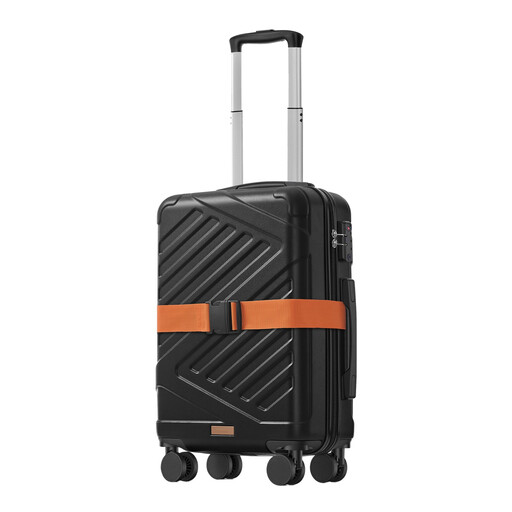
Why it suits this type of traveller: This compact model is designed for short trips and cabin use. Its external dimensions are 55 x 36 x 20 cm and its stated net weight is 2,8 kg.
The dimensions are clearly stated, so you can compare them with your airline’s requirements in advance. The product description also mentions a TSA lock, spinner wheels and separate sections for wet and dry items.
ABS shell, expandable design, 360° spinner wheels and an included luggage strap.
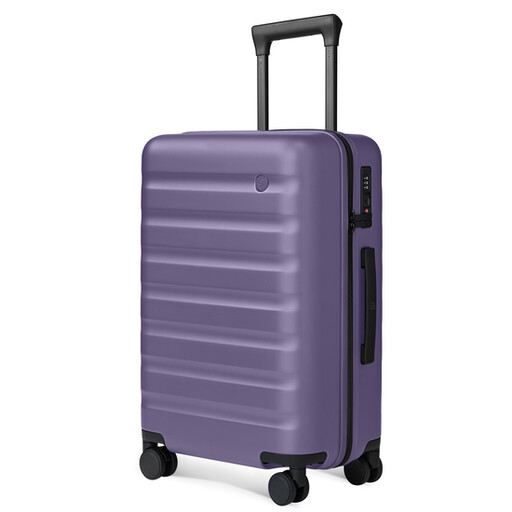
Why it suits this type of traveller: This 20-inch suitcase combines a hard PC shell with a flat top, recessed components and an interior with compression straps.
The product description mentions a dual-tube telescopic handle, a water-repellent PVC compartment, recessed handles and a TSA lock. Still, check your airline’s requirements against the dimensions of 56 x 38,5 x 23 cm.
PC shell, 360° quiet wheels according to the product information, and a TSA lock.
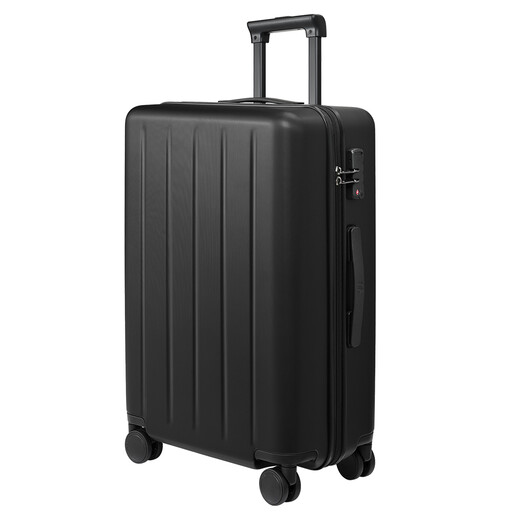
Why it suits this type of traveller: This medium-sized model is designed for trips lasting several days. Its stated dimensions are 66 x 45,5 x 25,5 cm and its shell is made from polycarbonate.
The product information lists the material and dimensions, as well as a TSA lock, double spinner wheels and an interior compartment with an X-shaped strap. This makes it easier to compare than relying on a size label alone.
100% PC shell according to the product description, double spinner wheels and an organised interior.
We’ve put together a full, up-to-date list of products that meet these strict selection criteria and comply with current European safety regulations.
It can be, but it depends on the external dimensions and your airline’s conditions. Check the height, width and depth, including the wheels and handles. A 20-inch model is often designed for cabin use, but always check the requirements for your specific flight.
Its lifespan depends on the material, how much you pack, how it’s transported and how well you maintain it. Avoid overpacking, don’t drag the suitcase over high obstacles by its telescopic handle, and clean the wheels if dirt gets caught in them. Also check the zip, handle and wheel attachments regularly.
The purchase price is only one factor. When flying, baggage fees, weight and size also matter. A lightweight suitcase can help you stay within a weight limit, but extra features such as an expansion zip or larger wheels can increase its own weight. So compare the overall dimensions, net weight and the type of travel you expect to do.
