
Vandaag of morgen in huis

Kwaliteit gegarandeerd

Welkomstaanbiedingen ontgrendelen: GRATIS bezorging | Tot 80% korting | Gratis 30 dagen JoyPlus-proefperiode
Download de app
A hard-shell suitcase protects your belongings with a sturdy outer shell and comes in a range of sizes, materials and price brackets. But a hard exterior doesn’t automatically make a case suitable for every trip. An oversized cabin suitcase could be refused at the gate, while an awkward wheel system can quickly become a nuisance at stations and on uneven pavements.
So don’t focus only on the colour or claims such as ‘extra strong’. Check the dimensions, material, weight, lock and layout in particular. Below, you’ll find the key things to consider, along with a few options for different types of traveller.
The term cabin suitcase doesn’t mean the same thing for every airline. A suitcase measuring 55 x 36 x 20 cm may fall within the limits for some airlines, but rules vary by airline, ticket and fare. Check your airline’s current baggage allowance before you buy and before you travel.
Check the full external dimensions, including wheels, handles and any expansion zip. An expandable case may exceed cabin size limits when you use the extra space.
An ABS suitcase is often lightweight and affordable, but ABS can react differently to a hard impact than polycarbonate. A polycarbonate suitcase is generally more flexible and is often chosen for frequent air travel. However, the material blend, shell thickness and construction also affect how durable a case is in everyday use.
So, the material name alone isn’t enough. Check the net weight, maximum load and protection around the corners, zips and handles too. Durability claims and test results should be treated as information provided by the brand. According to JOYFURNOS’s own product description, certain ABS models have been tested for use; this is not an independent guarantee for every travel condition.
A suitcase with a TSA lock can make it easier for security staff to open your luggage during certain checks. But the lock won’t prevent your suitcase from being knocked, damaged or taken by someone else. You should also use a distinctive luggage tag or strap, and keep valuables in your cabin luggage where possible.
Check the default code after buying your suitcase too. Several models in this guide are set to 0-0-0 by default. Set your own code by following the instructions provided, and keep the new combination somewhere safe.
A cabin suitcase can be a practical choice for a short business trip or weekend away. As well as checking the capacity in litres, look at the internal layout: compression straps, zipped pockets or a separate wet-and-dry section can help keep your clothes organised.
For longer holidays, a suitcase for hold luggage is a better fit. A 24 to 28-inch model offers more space, but it’ll also weigh more when fully packed. Check your airline’s weight allowance and the suitcase’s stated maximum static load.
A suitcase with spinner wheels has four wheels that swivel, so you can roll the case beside you. This is useful at stations, airports and on hotel floors. Check whether the wheels are single or double, and whether the telescopic handle locks securely into place.
‘Quiet wheels’ is a product claim that depends on the surface. They may roll smoothly on polished floors, but some resistance is normal on cobbles or uneven pavements.
A sturdy zip, integrated lock and securely attached handles matter more than decorative details. An expandable suitcase gives you extra flexibility for souvenirs, but additional contents add weight and can put strain on the zip or shell. Don’t pack the case beyond its internal dimensions or maximum load.

Why it suits this traveller: This compact 30-litre ABS suitcase is designed for short trips and has a stated weight of 2.5 kg. Its external dimensions are 34 x 22 x 52 cm.
The exact dimensions and capacity make it easier to compare the case with your airline’s rules. Always check those rules yourself.
30-litre capacity, ABS shell, swivel wheels, extendable handle up to 100 cm and a combination lock.
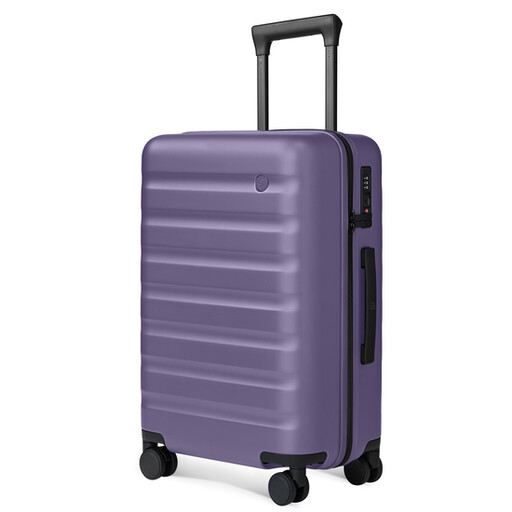
Why it suits this traveller: This polycarbonate suitcase is designed for travellers who care about the material, layout and details such as recessed handles and a TSA lock.
The stated dimensions of 56 x 38,5 x 23 cm and PC material give you specifications you can check, rather than just a general claim about strength.
PC hard shell, 360° wheels, compression straps, water-repellent PVC pouch and a zip with stated test values according to the product description.
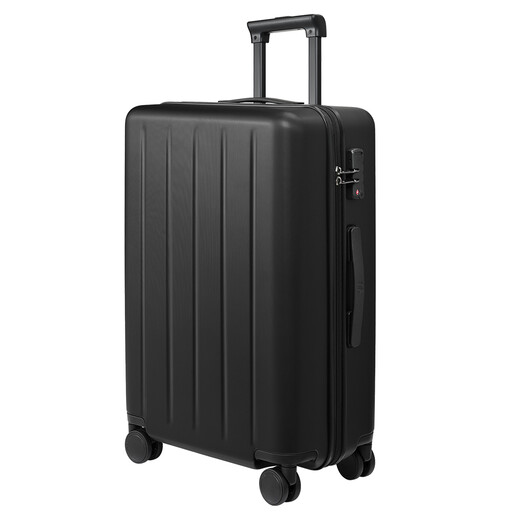
Why it suits this traveller: The PC shell, double spinner wheels and internal X-strap are designed for frequent flyers who want to pack their luggage in an organised way.
The specifications list the dimensions, capacity, weight and material separately. This makes it easier to choose a case for hold luggage or a longer trip.
PC hard shell, 38-litre capacity, 3 kg net weight, double spinner wheels and a TSA lock.
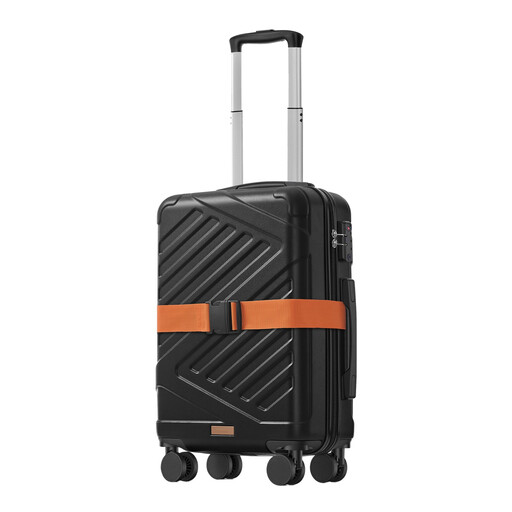
Why it suits this traveller: According to the product information, this model is designed as cabin luggage. It measures 55 x 36 x 20 cm externally and weighs 2,8 kg.
The dimensions are clearly stated, so you can compare them with your airline’s cabin baggage allowance. Only use the expandable section when checking the case in as hold luggage.
ABS shell, expandable capacity, 360° spinner wheels, wet-and-dry layout and an integrated TSA lock.
We’ve put together a full, up-to-date list of products that meet these strict selection criteria and current European safety regulations.
ABS is often a practical choice if you’re looking for a lightweight, affordable suitcase. Polycarbonate is a popular option thanks to its combination of flexibility and relatively low weight. Exact performance also depends on the construction, zip, wheels and handles.
Lifespan varies depending on how you use your suitcase. Frequent check-ins, heavy loads, uneven surfaces and rough baggage handling put particular strain on the wheels, zips and handles. Avoid unnecessary wear by not overpacking the case, keeping dirt out of the wheels and cleaning the shell with a soft cloth.
No. A TSA lock isn’t generally compulsory, but it can be useful when travelling by air if your luggage needs to be checked. Check the code instructions before use, and pack valuable or fragile items in your cabin luggage.
