
Vandaag of morgen in huis

Kwaliteit gegarandeerd

Welkomstaanbiedingen ontgrendelen: GRATIS bezorging | Tot 80% korting | Gratis 30 dagen JoyPlus-proefperiode
Download de app
A hard-shell suitcase protects your luggage from pressure, knocks and moisture from the outside. But a sturdy exterior isn’t the whole story. An awkward size, wheels that don’t turn smoothly or a lock code you’ve forgotten can make travelling unnecessarily difficult. Use these practical points to compare a hard-shell suitcase based on the features that really matter to travellers in the UK.
A 20, 24 or 28-inch suitcase won’t have the same external dimensions across every brand. Handles, wheels and any expandable zip also count. Always check the measurements in centimetres and compare them with your airline’s baggage rules.
A hand luggage suitcase, cabin trolley or 20-inch suitcase may look suitable for the cabin, but that’s not guaranteed. Depth and height including the wheels can make a difference.
An ABS suitcase is generally lightweight and keeps its shape, but its properties also depend on its thickness and construction. A polycarbonate suitcase may offer a different balance of flexibility, weight and impact resistance. Don’t treat a marketing claim such as “unbreakable” as a guarantee.
Look at the complete construction: shell, zip, corner protection, telescopic handle and wheel attachments. According to the brands’ own product information, certain materials can help provide protection or reduce weight. These are product specifications, not guarantees for every travel condition.
A suitcase with a TSA lock can make airport inspections easier, as authorised staff can open the lock with a special key. The lock won’t stop someone from picking up the suitcase or the zip from being damaged. Use a distinctive luggage tag or strap as well, and keep valuables in your hand luggage.
Reset a default code such as 0-0-0 straight away and note down the new code somewhere safe. Also check that the zip closes properly and isn’t under strain from overpacking.
Choose a size based on the length of your trip and the baggage rules:
Don’t just look at the capacity in litres. A well-designed layout with packing straps, zipped pockets and separate compartments can be more practical than a larger but cluttered space.
A lightweight suitcase is useful when airlines have a strict weight limit. However, a lighter shell doesn’t automatically mean the whole suitcase is lighter: the wheels, handles, lock and lining all count.
ABS is a commonly used plastic for hard-shell suitcases. Polycarbonate is also used, sometimes in combination with textile panels. Always check the stated net weight and external dimensions. The wheel construction is also important for checked baggage, as the suitcase is likely to be moved and set down more often.
Four double or single 360-degree wheels roll in multiple directions. This is especially useful at stations, airports and on smooth hotel floors. Two wheels can work well when pulling the suitcase behind you, but offer less flexibility when manoeuvring sideways.
Also check:

Why it suits this traveller: This compact hard-shell suitcase measures 34 × 22 × 52 cm and weighs 2.5 kg, making it a good fit for short trips and travellers looking for a manageable size. Be sure to check your airline’s cabin baggage requirements before you travel.
The dimensions, 30-litre capacity and weight are clearly stated. This lets you compare the size with your hand luggage allowance in advance, rather than relying on “18 inches” alone.
ABS shell, combination lock, extendable handle and internal compartments. According to the product information, this model has two swivel wheels.

Why it suits this traveller: This suitcase is designed for travellers who value low weight and easy storage. It has a stated capacity of 46 litres and a net weight of 6.83 lb, and folds away for storage at home.
The product information lists both the dimensions when in use and the folded dimensions. This shows how much space the suitcase takes up at home and avoids confusion about its expandable design.
Polycarbonate panels with textile, 360-degree spinner wheels, aluminium handle and a TSA-approved lock, according to the product description.
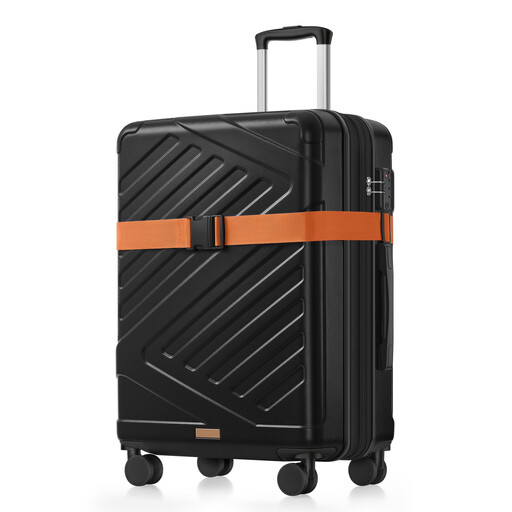
Why it suits this traveller: Measuring 65 × 45 × 25 cm, this suitcase is designed for checked baggage and longer holidays. Its expandable construction offers flexibility, but the stated maximum static load of 15 kg means it’s best to pack sensibly.
The product information specifically advises against packing beyond the internal dimensions. This matters with an expandable suitcase, as the extra capacity can’t be loaded without limit.
ABS shell, TSA lock, 360-degree spinner wheels, wet-and-dry compartments and included luggage strap, according to the product description.
We’ve put together a complete, up-to-date list of products that meet these strict selection criteria and the applicable European safety regulations.
That depends on its external dimensions, including the wheels and handles, and on the airline you’re flying with. An 18 or 20-inch model may be suitable, but always check the permitted height, width, depth and weight. A 24-inch suitcase or 28-inch suitcase is generally intended for checked baggage.
Its lifespan depends on how it’s used and packed, the surfaces it’s taken over, and the quality of its zips, wheels and handle. Don’t pack beyond the stated capacity, avoid pulling it up stairs and check the wheel attachments after every trip. Clean the exterior with a soft, damp cloth and avoid abrasive cleaning products.
Not always. An expandable suitcase is useful when you need extra space, for example on the return journey. However, the extra depth may exceed the baggage limit, and carrying more weight puts extra strain on the zips and wheels. Only use the expansion zip when permitted by the airline’s rules and the suitcase’s construction.
