Start with the field of view you need from an accessible vantage point, and compare focal lengths on the same full-frame-equivalent basis rather than looking only at zoom factors. A mirrorless camera with a suitable telephoto lens gives you a choice of lenses, a bridge camera combines a wide optical zoom range in one device, and a travel zoom is designed to be carried around. None of these features, on its own, proves that a camera will deliver better image quality at dusk. Check the maximum aperture at the telephoto end, the sensor size and exactly what’s included in the set before you choose.
Who is this choice relevant to?
Photographer capturing distant skyline details
This photographer wants to capture part of a building, quay or ship from across the water without moving closer. The field of view and optical telephoto range are important points of comparison, as Sony Netherlands and the Consumers’ Association explain.
Photographer at dusk
This photographer wants to capture details as the light fades, so looks beyond zoom range to the maximum aperture, sensor size and image stability. Specifications from Nikon, Canon and Sony can help with the comparison, but don’t determine the result on their own in your particular conditions.
Photographer exploring the harbour on foot
This photographer wants to switch between wide views and details while out walking, and weighs up a camera with a fixed zoom against a body with interchangeable lenses. The Consumers’ Association highlights size and ease of use as factors to consider when choosing a camera.
What should you look for?
First, decide how tightly you want to frame the skyline from your shooting position. Then consider how the camera performs as the light fades, how easy it is to carry your full kit, and which lens actually comes with the camera.
| What to consider |
What to look for when buying |
Who this matters to |
| Narrow field of view |
Compare the optical range in full-frame-equivalent millimetres and, if possible, try framing a shot from your chosen position. Sony Netherlands explains that the field of view is linked to focal length and sensor size. |
If I want to fill the frame with a particular part of a building or ship from across the water, I need to know how tightly I can frame it without relying on digital zoom. Around 36% of consumers prioritise field of view and telephoto range. |
| Details in low light |
Check the maximum aperture at the telephoto end, the sensor size and whether image stabilisation is available. Canon lists a maximum aperture of f/7.1 at the telephoto end for the RF-S 55-210mm. |
When I want to capture recognisable skyline details at dusk, I look beyond the zoom factor and consider the shooting conditions. Around 29% of consumers prioritise performance as the light fades. |
| Kit you can carry |
Compare the camera’s weight and size with all the lenses and any support equipment you’ll need, not just the body. A fixed zoom means you won’t have to change lenses while you’re out and about. |
If I want to switch between wide views and details while out walking, I want to know in advance how much kit I’ll actually be carrying. Around 21% of consumers prioritise portability. |
| Complete kit and expandability |
Check exactly what’s in the box, the lens mount and whether the telephoto lens you want is included. Compare a complete kit with the equipment you’d still need if you bought a body on its own. |
When I need a tight crop, I don’t want to find out after buying that the included lens won’t do the job. Around 14% of consumers focus mainly on what’s included and expandability. |
Common pitfalls
-
Assuming the highest zoom factor makes the best camera for skylines
A longer telephoto range doesn’t automatically deliver better image quality, and it can make it harder to frame a tight shot steadily. The Consumers’ Association points out that very high zoom can make it difficult to keep a subject in the frame.
First decide how you want to frame the shot from your chosen position, then compare optical range, sensor size and low-light performance.
-
Buying a body or standard kit without the telephoto lens you need
A body with a short standard zoom won’t give you the same framing as a kit with a telephoto lens. The Canon EOS R50 kit described by Canon includes both an RF-S 18-45mm lens and an RF-S 55-210mm lens.
Read the full model name and check what’s in the box to make sure the telephoto lens is part of the kit on offer.
If the telephoto lens you want isn’t included, you may need to buy a compatible lens to get the framing you’re after.
-
Treating digital zoom as extra optical range
For the COOLPIX P1100, Nikon distinguishes between the 3000 mm equivalent optical maximum and the digitally extended Dynamic Fine Zoom figure of 6000 mm equivalent.
Compare the optical full-frame-equivalent range, and treat digital zoom separately when assessing how you can frame your shot.
-
Assuming a telephoto lens gives you access to a better vantage point
A longer range doesn’t change access restrictions. For industrial sites in the Port of Rotterdam, the Port of Rotterdam Authority states that access without permission is not allowed; this isn’t a general rule for every harbour location.
Choose an accessible shooting position and check local conditions before you set off.
Camera brands and models for reference
Canon
A mirrorless camera for anyone considering an interchangeable telephoto lens and a kit with multiple lenses.
- Canon describes an EOS R50 kit with the RF-S 18-45mm and RF-S 55-210mm IS STM; that kit isn’t automatically included with every EOS R50 offer.
- Canon specifies optical image stabilisation for the RF-S 55-210mm.
- At the telephoto end, the maximum aperture is f/7.1; bear this in mind if you’re photographing at dusk.
Sony
The RX10 IV is a bridge camera with a fixed zoom, for anyone who wants to switch between wide views and distant subjects without changing lenses.
- Sony lists 25× optical zoom, a 24–600 mm full-frame-equivalent range and a 1.0-type sensor for the RX10 IV.
- These are model specifications, not an independent comparison of image quality at dusk.
Nikon
The COOLPIX P1100 is designed for very distant subjects that need a tight crop.
- Nikon lists an optical range of 24–3000 mm full-frame equivalent.
- The 6000 mm-equivalent Dynamic Fine Zoom is digital zoom. Nikon specifies a 1/2.3-inch-type sensor and a maximum aperture of f/8.
Panasonic
The LUMIX DC-TZ99 is a compact travel zoom for anyone who wants to switch from wide views to tighter framing while out and about.
- Panasonic lists 30× optical zoom and a 24–720 mm full-frame-equivalent range.
- The Dutch product page lists the variants viewed as unavailable; check whether the variant you want is currently in stock.
Cameras at Joybuy
These cameras may suit anyone who wants to adjust the framing or zoom in optically when taking photos. A zoom figure alone won’t tell you what field of view you’ll get from your shooting position, so check the product specifications and make sure the camera type suits your location.
 No image available
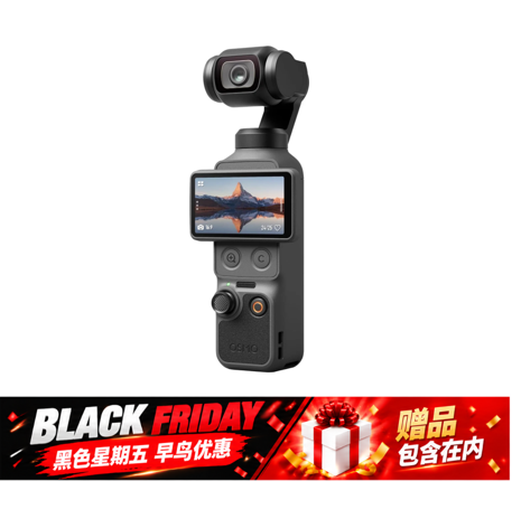
DJI Osmo Pocket 4 Standard Combo
The title mentions 2× lossless zoom for adjusting the framing; check that the range suits the distance from your shooting position.
The title lists a 1″ CMOS sensor and 3-axis stabilisation.
View at Joybuy
 No image available
KOMERY G7 5K digital camera, 80MP, white
The title presents the G7 as a portable travel point-and-shoot camera; the product description lists 18× optical zoom.
The title lists 5K and 80MP. A zoom factor alone doesn’t determine the field of view from your shooting position.
View at Joybuy
 No image available
KOMERY W6 digital camera, 12× optical zoom
The stated optical zoom may help you adjust the framing; check the focal length or field of view to see what you can capture from the harbour.
The title also lists 4K, Wi-Fi and 64MP.
View at Joybuy
 No image available
Songdian digital camera, 8× optical zoom, white
The title lists 8× optical zoom; compare the stated field of view with the framing you want from your shooting position.
The title also lists 5K, 64MP and a dual lens.
View at Joybuy
 No image available
Songdian 5K digital camera, 56MP, black
The title lists 10× optical zoom; check the field of view it provides before choosing the camera for a tight skyline crop.
The title also lists 5K and 56MP.
View at Joybuy
Frequently asked questions
Can I compare cameras by zoom factor alone?
No. For the framing you want, also compare the field of view or the full-frame-equivalent focal length. Then consider the sensor size, maximum aperture and conditions at your shooting position; a high zoom factor alone won’t tell you what the photo will look like.
What should I check before fitting a telephoto lens to a mirrorless camera?
Check the lens mount and exactly what’s included in the kit. Canon describes the RF-S 55-210mm as a lens for EOS R APS-C cameras, so don’t rely on the camera body’s name alone.
How can I keep a distant skyline in the frame?
Start with a wider shot, then zoom in to make it easier to frame your subject. For 80× zoom, the Consumers’ Association gives a field of view of 1° and recommends using a tripod.
What can I do if my camera or lens turns out to be faulty?
For a consumer purchase in the Netherlands, the seller must offer a remedy for a faulty product. The Dutch government lists free repair, replacement or, where appropriate, a refund; there’s no fixed statutory guarantee period that applies equally to every product.
Can I take photographs anywhere in a Dutch harbour and publish them?
Don’t assume that you have general permission to photograph at every harbour or location. For the Port of Rotterdam, the Port of Rotterdam Authority states that industrial sites cannot be accessed without permission and that permission may be needed to take photographs on or of such sites. For identifiable people, the Dutch Data Protection Authority distinguishes between private use and wider or commercial publication; in the latter case, the GDPR may apply.


