What should you look for when choosing?
First decide whether you can safely lay the letters flat. Then choose based on their size, condition and whether you need an image or a transcription as well.
| What to consider |
What to look for |
Who it matters most to |
| Scanning loose letters |
Measure the entire sheet and compare it with the scanning surface. Check a test scan for legibility and detail. |
If I mainly want to scan loose, sturdy letters, I’ll check that they fit and can safely lie flat. Around 40% of consumers say loose letters are their main consideration. |
| Fragile or bound items |
Check whether the original can safely lie on glass; don’t force a fold or binding flat. |
If I have a fragile letter or a bound collection, I want to capture the original without applying unnecessary pressure. Around 30% of consumers prioritise preserving fragile or bound items. |
| Transcribing handwriting |
Keep the image scan and test your intended software with a sample of your own. OCR and handwriting recognition aren’t the same; the KB describes OCR as word recognition, and IRIS states that the A3 scanner described there doesn’t support HGR. |
If I need editable text, I want to know whether the software can handle my handwriting and be able to check the scan. Around 20% of consumers prioritise transcription. |
| Larger formats or lots of pages |
Compare the capture format of the exact model with your largest letter, and try out the complete process if possible. |
If I need to process larger sheets or a series of pages, the format and capture sequence are crucial to me. Around 10% of consumers focus mainly on larger sheets or lots of pages. |
Scanners at Joybuy
This selection includes scanners for loose A4 documents and an overhead model for flat A3 and A4 documents. If you’re scanning fragile or bound letters, always check whether the original can be handled safely.
 Image unavailable
Epson DS-C330 ADF + Sheet-Fed Scanner
For loose A4 letters; check that the feeder is suitable for the condition of the paper.
A4; 600 × 600 dpi. The product description lists output to PDF, JPG and TIFF, and support for booklets up to 5 mm thick.
View at Joybuy
 Image unavailable
Epson WorkForce DS-970 Sheet-Fed Scanner
For loose A4 letters and batches of documents; make sure each original is suitable for feeding through the scanner.
A4; 600 × 600 dpi. The product description lists a 100-sheet automatic document feeder, double-sided scanning, paper protection sensors and a scanning speed of up to 85 ppm.
View at Joybuy
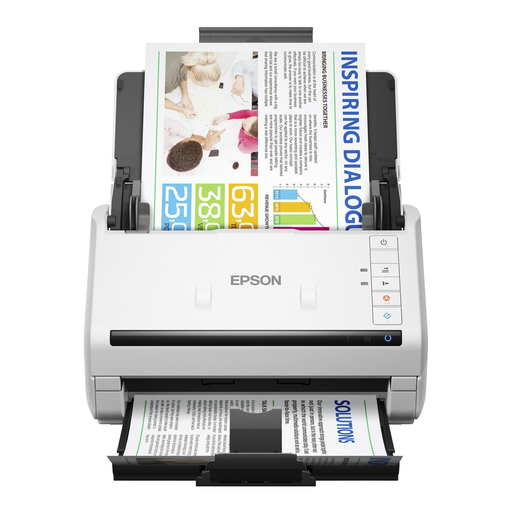 Image unavailable
Epson WorkForce DS-530 II Sheet-Fed Scanner
For loose A4 letters; before use, check that the paper and the condition of the original are suitable for the feeding method.
A4; 600 × 600 dpi. The product description lists a 50-sheet automatic document feeder, double-sided scanning and speeds of up to 35 ppm.
View at Joybuy
 Image unavailable
CZUR Shine 800 A3 Pro Document Camera
An overhead option for flat A3 or A4 documents; check the exact capture area to make sure it suits your letter.
The product description lists an 8 MP CMOS sensor, OCR output to editable text and compatibility with Windows or macOS. OCR doesn’t guarantee accurate handwriting recognition.
View at Joybuy
 Image unavailable
Epson WorkForce DS-70 Handheld Scanner
For loose A4 letters if a portable scanner suits your way of working; don’t force damaged or thick paper into the feed slot.
600 × 600 dpi; USB-powered. The product description lists OCR software for editable text and searchable PDFs. Check any transcription against the image scan.
View at Joybuy
Frequently asked questions
Should I buy a book scanner for loose letters?
Not necessarily. If the letters can safely lie flat and fit within A4, an A4 flatbed may be suitable. Consider overhead scanning if the size, binding or fragile condition makes contact with glass undesirable.
Does OCR automatically turn handwriting into error-free text?
Don’t assume it does. The KB describes OCR as recognising words in a scan; an IRIS comparison document distinguishes this from handwriting recognition and states that the A3 scanner described in it doesn’t support HGR. Keep the image scan and check any transcription.
How do I scan a fragile letter?
First check whether the paper can be handled safely, and don’t force any folds or binding flat. The Library of Congress advises assessing the condition of fragile material and the risks of the scanning set-up in advance. If in doubt, seek expert advice rather than using the original as a test.
What if a scanner breaks down too soon during normal use?
For a consumer purchase in the Netherlands, you have statutory rights in addition to any manufacturer’s or retailer’s guarantee. According to ACM ConsuWijzer, if a product breaks down sooner during normal use than you could reasonably expect, the seller must resolve the issue free of charge, for example by repairing or replacing it.
Can I post scans of other people’s letters online for my school project?
Not automatically. The Dutch government distinguishes between making a copy for personal use and distributing or making copyright-protected work available to the public. The Dutch Data Protection Authority says that publishing other people’s personal data online is generally only permitted with their consent. Whether a particular letter is protected, and which rules or exceptions apply to your project, depends on its content, the rights holders and how you share it. If necessary, ask your school for advice before publishing.


