
Vandaag of morgen in huis

Kwaliteit gegarandeerd

Welkomstaanbiedingen ontgrendelen: GRATIS bezorging | Tot 80% korting | Gratis 30 dagen JoyPlus-proefperiode
Download de app
A hands-free breast pump can be useful at work, at home or on the go. You don’t have to hold a bottle, and you can often wear the pump discreetly inside a nursing bra. However, wearable models vary considerably in fit, controls, noise levels and ease of cleaning. A low price or a promise of a “natural suction rhythm” doesn’t, on its own, tell you how well a pump will suit your needs.
As Joybuy Product Recommendation Officer, I’ve narrowed down the key product specifications and practical points to consider. That way, you can avoid paying mainly for marketing claims.
A breast shield that’s too large or too small can leak, feel less comfortable or affect suction. Many models come with a 24 mm shield, but that won’t suit everyone. Check whether inserts in several sizes are included, for example 17, 19 and 21 mm.
Pay attention to the shape, too. An anatomical or oval breast shield may fit differently from a round one. The right size is personal, so always follow the instructions and stop if you feel pain or persistent discomfort.
A wireless breast pump may have a built-in battery, but battery life varies. Some models run for around six sessions per charge, while others offer up to 180 minutes of use according to the product specifications. Don’t just look at battery capacity; also check:
A pump with a separate tube and motor may feel lighter against your breast. With a fully wearable model, the motor is often attached directly to the breast shield. This gives you greater freedom to move, but can also add weight inside your bra.
Not all products list noise levels in the same way. Where available, a decibel rating is more useful than a general claim such as “discreet”. For example, the Medela Motion InBra and Medela Swing Maxi are listed in the supplied product information as reaching a maximum noise level of 45 dB. Even that may be audible in a quiet office.
Also check that the pump fits properly. A poor seal or an incorrectly fitted valve can make it noisier and less efficient.
A single breast pump is a good choice if you pump occasionally, want to use one side at a time or are looking for a compact backup. A double breast pump can be useful if you regularly want to pump from both breasts at once. On the other hand, a double model generally has more parts, weighs more and takes longer to clean.
So don’t automatically opt for two pumps. One unit may be enough for occasional use. A double model could save you time if you’re using it at work, pumping several times a day or following a busy schedule.
Many electric breast pumps have a stimulation mode and an expression mode. Some models also include a mixed mode. Nine suction levels give you more flexibility to adjust the intensity, but a higher setting isn’t automatically more comfortable or suitable.
The Momcozy M5 lists 3 modes and 9 suction levels. According to its product description, the Momcozy M9 offers up to 15 adjustable suction levels. The Medela Motion InBra also has 9 adjustable levels according to the supplied information. Always choose a setting that feels comfortable and follow the manufacturer’s instructions.
Parts that come into contact with milk should be easy to take apart and clean. Products in this selection list food-grade materials and BPA-free parts; always check the current product page and packaging to confirm.
Also look out for:
Wash all parts that come into contact with milk before first use and after every session, following the instructions. A hands-free design only saves you time if the daily cleaning routine is manageable.
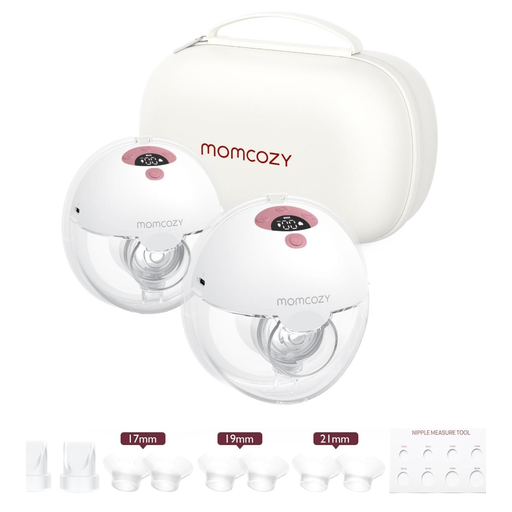
Why it suits this profile: According to the product information, this single wearable breast pump is suitable for use at home, at work or on the go. It lists four sizes: 17, 19, 21 and 24 mm.
The included inserts help ensure you’re not limited to one standard size. Check the fit before using the pump regularly.
3 modes, 9 suction levels, a USB-C rechargeable battery and a weight of around 225 grams according to the product description.
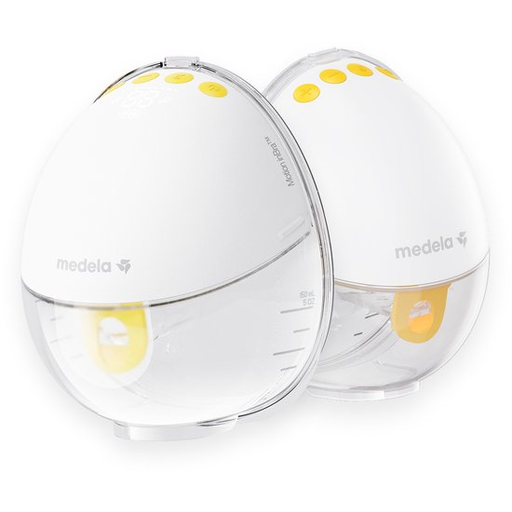
Why it suits this profile: With anatomically shaped cups, multiple inserts and a rechargeable battery, this double pump is well suited to regular use at home, in the office or on the go.
The product information lists three parts per cup and a maximum noise level of 45 dB. This gives you more concrete information about cleaning and noise than simply describing it as “discreet”.
Two units, 150 ml containers, 9 settings, inserts of 15, 18 and 21 mm alongside the 24 mm shield, and up to 2.5 hours of battery life according to the product specifications.
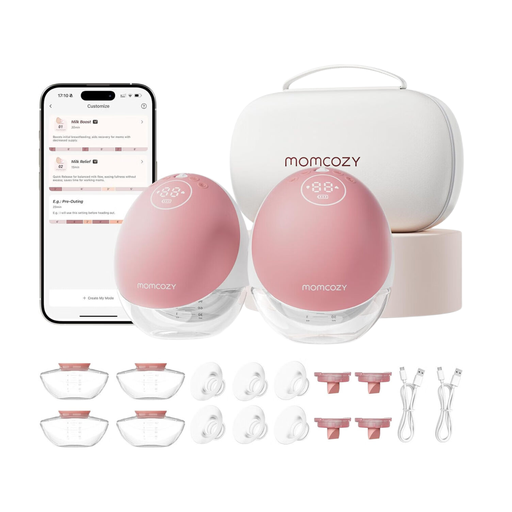
Why it suits this profile: According to the product information, this double wireless breast pump is designed for discreet use, with app controls and a range of settings.
Inserts of 17, 19 and 21 mm are listed alongside the standard 24 mm shield. App controls can be useful, but check compatibility with your phone beforehand.
Up to 15 adjustable suction levels according to the product description, two pump motors, USB-C charging and an included storage case.
We’ve put together a complete, up-to-date list of products that meet these strict selection criteria and the applicable European safety regulations.
Take apart all the parts that come into contact with milk and clean them according to the instructions. Use warm water and a suitable mild detergent if recommended. The motor, cable and other electronic parts generally must not be submerged. Let all the parts dry completely before reassembling the pump.
Battery life per charge varies by model and suction setting. The supplied specifications include examples ranging from around six sessions to a maximum of 180 minutes. Battery life over several years depends on how often you charge it, how it is stored and the conditions in which it is used. Also check whether replacement parts such as membranes and valves are available.
Not always. A double breast pump may suit you if you pump regularly and have a busy work schedule. A single breast pump is often easier to carry and may be enough for occasional use or pumping from one side. Compare the number of sessions, cleaning time, weight and fit with your daily routine.
