
Vandaag of morgen in huis

Kwaliteit gegarandeerd

Welkomstaanbiedingen ontgrendelen: GRATIS bezorging | Tot 80% korting | Gratis 30 dagen JoyPlus-proefperiode
Download de app
A hand mixer is handy for whipping cream, whisking egg whites, mixing cake batter and sometimes even making bread dough. But it’s not wise to focus only on the highest wattage or the number of speed settings. A powerful electric hand mixer can be awkward to use, while a compact model may struggle with heavy dough.
For home bakers, keen cooks and families, three things matter most: the right attachments, control over the speed and a motor suited to the mixture you’re making. Read on to find out what to look for and which popular options suit different needs.
Higher wattage doesn’t automatically mean a hand mixer can handle every type of dough with ease. Manufacturers may also use different measurement methods, such as rated power and peak power. For example, the Russell Hobbs Desire is listed as having 185 W of power and 350 W peak power. These figures aren’t directly comparable with a model that only lists its motor power.
So also consider the attachments, speed control, recommended operating time and the type of batter or dough you want to make.
A hand mixer with multiple speed settings is only practical if its lowest setting starts gently enough. Without a soft start, flour can fly out of the bowl or runny batter can splatter. A turbo button is useful for a short burst of extra power, but it’s no substitute for good everyday speed control.
Check whether the model has at least five speed settings, a clear slider or buttons, and possibly a soft-start function.
A hand mixer with beaters is suitable for whipped cream, egg whites and light mixtures. For biscuit dough, pizza dough or bread dough, you’ll need dough hooks. Some products also come with a hand blender, chopper or measuring jug. These can be handy, but only if you’ll actually use those functions.
Always check what’s included in the box. A mixer with attachments isn’t automatically suitable as a hand mixer for bread dough: the motor power, hook design and operating time still matter.
For whipped cream, egg whites and cake batter, a model in the lower power range is often enough. If you regularly make heavy batter or dough, you could consider models rated at around 400 to 500 W or more, but treat wattage as a guide, not a guarantee of quality.
A powerful hand mixer with dough hooks should feel comfortable to hold. A heavy appliance can become tiring during prolonged kneading. Also check the warnings about maximum mixing time and let the motor cool down if the appliance gets warm.
A hand mixer with a turbo function is useful for a short burst of extra speed, for example when whisking egg whites or mixing a thick batter. Don’t use turbo for long periods with heavy dough. A hand mixer with multiple speed settings gives you more control: start slowly, then gradually increase the speed.
Soft start is especially useful when mixing flour, icing sugar and thin liquids. The motor gradually builds up speed, helping to reduce splashes.
A good hand mixer for baking usually comes with two beaters and two dough hooks. Check whether the attachments are made of stainless steel and whether the product information says they’re dishwasher-safe.
Never immerse the motor housing in water. Always unplug the appliance before changing attachments. This is important for any electrical kitchen appliance, regardless of the brand.

Why it suits this type of user: The 3-litre rotating bowl makes this model practical for beginner bakers who want to prepare cake batter, whipped cream and light dough without having to hold the bowl throughout.
The product specifications list six speeds, a rotating bowl and suction cups. So ease of use isn’t determined by wattage alone.
450 W, six speeds, 3-litre bowl, two beaters and two dough hooks.
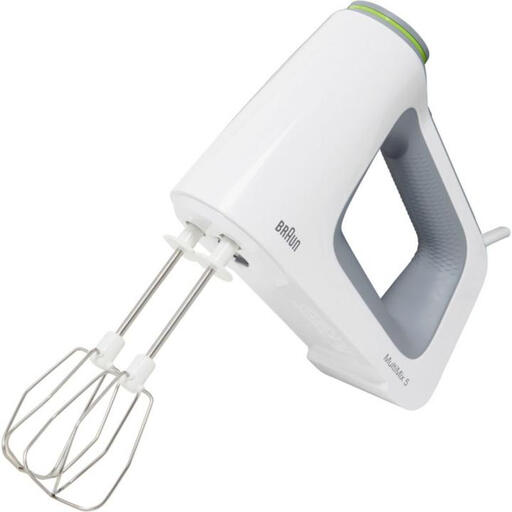
Why it suits this type of user: This model is designed for people who bake often and value precise speed control, an ergonomic handle and easy attachment changes.
The product specifications list variable speed control from 1 to 9 and EasyClick attachment changes. That gives you more control than a standalone turbo button.
750 W motor, nine speed settings, Softgrip and dishwasher-safe attachments according to the product information.
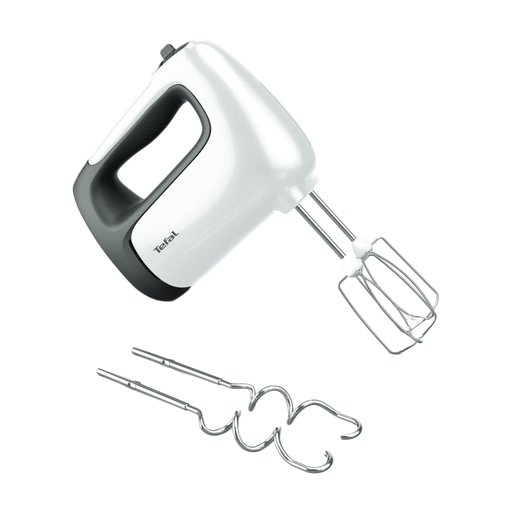
Why it suits this type of user: This model is suitable for people who want to prepare soups, sauces or smoothies as well as mix ingredients, and who regularly work with heavier mixtures.
The set includes beaters, dough hooks and a stainless steel blender attachment. So you’re not buying separate attachments intended only for light mixtures.
500 W, five speeds, turbo, dough hooks, beaters and a blender attachment; parts are dishwasher-safe according to the product description.
We’ve put together a complete, up-to-date list of products that meet these strict selection criteria and the applicable European safety regulations.
A hand mixer only uses electricity while it’s mixing. How much energy different models use depends on their power and how long they’re used. A higher wattage may mean faster mixing, but it also uses more energy over extended periods. So don’t leave the appliance running unnecessarily, and use the lowest setting that suits the recipe.
Also bear these points in mind:
Many electrical kitchen appliances sold in the EU come with a statutory guarantee of at least two years. When buying, also check the seller’s information and any additional manufacturer’s guarantee.
Some models can do this with dough hooks, but not every appliance is suitable. Check the power, the hooks included and the maximum operating time. For large quantities of firm bread dough, a stand mixer is often more practical.
A range of power levels can work well for whipped cream, egg whites and cake batter. For heavier mixtures, many people choose a model rated at around 400 to 500 W or more. Always consider the full package: motor power, speeds, attachments and instructions.
Its lifespan depends on how often it’s used, the load it handles, how it’s cleaned and how it’s stored. Prolonged heavy kneading can put strain on the motor. A hand mixer used within the stated limits and given time to cool down between uses is generally better placed to last.
