
Vandaag of morgen in huis

Kwaliteit gegarandeerd

Welkomstaanbiedingen ontgrendelen: GRATIS bezorging | Tot 80% korting | Gratis 30 dagen JoyPlus-proefperiode
Download de app
A handheld vacuum cleaner is ideal for crumbs on the sofa, sand in the car and dust in narrow gaps. Yet many people buy a model that turns out to be less practical after just a few weeks. The issue is often not its appearance, but features such as battery life, the filter and the accessories supplied.
Joybuy Product Recommendation Officer sets out the key points to consider. This helps you compare a cordless handheld vacuum cleaner, powerful handheld vacuum cleaner or dustbuster based on verifiable product specifications rather than marketing claims.
A figure such as 16,000 Pa or 55 kPa sounds impressive, but it does not tell you everything about everyday use. The nozzle, airflow, filter condition and surface also have an impact. A high stated suction power is therefore no guarantee that every type of dirt will disappear in a single pass.
Also consider the difference between a handheld vacuum cleaner for cars and a model for larger surfaces. For car seats, cup holders and gaps, a compact appliance with a narrow nozzle is often more practical. For an entire home, a stick vacuum cleaner with a larger dust container and longer battery life may be more suitable.
A cordless model is convenient to use without a cable, but the battery determines how long you can clean continuously. Always check:
For example, a model with 14 to 16 minutes of operating time is suitable for quick tidy-ups in the car. For several rooms or a large household, longer battery life is more important than a small size.
A full dust container or blocked filter reduces airflow. Check the dust container capacity, how it is emptied and whether replacement filters are available. A handheld vacuum cleaner with a HEPA filter may help trap fine dust according to the product description, but check how the filter should be cleaned and dried.
A washable filter may help to reduce replacement costs, but it must be completely dry before being put back. You should also only use a handheld vacuum cleaner for its intended purpose. A dry vacuum cleaner is not automatically suitable for liquids.
Pa, kPa and watts measure different aspects of an appliance. It is therefore better to compare models intended for the same purpose. A compact vacuum cleaner for keyboards and car gaps has different requirements from a stick vacuum cleaner for carpets.
For everyday dirt, a well-designed nozzle and a brush for pet hair are often more useful than a higher power figure alone. Also check whether the manufacturer lists multiple settings. A turbo setting can provide extra power, but it will generally drain the battery more quickly.
A USB-C connection is practical for use with a suitable adapter, power bank or car charger. Do check whether the charging adapter is included. A larger battery may extend the operating time, but it can also make the appliance heavier.
For occasional use in the car, a short charging period may be sufficient. If you remove pet hair from furniture every day, you will benefit more from longer battery life, a brush roll or a spare battery.
A crevice tool, upholstery brush and soft brush make the appliance more versatile. Some models also offer a blow function. According to EAFC’s product description, the model in question has four functions: vacuuming, blowing out dust, inflating and vacuum sealing. Only use accessories on surfaces they are suitable for.
For wet dirt, an ordinary dustbuster is not the right choice. Instead, choose a spot cleaner or carpet cleaner with separate clean- and dirty-water tanks. A steam cleaner works on a different principle and is intended for surfaces that are suitable for heat and moisture.
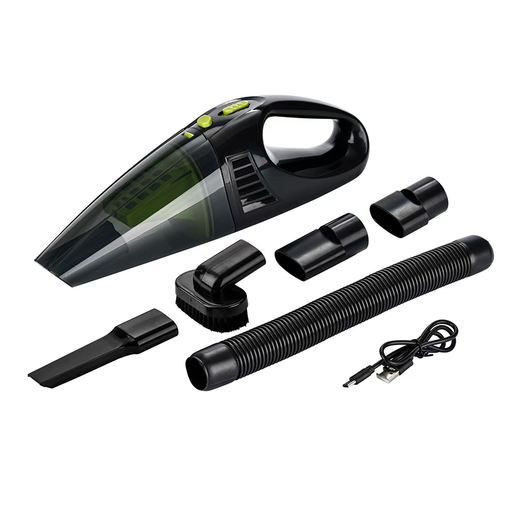
Why it suits this profile: This cordless model is designed for short cleaning sessions in the car, on a desk or in small spaces. The 0.4-litre dust container means you do not need to empty it as often while cleaning.
The product information states both an operating time of approximately 14–16 minutes and a charging time of around four hours. This makes it clear in advance that it is mainly designed for quick jobs.
Cordless design, HEPA filter, 0.4-litre dust container and a stated noise level of approximately 65–75 dB.
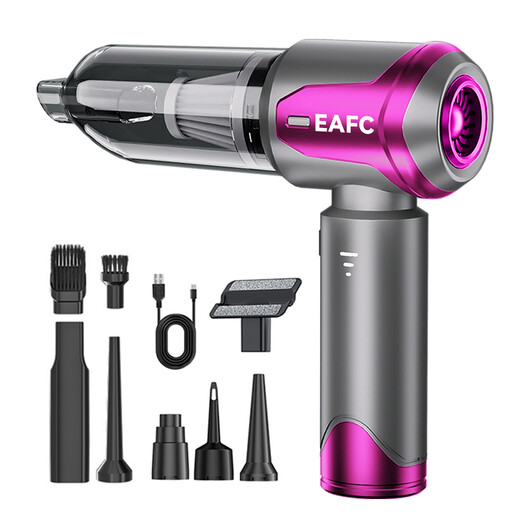
Why it suits this profile: For anyone who wants to use one small appliance in the car, at home, in the office and while travelling. The attachments supplied support a range of cleaning tasks.
The stated 16,000 Pa, three speeds and 6,000mAh battery provide more information than simply calling it “powerful”. The specified charging time is approximately two hours.
Brushless motor according to the product description, USB-C charging, three speeds and functions for vacuuming, blowing, inflating and vacuum sealing.
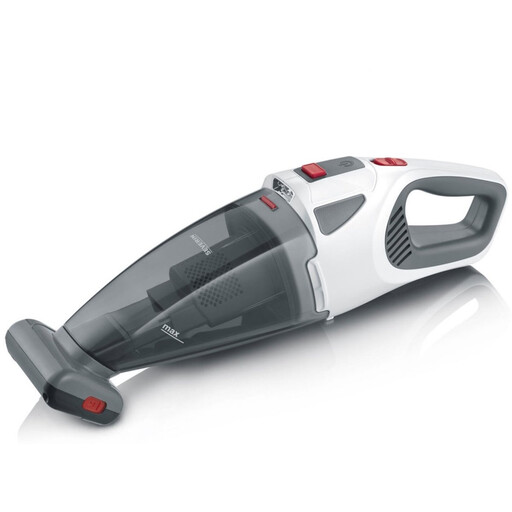
Why it suits this profile: This model is suitable for households that want to tackle furniture, car interiors and everyday mess while enjoying more flexibility than a simple dustbuster.
The product information states an operating time of up to 30 minutes, a charging station and a rotating turbo brush. This gives you a clearer idea of its practical use than a standalone motor power figure.
18.5V Li-ion battery, wet and dry function according to the product description, LED lighting and 4-in-1 accessories.
We have compiled a complete, up-to-date list of products that fully meet these strict selection criteria and the applicable European safety regulations.
Yes, particularly if the model has a crevice tool, compact housing and sufficient battery life. Check beforehand that the battery will last long enough for your car. For sand, pet hair and dirt between the seats, a rotating brush or special upholstery brush can be useful.
Its lifespan depends on battery use, filter maintenance, blockages and the quality of its components. Empty the dust container in good time, clean washable filters according to the instructions and allow them to dry completely. With cordless models, the battery is often an important consideration, so check whether it can be replaced.
With a cordless model, you mainly pay for the electricity used while charging and, potentially, replacement filters or a battery. A corded model does not need charging breaks, but it uses electricity while running. The biggest difference in costs usually comes from replacement parts and maintenance, rather than from one short charging session.
