
Vandaag of morgen in huis

Kwaliteit gegarandeerd

Welkomstaanbiedingen ontgrendelen: GRATIS bezorging | Tot 80% korting | Gratis 30 dagen JoyPlus-proefperiode
Download de app
A hand blender can quickly process soup, sauce, smoothies, purée and baby food without the need for a large food processor. However, the differences between models are greater than their appearance might suggest. A low price can be tempting, but awkward controls, limited accessories or a motor that overheats quickly can soon become frustrating.
As a Joybuy Product Recommendation Officer, I filter product information based on practical considerations. Below, you’ll find what to look for, which marketing claims to treat with a degree of caution and which type of hand blender suits your needs.
A powerful hand blender is often marketed with a high wattage. This figure says something about the power drawn, but not everything about the final blending result. The shape of the blending foot, the blade, the speed control and the recommended operating time also play a part.
A 450-watt model may be sufficient for smoothies, sauces and light purées. For thick soups, hard vegetables or regular chopping, a motor rated at 800 to 1000 watts is more practical. Also check whether the manufacturer specifies any limits for prolonged use.
A hand blender with accessories may seem versatile, but a whisk, chopper or masher is only worthwhile if you genuinely need it. So check what’s included in the box rather than relying solely on the product title.
A hand blender with whisk is useful for whipped cream, batter and light mixtures. A hand blender with chopper is better suited to herbs, nuts, cheese or small quantities of vegetables. Check the contents and capacity of the accessories before ordering.
A detachable blending foot makes cleaning easier. However, not all parts are suitable for the dishwasher. With many models, only the foot or accessory can be cleaned this way; the motor unit must not be submerged in water.
Also look for splash protection, a secure locking mechanism and clear instructions. When working with hot ingredients, follow the manual. Some models, such as the Russell Hobbs Desire, state that hot liquids must first be allowed to cool below 80 °C.
For everyday use, these guidelines are practical:
Wattage is no guarantee of a smooth result. According to Braun’s product description, for example, the MQ50051M should be used with the foot fully submerged to reduce splashing. The ROUNY H1 specifies a maximum operating time of one minute, followed by one minute of rest. Instructions like these are at least as relevant as the motor power.
A single-speed model is easy to operate. This suits users who mainly make soup, sauce or smoothies. If you want more control over the texture, choose a model with several settings.
A hand blender with turbo function offers an extra-powerful setting for short bursts. Twenty speeds may sound comprehensive, but a continuously variable dial or two well-chosen settings can be just as useful in practice. Above all, check whether the controls are comfortable and whether you can operate the button with one hand.
A metal foot is generally suitable for regular contact with hot preparations, provided the manufacturer permits this. Check whether the foot is detachable and which parts are dishwasher-safe.
Also consider:
A cordless hand blender gives you greater freedom of movement, but pay attention to the battery, charging time and lower stated power. According to the product specifications, the Nedis KAHB600BK has a 100-watt motor and a speed of 13,000 revolutions per minute. This may be useful for light preparations, but it belongs to a different usage class from a corded 1000-watt model.
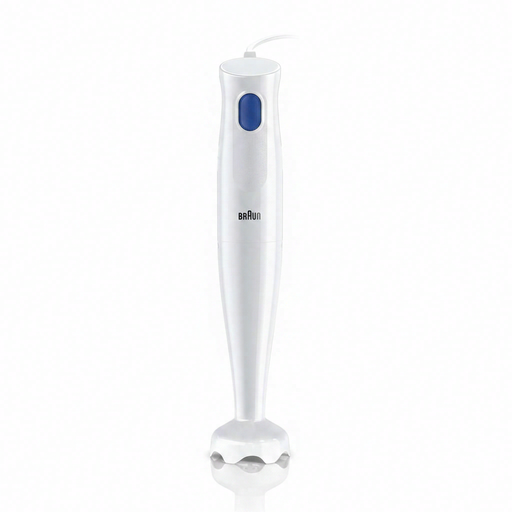
Why it suits this profile: The 450-watt motor, single speed and lightweight design keep operation straightforward. This model is suited to simple smoothies, sauces and purées.
The product information clearly states that it has one speed and 450 watts of power. This means you don’t pay for a large accessory set that you may never use.
Product weight of 550 grams, detachable blending foot and an included 600 ml measuring jug.
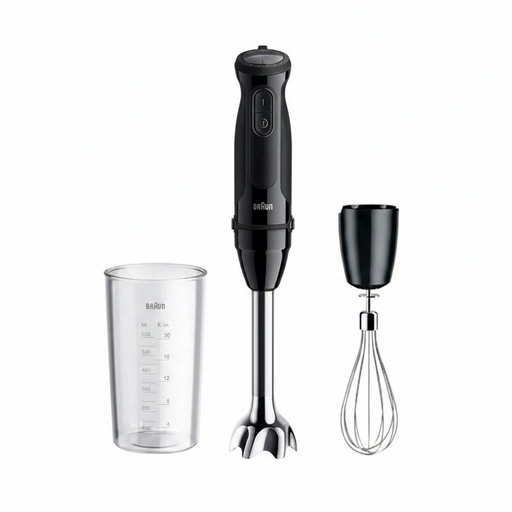
Why it suits this profile: The combination of 1000 watts, 21 speeds and a whisk offers plenty of flexibility for different recipes.
The speed isn’t limited to a single setting and, according to the product description, the EasyClick parts are dishwasher-safe. Check the manual for confirmation.
1000 watts, 21 speeds, turbo function and a 1.2-metre cable.
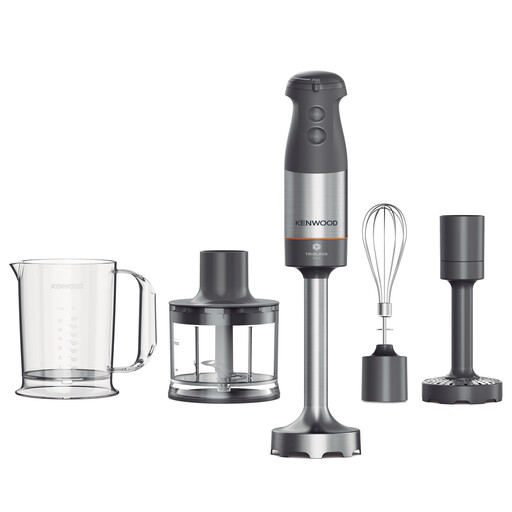
Why it suits this profile: The longer XL foot and included accessories are well suited to larger quantities of soup and purée, as well as meal preparation.
The product details specifically list a whisk, mini chopper, measuring jug and masher. This allows you to assess in advance whether the set suits your recipes.
1000 watts, two speeds, wider Triblade XL foot and dishwasher-safe accessories according to the product description.
We’ve put together a complete, up-to-date list of products that fully meet these strict selection criteria and the applicable European safety regulations.
Always follow the manual for your chosen model. The most important habits are:
A hand blender will generally last longer if you don’t overload it and cut hard ingredients into smaller pieces. The statutory guarantee in the EU for this product category is at least two years; additional rights may arise under national legislation.
For soup and smoothies, a model from around 450 watts is often sufficient, depending on the ingredients. For larger quantities or thicker preparations, 800 to 1000 watts is a more sensible choice. A long blending foot or generously sized measuring jug can also be more practical.
Only if the manual permits it. Keep the hand blender submerged to reduce splashing and take care with hot liquids. A tall saucepan provides more room around the rotating foot than a shallow bowl.
Energy consumption depends on the power rating and operating time. A 1000-watt motor running for five minutes theoretically uses around 0.083 kWh. In practice, a hand blender is usually used for short periods, so energy consumption per preparation remains limited. The purchase price, accessories and availability of replacement parts are often more important to the overall cost.
