
Frosting maker who likes to measure carefully
You add the ingredients gradually and want to be able to control the mixer easily while whisking.


For a small, occasional batch of vanilla frosting, a standalone hand mixer with suitable beaters and easy-to-use speed settings is a practical choice. For larger batches, a mixer with a powered bowl can be convenient, but it needs more storage space. Using a mixer doesn’t make frosting safe to take along without chilling: the Netherlands Nutrition Centre advises transporting chilled products in a cool bag and following storage guidance suited to the dish and its ingredients.
You add the ingredients gradually and want to be able to control the mixer easily while whisking.
For a one-off picnic, you’re mainly looking for a simple hand mixer with the beaters you need, without having to buy a bowl set.
You often make frosting for several bakes and are therefore considering a hand mixer with a powered bowl.
Start by thinking about how much you usually make and whether you want to use your own bowl. Then check the beaters, controls and cleaning instructions.
| What to consider | What should you check? | Who is this important for? |
|---|---|---|
| Controls while whisking | Check that the mixer comes with beaters and that its speed settings suit the way you add ingredients. | I want to adjust the mix as I go and use the right beaters; around 36% of consumers say control while whisking is their main consideration. |
| Standalone mixer or bowl set | Think about whether your own mixing bowl will do and check which accessories come with the model. | If I only bake occasionally, I don’t want to buy a bowl set I’ll hardly use; around 29% of consumers prioritise simple, occasional use. |
| Cleaning | Follow the cleaning instructions for the exact model and check whether the parts are dishwasher-safe. | After baking, I want to know how to clean the beaters and any other parts I’ve used; around 21% of consumers say cleaning is their main consideration. |
| Larger quantities | Check the bowl capacity and make sure you have enough worktop and storage space; bowl capacity isn’t the same as a proven maximum quantity of frosting. | If I often make larger batches, a bowl setup may suit the way I work better; around 14% of consumers prioritise mixing larger quantities. |
Manufacturers state the motor power, but this doesn’t compare frosting results under the same conditions.
Choose based first on the beaters, controls and the quantity you make. Treat wattage as a specification, not a performance ranking.
A bowl set takes up space and needs cleaning after use. Philips states that the HR3745/00 has no dishwasher-safe parts.
Remember to factor in cleaning and storing the extra bowl and setup when making your choice.
Choose a bowl set if you’ll genuinely use it, and check the cleaning instructions before you buy.
The mixer doesn’t determine how you should store the dish; that depends on the ingredients and the relevant storage advice.
Chilled products may need to be transported in a cool bag.
Plan how you’ll keep everything chilled before you set off, and follow the storage advice for your frosting or cake. The Netherlands Nutrition Centre advises throwing away products that are normally kept chilled if they have been left unrefrigerated for more than two hours.
The Tomado THM3001B is a standalone hand mixer with thumb-operated controls and accessories for whisking and kneading.
The ErgoMixx MFQ36400 is a standalone hand mixer with a soft grip, designed for use with your own bowl.
The HR3745/00 combines a hand mixer with an automatically rotating mixing bowl.
The MultiMix 3 HM 3105 WH is a standalone mixer with several attachments.
The Prep'Mix+ HT4601 is a standalone hand mixer with beaters and dough hooks.
The products below are hand mixers with beaters for whisking; the Philips HR3745/00 also comes with a powered bowl. Choose the setup that suits the quantity you make and the space you have. Make separate arrangements to transport perishable frosting chilled to your picnic.
 No image available
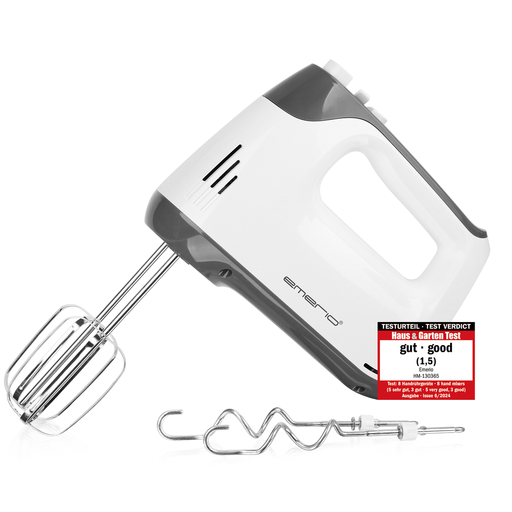
A good fit if you want to whisk in your own bowl and adjust the speed as you mix.
The product name lists five speeds and a turbo function. The product description mentions a slow-start function and an eject button. The instructions warn against using the mixer outdoors or in damp environments, so don’t use it at the picnic site.
 No image available
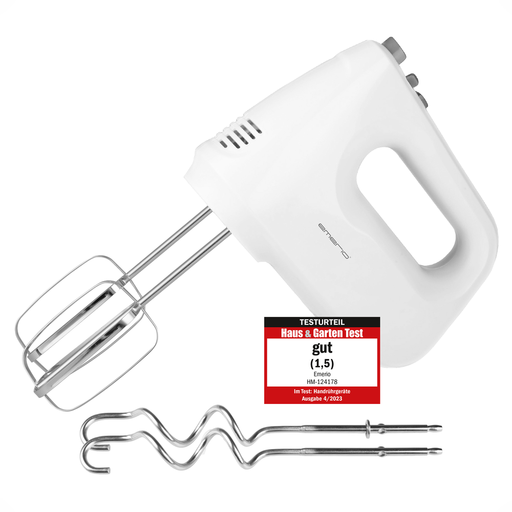
A good fit if you want to whisk in your own bowl and use a range of speed settings as you mix.
The product name lists six speeds and a turbo function. The product description mentions a slow-start function and an eject button. The instructions warn against using the mixer outdoors or in damp environments, so don’t use it at the picnic site.
 No image available
A good fit if you prefer using a bowl setup to mix frosting.
The product name lists six speeds, 450 W, beaters and a dough hook. Philips lists an automatically rotating 3-litre bowl. According to Philips, the parts are not dishwasher-safe.
 No image available
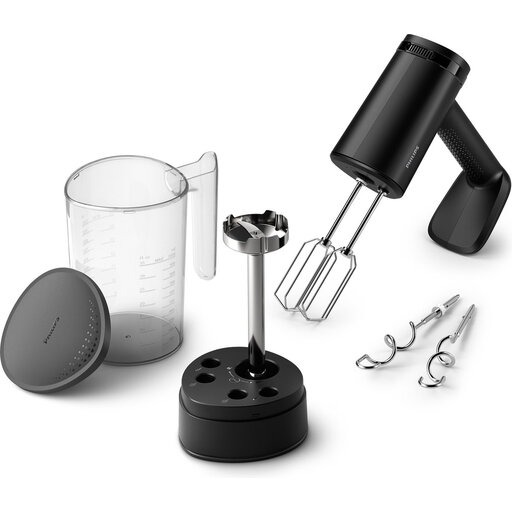
A good fit if you’re looking for a standalone hand mixer to mix ingredients in your own bowl.
The product name lists 500 W. The product description mentions five speeds and a turbo function.
It depends on the ingredients and the storage advice for the dish. The Netherlands Nutrition Centre advises transporting chilled products in a cool bag and throwing away products that normally belong in the fridge if they have been left unrefrigerated for more than two hours. For buttercream cake, the Netherlands Nutrition Centre advises keeping it in the fridge; this advice doesn’t automatically apply to every type of frosting.
Check that the exact model comes with beaters and follow the cleaning instructions for that model. Tomado lists dishwasher-safe beaters for the THM3001B; Philips states that the parts for the HR3745/00 are not dishwasher-safe.
Online purchases generally come with a statutory cooling-off period. According to ACM ConsuWijzer, it ends 14 days after delivery, subject to legal exceptions. If a product doesn’t meet what you could reasonably expect, the retailer is responsible for the statutory guarantee; any manufacturer’s guarantee doesn’t replace that responsibility.
Electrical kitchen appliances placed on the market in the Netherlands must meet the applicable European safety requirements. According to the Dutch government’s Ondernemersplein, manufacturers must apply the required CE marking and draw up an EU declaration of conformity for products that meet the requirements. The marking is not an independent performance test.