
Baker making small cakes
You make batter in your own bowl and want to compare suitable beaters and adjustable speeds. Bosch and Philips list these features for specific hand mixers.


For small batches, a standalone hand mixer with beaters and variable speed is a sensible choice, provided the beaters reach properly into your bowl. Only opt for extra power, a mixing bowl or more attachments if they’ll also suit your other recipes; on their own, these features don’t prove that a mixer will do a better job with a small amount of batter.
You make batter in your own bowl and want to compare suitable beaters and adjustable speeds. Bosch and Philips list these features for specific hand mixers.
You want to store the mixer and its attachments together. Kenwood describes the QuickMix Go as having a storage lid; compare the size of the complete set too.
If you mix for longer periods, consider the grip and weight distribution. Braun describes its HM3135WH as featuring SmartMix; this is a design feature of that model, not proof that every user will find it more comfortable.
For a small batch of cinnamon cake batter, how well the mixer works with your bowl, how easy it is to use and how the complete set stores are all practical points to compare.
| What to consider | What should you check? | Who is it most important for? |
|---|---|---|
| Mixing a small batch | Check that the beaters supplied are suitable for your bowl and can reach the bottom and sides. | If you usually make a small amount in your own bowl, you’ll want beaters that work well with it. Around 36% of consumers prioritise mixing small batches. |
| Adjusting the speed | Check how many speed settings there are and whether the controls on the exact model suit the way you work; multiple settings don’t automatically mean it has a gentle start. | If you want to adjust the speed as you mix, the controls are an important point of comparison. Around 29% of consumers give speed control their highest priority. |
| Storing the complete set | Compare the storage space needed for the mixer and all the attachments supplied. | If you’re short on cupboard space, it’s the size of the whole set that matters, not just the motor housing. Around 21% of consumers choose based on storage. |
| Handling and cleaning | Consider the grip and weight of the model, and check the instruction manual to see which parts can be washed. | If you mix for longer periods or cleaning is a key concern, it’s worth checking in advance how the mixer feels in your hand and which parts you can clean. Around 14% of consumers prioritise ease of handling and maintenance. |
A higher stated wattage doesn’t prove that a hand mixer will mix small amounts of cinnamon cake batter better.
Compare the beaters, controls and shape of your bowl too. Treat manufacturers’ performance claims as claims, not as a head-to-head practical test.
A set may include dough hooks, a chopper or a blending foot as well as beaters. These extra parts aren’t automatically necessary for a small batch of cake batter.
Check what’s included with the exact model and only choose extra attachments if you’ll use them for other recipes.
Extra parts need storage space and, if you use them, may mean more cleaning.
According to the Dutch government, a manufacturer’s warranty is additional cover. In the Netherlands, there is no fixed statutory warranty period, and the retailer must provide a solution if a product is faulty.
Check what any extra warranty actually adds, and contact the retailer if you have a problem with a faulty product.
An extra warranty could mean unnecessary additional costs if its terms don’t add anything you need.
The CleverMixx MFQ22100 is a straightforward hand mixer to compare if you use your own bowl.
The HR3740/00 is worth comparing if you’re looking at beaters and speed settings.
The Powermix Silence HT650E is worth a look if you’re also considering dough hooks.
The MultiMix 3 HM3135WH is a specific model with extra attachments to include in your comparison.
The QuickMix Go HMP40.000GY is worth considering if storage for the set is important to you.
This selection includes hand mixers with beaters and adjustable speeds, as well as models with a mixing bowl or extra attachments. Check that the set supplied with each model suits your bowl, recipes and storage space.
 No image available
A model supplied with a mixing bowl to consider if you’d rather use the bowl included than your own small bowl.
The product name lists 450 W and six speeds. The instructions describe use with the supplied 3 L bowl; check that it suits the quantities you make.
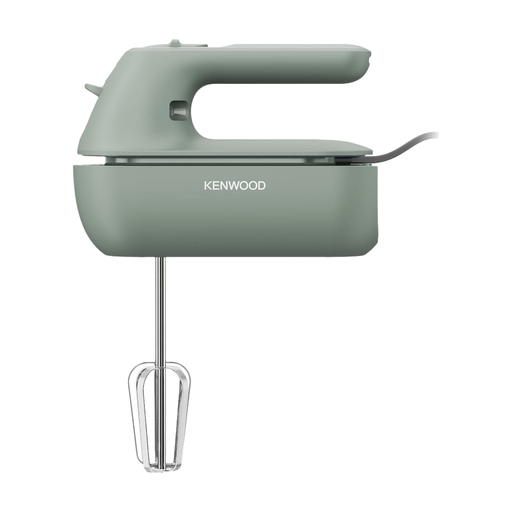 No image available
A hand mixer to compare if beaters and a way to store the attachments and cord are important to you.
The product name lists 400 W, five speeds, beaters and dough hooks. The product description mentions a storage system and a slow-start function.
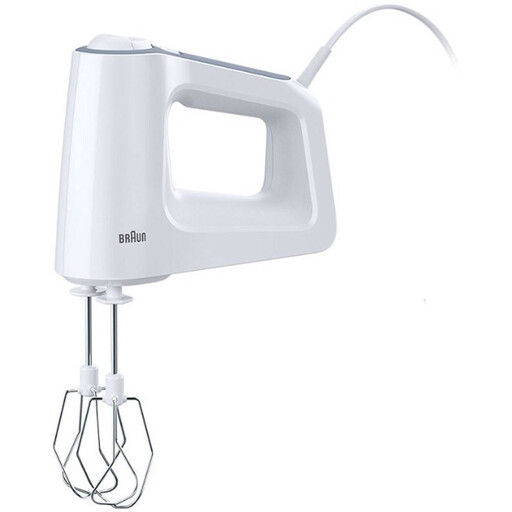 No image available
A comprehensive set to compare if you want to use attachments other than beaters too.
The product name lists 220 V and 500 W. The set description includes two whisks, five speeds, a gradual start from speed 1, dough hooks, a blending foot and a chopper.
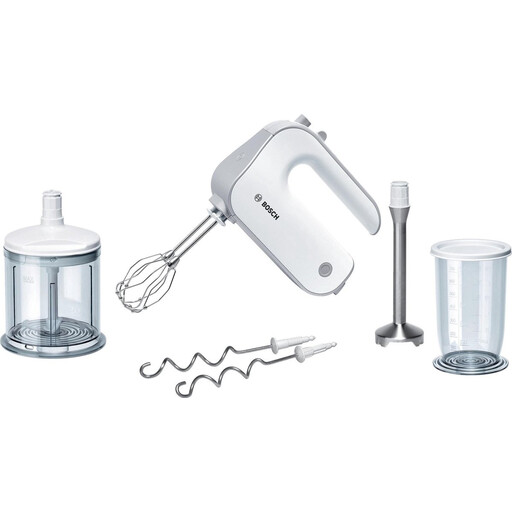 No image available
A hand mixer set to consider if you’re looking for beaters and several speed settings.
The product name lists 500 W. The product description mentions whisks, five speeds, a soft-grip handle and starting at the lowest speed.
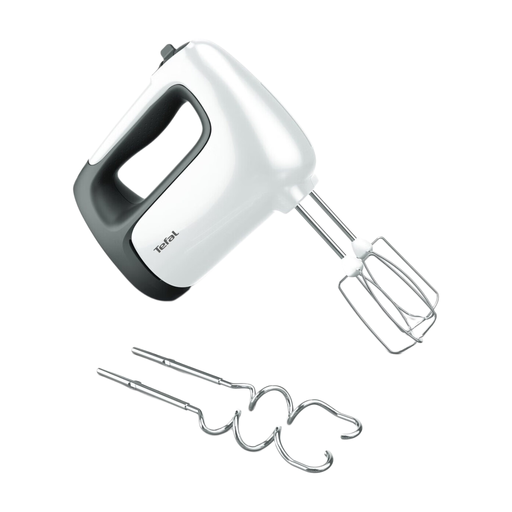 No image available
A set to compare if you want to use dough hooks or a blending attachment as well as beaters.
The product name lists 500 W and five speeds. The description mentions beaters, dough hooks, a blending attachment and dishwasher-safe accessories.
No, not necessarily: you can use a standalone hand mixer if the beaters suit your bowl and the quantity you’re making. Check that they reach the bottom and sides; product specifications don’t state a minimum workable quantity.
This varies by model and part. Bosch lists dishwasher-safe parts for the MFQ22100; check the manual to see exactly which parts. Unplug the mixer before cleaning, and don’t immerse the motor housing, cord or plug.
Extra cover isn’t automatically necessary. According to the Dutch government, the retailer must provide a solution if a product is faulty; in the Netherlands, there is no fixed statutory warranty period. Check whether the terms of any extra cover add anything you need.
CE marking is mandatory for electrical products covered by the applicable Dutch regulations. The Netherlands Food and Consumer Product Safety Authority outlines low-voltage rules for electrical equipment with a rated AC voltage of 50 V to 1000 V. Check the marking and rating plate on the item being offered; CE marking alone is not proof of independent testing.