
Baking several batches for a buffet
You’re making batter in several bowls and weighing up whether to mix it yourself or use a model with a rotating bowl.


For a few manageable bowls of red velvet batter, a hand mixer is a good choice if you want to move it around the sides and base yourself. For repeated batches, a model with a rotating bowl can reduce the amount of manual guidance needed. However, the bowl doesn’t mean you can make a larger batch or use the mixer for longer without stopping: check the permitted quantity and operating time for the exact model in its manual.
You’re making batter in several bowls and weighing up whether to mix it yourself or use a model with a rotating bowl.
You want to mix the ingredients in a controlled way and avoid unmixed patches, without mixing for longer than your recipe requires.
When making successive batches, you’re mainly thinking about how the mixer feels in your hand and how much effort it takes to clean the beaters and bowl.
A good choice if: you make a manageable bowl at a time and want to mix around the sides and base yourself. Philips lists five speeds and a turbo function for the HR3740/00; Bosch lists the same features for the MFQ36400.
Bear in mind: you hold the appliance and move it around the bowl yourself. Check the permitted batch size and operating time in the manual for the exact model.
A good choice if: you make batches repeatedly and want to guide the mixer less by hand as it works. Bosch describes the MFQ36460 as a hand mixer with an automatically rotating mixing bowl.
Bear in mind: the bowl and stand take up space and need cleaning. Having a bowl doesn’t in itself allow you to make larger batches or use the mixer for longer.
Consider this alternative if: the quantity or number of batches is beyond the limits of a hand mixer. The Dutch Consumers’ Association mentions cake batter as one of the uses considered when testing stand mixers.
Bear in mind: this is a different type of appliance. Compare the bowl capacity and operating limits of specific models before choosing.
| What to consider | What to check before buying | Who should pay particular attention? |
|---|---|---|
| Making several batches | Check the permitted quantity, operating time and any required rest periods for the exact model. | If you’re making several bowls in a row, you’ll want to know whether your approach is within the model’s limits. Around 36% of consumers say making several batches is their main concern. |
| Control over the batter | Compare the speed settings and beaters supplied, and follow your recipe’s mixing order and timings. | If you want to mix ingredients in stages and keep an eye on the batter’s texture, the choice of speed matters. Around 29% of consumers prioritise control over the batter. |
| Ease of handling | Check the weight and grip of the exact model if you’ll be holding the mixer yourself. | When mixing several batches in a row, it’s worth considering how the mixer feels in your hand. Around 21% of consumers say ease of handling is their main concern. |
| Cleaning and storage | Check which parts are included and follow the cleaning instructions for the exact model. | If you want to tidy up quickly after making several batches, consider how easy the attachments are to clean and how much storage space you have. Around 14% of consumers prioritise cleaning and storage. |
A power rating doesn’t tell you how much red velvet batter you can mix with a model or how long you can use it for at a time.
Work out how much batter you’ll make at once, then check the manual for the exact model before buying.
A rotating bowl is a convenience feature; your recipe may still require you to add ingredients in stages and check the batter as you go.
Choose a bowl to suit the way you work, not as a guarantee of a particular batter texture. Remember, too, that it takes up extra space and adds parts to clean.
A bowl and stand take up space and add more washing-up.
Cleaning instructions can vary between models and attachments.
Read the instructions for the exact mixer and the parts supplied before cleaning them.
Philips doesn’t list any dishwasher-safe parts for the HR3740/00, so you’ll need to wash them by hand.
Bosch offers both a hand mixer and a model with a rotating bowl in the ErgoMixx versions mentioned here.
The HR3740/00 is a hand mixer worth comparing if a choice of speeds and conical beaters are important to you.
The MultiMix 3 HM 3100 WH is worth comparing if grip and weight distribution matter when mixing by hand.
The QuickMix Go HMP40.000RD is worth comparing if you’re looking for a compact hand mixer with a cord storage solution.
This selection includes hand mixers and a hand mixer with an automatic mixing bowl for making several batches of batter. Check the permitted batch size and operating time for each model.
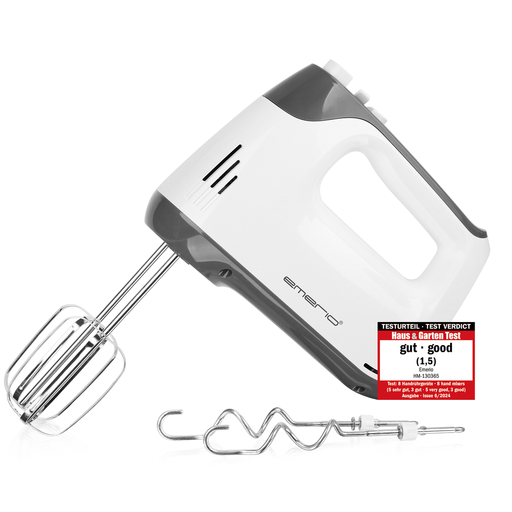 No image available
A hand mixer that you move around the bowl yourself as you mix the batter.
Five speeds and a turbo function. The product description advises against prolonged continuous use; let the motor cool down between uses.
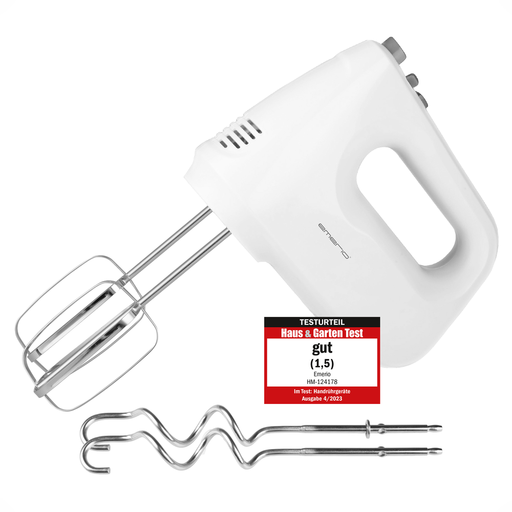 No image available
A hand mixer that lets you guide the mixing motion around the bowl yourself.
Six speeds and a turbo function. The product description advises against prolonged continuous use; let the motor cool down between uses.
 No image available
A model with an automatic mixing bowl, worth comparing if you want to guide the mixer less by hand as it works.
Six speeds, 450 W, beaters and a dough hook.
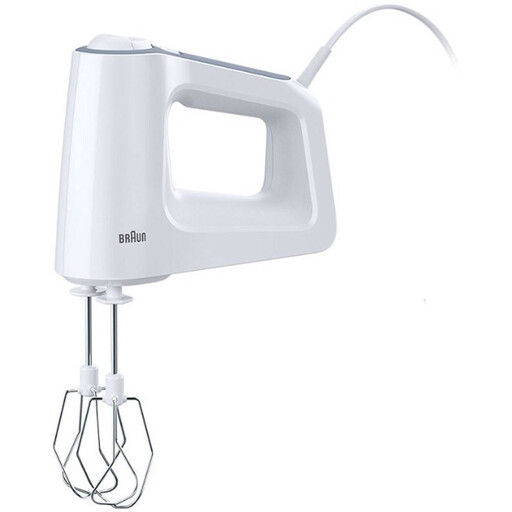 No image available
A hand mixer that you move around the bowl yourself as you mix.
Check the attachments supplied and the cleaning instructions for the exact model.
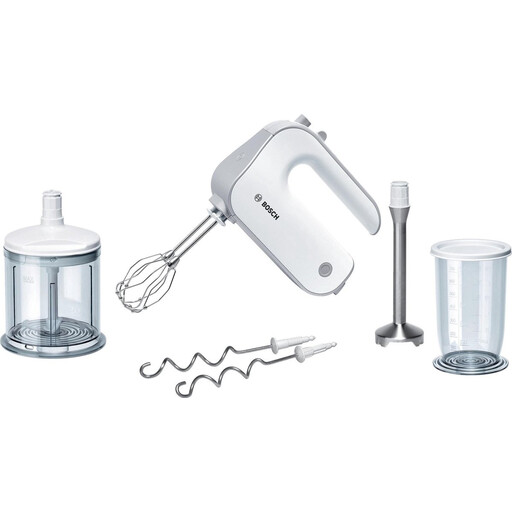 No image available
A hand mixer set worth comparing if you want to do more than just mix batter.
The product name lists 500 W and five speeds. Check which attachments are included with this version.
Compare the beaters supplied for the steps where you need to beat or mix ingredients; dough hooks aren’t automatically the right choice for cake batter. In the recipe consulted, King Arthur Baking describes adding the flour and buttermilk in batches. Follow the instructions for your own recipe and mixer.
The Dutch Nutrition Centre advises against tasting raw cake batter, as raw eggs and flour can contain harmful bacteria. Wash your hands after handling raw batter.
For food that spoils quickly, the Dutch Nutrition Centre recommends keeping your fridge at 4 °C and not leaving food out of the fridge for more than two hours. Whether this advice applies to the finished cake depends on the topping and ingredients used; check the relevant storage advice.
No. According to the Dutch government, there is no fixed statutory guarantee period in the Netherlands. You’re entitled to a product that meets what you can reasonably expect from it; if a product is faulty, contact the seller. A manufacturer’s guarantee may offer additional cover.
If you sell food or provide catering from home, the Netherlands Food and Consumer Product Safety Authority (NVWA) requires it to be prepared, sold and stored safely and hygienically. Food safety rules also apply to sales at markets and events; customers must be able to get allergen information for unpackaged products. These requirements apply to commercial activities and don’t automatically apply to every private buffet.