
Mousse maker
You mainly make light, airy fillings and want to check first whether the hand mixer comes with suitable beaters and several speed settings.


For mousse filling, a hand mixer with suitable beaters and variable speeds is a sensible place to start. Then consider how easy it is to use and how you’ll clean the attachments. Philips, Tefal, Kenwood and Braun list these features for specific models, but their product information is not an independent test of how well they make mousse. A storage system or extra blending foot is mainly useful if you’ll use it for other recipes too. You’ll also need to give separate thought to preparation, chilling and allergen information.
You mainly make light, airy fillings and want to check first whether the hand mixer comes with suitable beaters and several speed settings.
You’re making several portions to sell and want to consider how easy the mixer is to use and clean between batches.
You’ll use the mixer after the school fundraiser too, so you’re weighing up extra accessories and storage space against what you really need.
Start with the beaters and speed settings for your filling, then compare the controls, cleaning instructions and storage options that suit the way you’ll use it.
| What to consider | What to look for when buying | Who is this most important for? |
|---|---|---|
| Beaters and speed | Check that the version you’re considering comes with beaters and variable speed settings. | I mainly want suitable beaters and control over the speed for my filling; around 40% of consumers put whisking control first. |
| Controls for making several batches | Compare the grip, controls and stated weight. Also check whether you can set the mixer down securely between uses. | When making several batches, I want to work comfortably and handle the mixer easily; around 30% of consumers prioritise ease of use when mixing repeatedly. |
| Cleaning the attachments | Check the cleaning instructions for the exact beaters and other attachments included. | If I want to clean attachments between batches, I need to know which cleaning methods are suitable for those parts; around 20% of consumers say easy cleaning is their main buying concern. |
| Storage and future use | Check how the mixer, cord and attachments can be stored together, and whether you’ll use any extra accessories later. | After an occasional school bake sale, I want to be able to put the mixer and its parts away without a fuss; around 10% of consumers give compact storage top priority. |
Wattage and claims about whisking are product specifications or statements made by manufacturers, not comparisons based on independent mousse tests. Higher wattage alone doesn’t prove what results you’ll get with your recipe.
First compare the included beaters and speed settings, and think about how you’ll use the mixer.
Cleaning instructions vary by model and attachment. Philips, for example, says the parts of the HR3740/00 are not dishwasher-safe; Tefal says the beaters and dough hooks for the HT4611 are dishwasher-safe.
Check the instructions for the exact model and attachments you plan to use.
The NVWA points out that food safety rules also apply to occasional sales. Voedingscentrum advises against using raw egg in mousse and recommends keeping perishable food chilled.
Plan food preparation, chilling and allergen information separately from buying your hand mixer.
The HR3740/00 is one model to compare for its beaters and speed settings for whisking.
The Prep’Mix+ HT4611 comes with beaters and dough hooks, as well as a blending foot for anyone who wants to use the mixer for other recipes too.
The QuickMix Go HMP40.000GY is worth a look if you want to store the mixer and attachments together.
The MultiMix 3 HM3200WH is a useful model to compare for its grip and controls when mixing repeatedly.
Bosch offers several hand mixer versions, making it possible to compare standard features and extras across models.
These hand mixers are designed for whisking and mixing mousse filling. Compare the beaters, speed settings and attachments that matter for the way you’ll use yours.
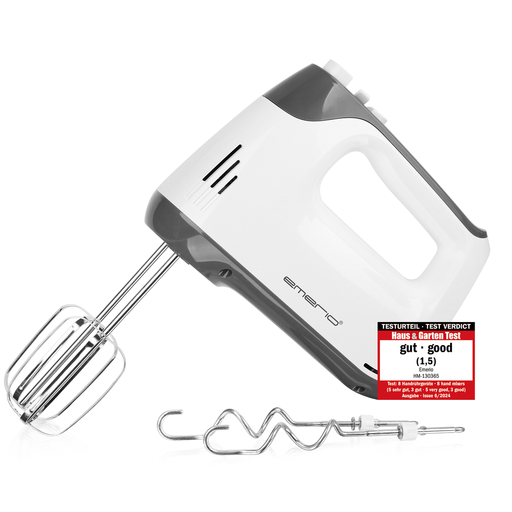 No image available
The listed beaters and speed settings are worth considering if you’re looking for a hand mixer for whisking.
The product information lists beaters, five speeds and a turbo function. It also mentions a slow-start function and a reverse function.
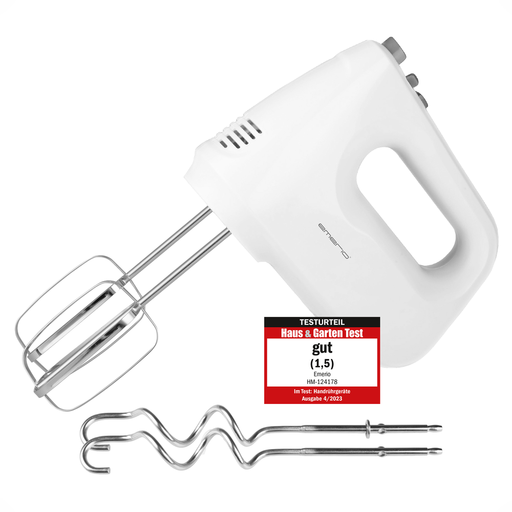 No image available
This model may suit you if you want to compare several speed settings for whisking and mixing.
The product information lists beaters, six speeds and a turbo function. It also mentions an ergonomic design and comfortable grip.
 No image available
The included bowl may be useful if you want to mix your filling in a bowl that comes with the set.
The product name lists 450 W, six speeds, beaters and a dough hook. The product information mentions a powered 3-litre bowl and cone-shaped beaters.
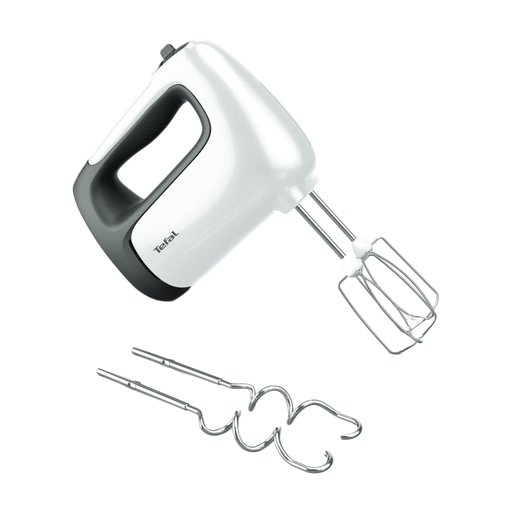 No image available
The beaters and five speeds are useful for whisking; the extra blending foot may come in handy if you’ll use it for other recipes too.
The product name lists 450 W. The product information mentions beaters and dishwasher-safe accessories.
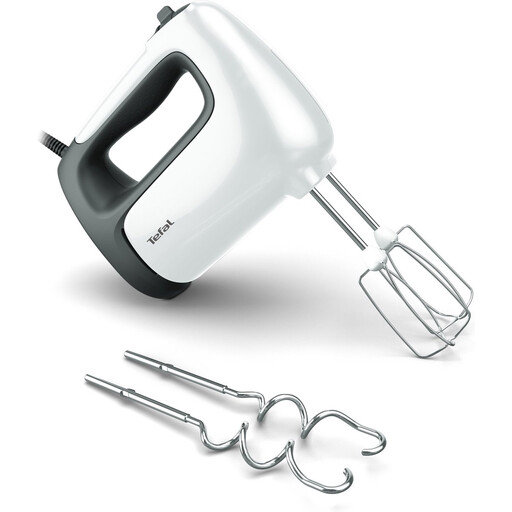 No image available
The beaters and speed settings are worth comparing if you’re planning to use the mixer with light ingredients.
The product name lists 500 W. The product information mentions beaters, five speeds and dishwasher-safe accessories.
No. For mousse filling, first check whether the mixer comes with beaters. Tefal describes the HT4611’s beaters as suitable for light ingredients such as whipped cream, and its dough hooks as being for heavier kneading.
Voedingscentrum advises against using raw egg in dishes that won’t be cooked afterwards, including mousse. This is especially important when young children will be eating it; using a hand mixer does not make raw egg safe.
Plan to keep it chilled during transport and the sale. Voedingscentrum advises not leaving perishable food out of the fridge for more than two hours, and says to throw it away afterwards.
According to the NVWA, food safety rules also apply to private individuals who sell food occasionally. The NVWA says you don’t need to register if you sell food once a year; if you sell food several times a year, it says a food safety plan is required. Also agree with the school who will organise the sale and what information about the products will be available.
Yes. The NVWA requires you to tell buyers about allergens in the food you prepare or sell. For non-prepacked products, you can do this with a card or verbally, for example, as long as it’s clear that customers can ask for the information. Keep a record of the ingredients in each filling.
Your statutory rights apply in addition to any manufacturer’s guarantee. According to ACM ConsuWijzer, the seller must offer a suitable solution if a product breaks too soon under normal use; there isn’t a fixed statutory two-year guarantee period for all products.