
Occasional cake baker
You want to mix cake batter and, above all, have control over the beaters and speed, without treating extra features as an end in themselves.


For a standard lemon cake batter, a hand mixer supplied with beaters and a speed setting you can adjust gradually is a practical starting point. Then consider how much space the mixer and accessories take up, and how easy they are to clean. A mixing bowl or extra attachments are most useful if you’ll use them for other recipes too.
You want to mix cake batter and, above all, have control over the beaters and speed, without treating extra features as an end in themselves.
You want to put the mixer and separate attachments away easily after baking, so you’re weighing up a standalone mixer against a model with a bowl and stand.
You want to do more than mix cake batter, including other mixing or kneading jobs, so you check which attachments come with the model you’ve chosen.
| What to consider | What should you look for? | Who is this important for? |
|---|---|---|
| Control over the batter | Check whether beaters are included and how you adjust the speed. | If you mainly want to mix a batch of cake batter, you’ll want to be able to adjust the speed as you mix. Around 36% of consumers prioritise having good control over the batter. |
| Storage space | Compare the dimensions and allow for the bowl, stand, cord and attachments. | If you have a small cupboard, you’ll want to be able to put the whole set-up away easily after baking. Around 29% of consumers prioritise compact storage. |
| Cleaning | Check how the attachments come off and follow the cleaning instructions for the exact model. | If you want to tidy up quickly after baking, check how easy the parts are to remove and clean. Around 21% of consumers prioritise easy cleaning. |
| Other recipes | Compare the included attachments with the recipes you actually make. | If you want to knead or whisk as well as make cake, extra attachments are only useful if they’re suitable for those jobs. Around 14% of consumers prioritise this versatility. |
A motor power rating is a specification for that particular model, but it doesn’t prove on its own that it mixes cake batter better.
First compare the beaters, speed controls and the set-up you want to use. Treat manufacturers’ performance claims as claims, not as the results of a comparative test.
With a model that has a rotating bowl, you’ll also need space to store the bowl and stand.
Choose this type of set-up if you want to work that way and have room for it. If you prefer to use your own bowl, a standalone mixer may be more practical.
The bowl and stand take up extra storage and cleaning space.
The parts supplied and their cleaning instructions vary by model. Stainless steel doesn’t automatically mean a part is dishwasher-safe.
Before buying, check which attachments are included and consult the cleaning instructions for each part of the exact model.
The ErgoMixx MFQ36400 is a standalone hand mixer with beaters and dough hooks, for anyone who wants to make more than just cake batter.
The MultiMix 3 HM 3100 WH is an example of a hand mixer with variable speeds and attachments for mixing by hand.
The 5KHM9212 may suit you if you want to use the supplied whisk and other attachments as well as mixing cake batter.
The Prep’Mix+ HT464138 is an example of a hand mixer with an automatically rotating bowl, for anyone who bakes more often.
The 5000 Series HR3740/00 is an example of a standalone mixer for cake batter. The HR3741/00 and HR3781/10 are separate models.
This selection includes standalone hand mixers for use with your own bowl, as well as a model with a powered mixing bowl. Compare the supplied beaters, speed settings and set-up with the space you have and the recipes that matter to you.
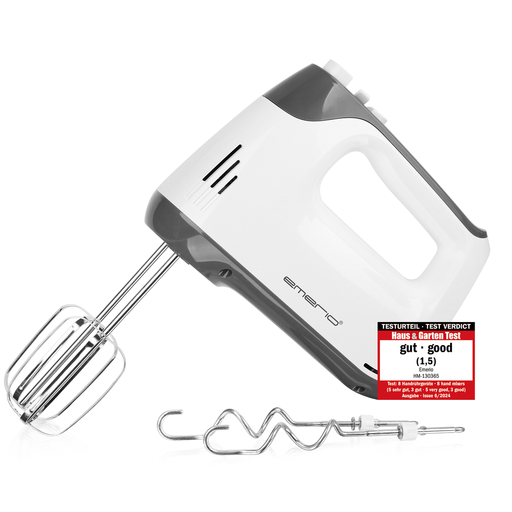 No image available
A standalone mixer for cake batter in your own bowl; the product description lists included beaters and five speeds.
The description also mentions a turbo function and a slow-start function.
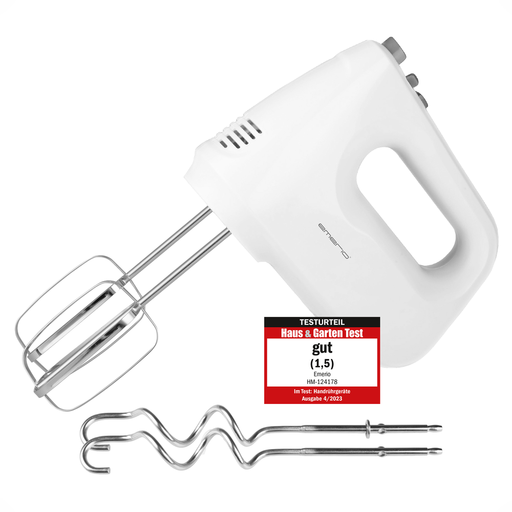 No image available
A standalone mixer for cake batter in your own bowl; the product description lists two beaters and six speeds.
The description also mentions a turbo function, a slow-start function and an eject button.
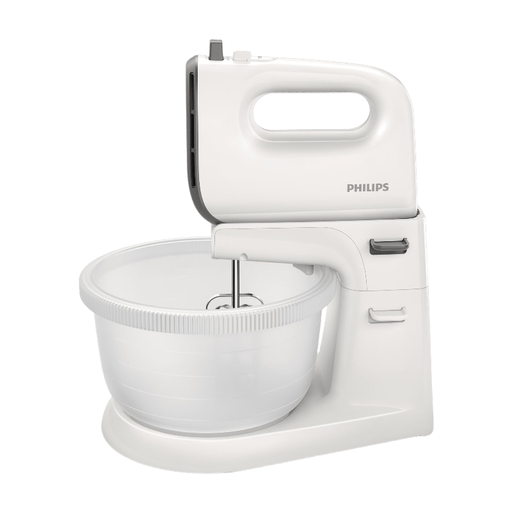 No image available
According to the product description, this model has an automatically powered mixing bowl for anyone who wants this type of set-up.
The description lists six speeds, cone-shaped beaters and a 3-litre bowl. The product title states 450 W.
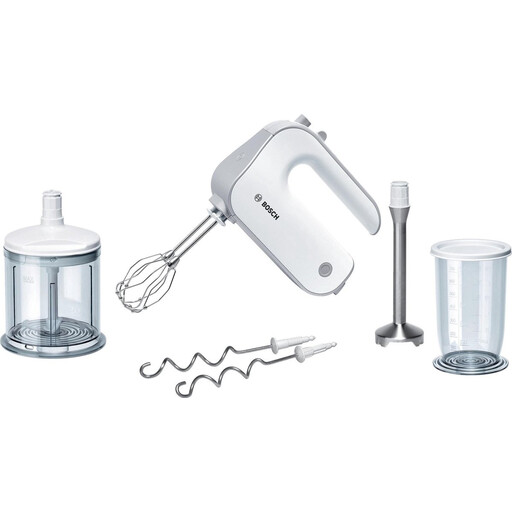 No image available
A hand mixer set for cake batter and other kitchen tasks; the product description lists beaters and five speeds.
The description also mentions a blender attachment, chopper and instant and turbo modes. The title describes it as an ergonomic model.
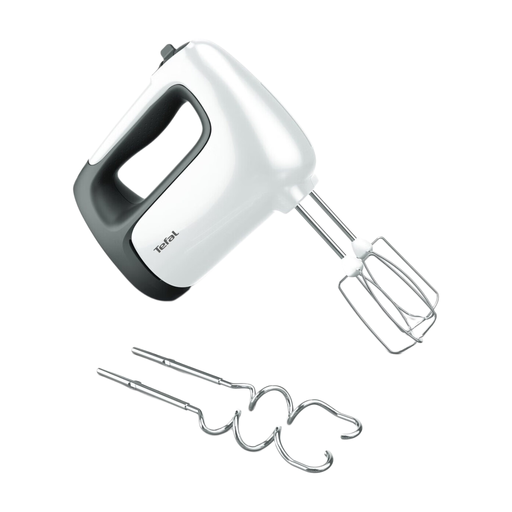 No image available
A standalone hand mixer with beaters for mixing batter in your own bowl.
The product title lists five speeds, 500 W and included dough hooks. These hooks are most useful if you also want to make other types of dough.
Not if you only want to mix cake batter: first check that the hand mixer comes with beaters. Dough hooks are worth considering if you also want to make other types of dough; follow the instructions for the exact model.
Use your model’s speed control and follow your recipe for the order of ingredients and mixing time. Before first use, read the manual for instructions on fitting and removing the attachments; the Bosch MFQ36400, for example, has an eject button.
This varies by model and part, so don’t assume based on the material alone. Before cleaning, check the care instructions for the hand mixer you choose.
The Netherlands Nutrition Centre advises against eating raw cake batter, as raw eggs and flour can contain harmful bacteria. This is particularly important for young children, pregnant women, older people and anyone with a weakened immune system.
Wrap the cake to stop it drying out. The Netherlands Nutrition Centre recommends keeping opened cake in a kitchen cupboard for seven days or in the freezer for three months; after that, its quality may deteriorate. Check the cake for signs of spoilage before packing it, too.