
Vandaag of morgen in huis

Kwaliteit gegarandeerd

Welkomstaanbiedingen ontgrendelen: GRATIS bezorging | Tot 80% korting | Gratis 30 dagen JoyPlus-proefperiode
Download de app
A hand mixer may seem like a simple kitchen appliance, but the differences between models can be significant. A cheap electric hand mixer may be perfectly suitable for whipped cream and cake batter, while a more powerful model is better suited to bread dough or regular use. Marketing terms such as “powerful”, “professional” and “turbo” only become meaningful when you compare them with specific specifications.
A higher wattage does not automatically mean that a hand mixer will be more pleasant to use or deliver more power over a longer period. The drive system, weight, speed control and permitted operating time also play a part. Some brands also state a peak power rating alongside the normal power rating. For example, the Russell Hobbs 24672-56 is described as offering 185 watts of power and 350 watts of peak power. Always make sure you are comparing the same power rating.
A hand mixer with a turbo function can provide extra speed for a short time, but when working with flour, cream and eggs, control is what matters most. Starting at a low speed helps prevent splashes and clouds of flour. A soft-start function is therefore useful, particularly if you bake often.
A hand mixer with accessories sounds versatile, but check whether it comes with beaters, dough hooks, a blending foot or a chopper. A hand mixer with beaters is suitable for whipped cream, egg whites and batter. For bread or pizza dough, you need a hand mixer with dough hooks. A blending foot makes the appliance more versatile, but can also make it heavier and more difficult to store.
For regular baking, a power rating of around 300 to 500 watts is often a sensible choice. This does not guarantee a particular result, but it does provide a useful point of comparison. For heavy dough, check the manual for the maximum operating time and required cooling breaks. Stop if the motor begins to struggle noticeably and allow the appliance to cool down.
Five speeds are sufficient for most household tasks. More settings can be useful if you want to build up gradually from gentle mixing to vigorous whisking. A turbo function is mainly suitable for short bursts of extra power. A soft-start function helps mix ingredients gradually and reduces splashing.
Check the material and how the accessories attach. Stainless-steel beaters and dough hooks are practical for frequent use. Also check whether the parts are dishwasher-safe. The motor unit, plug and cable must not be immersed in water. This is also stated clearly in the safety information for most models.
A heavy hand mixer may feel stable, but it can become tiring if you mix for a long time. A model with cable storage or an accessory holder keeps loose parts together in a kitchen cupboard. An automatic mixing bowl can be useful if you want to keep both hands free, but it takes up more space than a standalone hand mixer.
The selection below is linked to clear usage profiles. The product specifications are based on the product information provided. Brand statements about, for example, reduced effort or faster mixing are presented as brand claims, not as guaranteed results for every user.
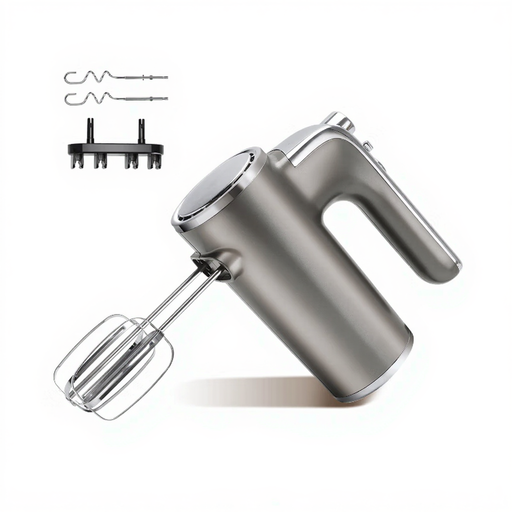
Why it suits this profile: This model provides a straightforward basis for cake batter, eggs and lighter baking recipes, without a large accessory set.
The stated specifications are clear: 400 watts, five speeds, a turbo button and four mixing attachments. However, check the operating time for heavy dough.
400 watts, five speeds, a turbo button and an accessory holder.
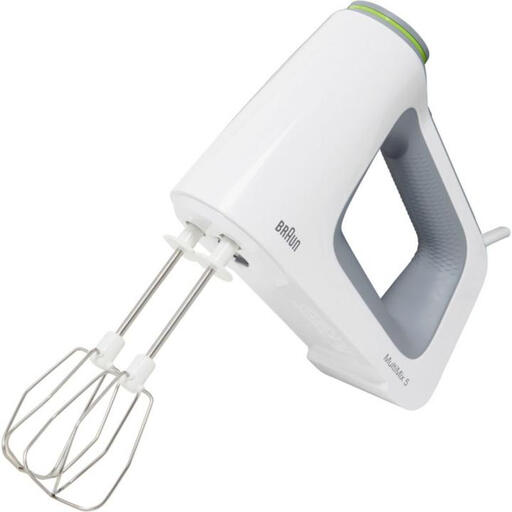
Why it suits this profile: The combination of 750 watts, VarioControl and a soft-grip handle is well suited to home bakers who mix frequently and work with a variety of recipes.
According to the product information, the speed can be adjusted continuously from 1 to 9. This gives you more control than a separate turbo setting alone. Follow the maximum operating time stated in the manual.
750 watts, speed control from 1 to 9 and EasyClick for accessories. According to Braun, SmartMix technology provides up to 40% less effort; this is a brand claim.
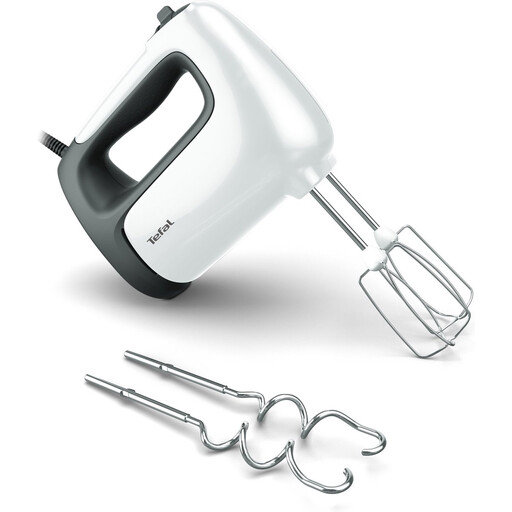
Why it suits this profile: This model is designed for users who want to work with both light ingredients and heavier bread or pizza dough.
The product information lists separate stainless-steel beaters and dough hooks. This means you do not have to use one type of attachment for every recipe.
500 watts, five speeds, turbo function, soft start and dishwasher-safe accessories.
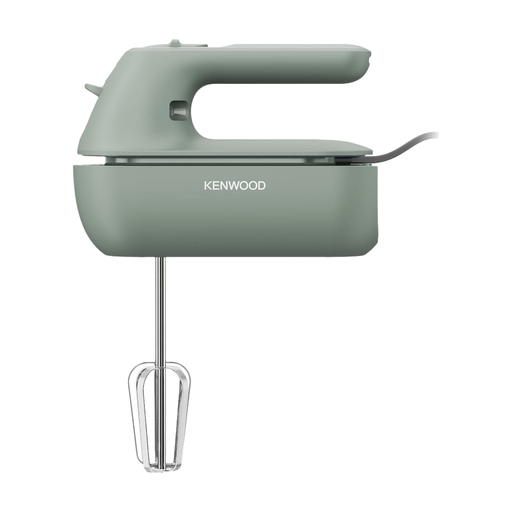
Why it suits this profile: The integrated storage system keeps the beaters, dough hooks, cable and measuring spoon together in a drawer or cupboard.
The slow-start function helps when mixing dry ingredients. According to the specifications, there is no turbo button, making the choice clearer.
350 watts maximum power, five speeds, soft start and integrated accessory storage.
We have put together a complete, up-to-date list of products that fully meet these strict selection criteria and the applicable European safety regulations.
For everyday tasks such as whipping cream, beating eggs and making cake batter, around 300 to 500 watts is a practical comparison range. For heavy dough, wattage is not the only important factor. The dough hooks, drive system and recommended operating time matter too.
No. Some models are supplied with beaters only. Always check the list of accessories. A hand mixer with dough hooks is needed for bread and pizza dough, but always follow the maximum quantity and operating time stated in the manual.
A hand mixer typically uses electricity for only a short time, so energy consumption per baking session is usually limited. The exact consumption depends on the power rating and operating time. A higher-powered model may use more electricity, but it may not need to run for as long for the same task. Look at both the power rating and the practical baking time.
