
Vandaag of morgen in huis

Kwaliteit gegarandeerd

Welkomstaanbiedingen ontgrendelen: GRATIS bezorging | Tot 80% korting | Gratis 30 dagen JoyPlus-proefperiode
Download de app
A good hand mixer is an indispensable tool in the modern kitchen. Whether you're baking a fluffy cake, whipping cream for apple pie, or preparing pizza dough, the right appliance saves you time and effort. But the market is flooded with models making all sorts of promises. Many people fall for marketing traps and end up with a mixer that gathers dust in a cupboard after just a few months.
As a Product Recommendation Officer at Joybuy, I cut through the noise and provide you with practical guidance. In this guide, we'll discuss the most common pitfalls and the specifications that truly matter, so you can make an informed decision.
Before we look at models, it's important to recognise the common mistakes. These often lead to dissatisfaction and unnecessary expense.
Focus on the specifications that determine ease of use and longevity. These are the three most important points to check.
Look beyond just the wattage. A good hand mixer has at least 3 to 5 different speeds. A 'soft start' feature, which builds up speed slowly, prevents flour or liquid from splashing out of the bowl. A turbo function is handy for that final, quick mix. For those who regularly make bread or pizza dough, a mixer with dough hooks and a motor of around 500W that doesn't overheat during prolonged kneading is a must. For lighter tasks, 300-400W is more than sufficient.
The two essential accessories are the beaters (for whipping and mixing) and the dough hooks (for kneading). Check that these are made of stainless steel (SS). This material is durable, doesn't rust, and is usually dishwasher-safe. Some sets, like those from Braun or Bosch, offer an immersion blender attachment. This can be a smart choice if you also want to purée soups or sauces and wish to save space.
A comfortable mixer should ideally weigh no more than 1.2 kg. Pay attention to the design: a handle with a soft, non-slip finish provides a better grip. Brands like Braun and Bosch often focus on weight distribution. For example, Braun's SmartMix technology places the motor vertically above the attachments, directing the weight into the bowl instead of your hand. This significantly reduces effort.
Not everyone needs the same type of mixer. Below are some popular choices, tailored to different needs and budgets.
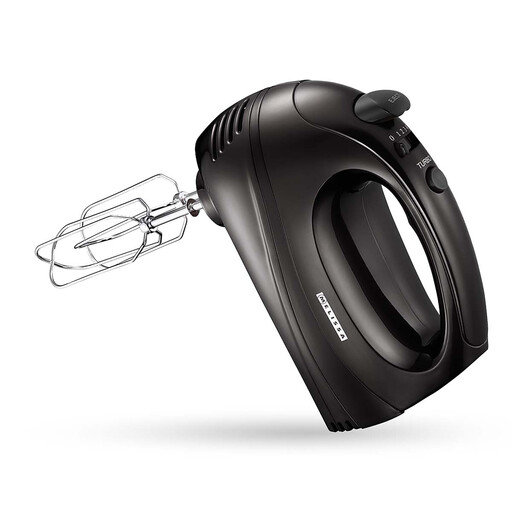
Why This Fits Their Persona: Ideal for those just starting their baking journey who need a reliable, no-frills appliance for cake batter, pancakes, and whipped cream without a major investment.
This model focuses on core functions. It has no superfluous accessories (pitfall #2), and its 300W power is honest and sufficient for its intended tasks, without boasting about unnecessary force (pitfall #1).
Comes with both beaters and dough hooks. The 5 speeds and turbo function offer precise control for various recipes.
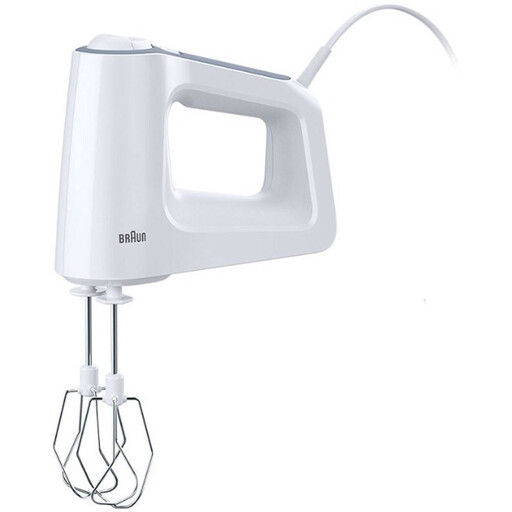
Why This Fits Their Persona: For the cook who both bakes and prepares savoury dishes. This mixer set combines a hand mixer, immersion blender, and chopper, making it a multi-functional tool for soups, sauces, dough, and batter.
The accessories are functional and replace other appliances, avoiding the 'superfluous accessories trap' (pitfall #2). The SmartMix technology addresses the ergonomics trap (pitfall #3) by distributing weight more effectively.
3-in-1 versatility saves space and money. The ComfortClick system makes swapping attachments easy.
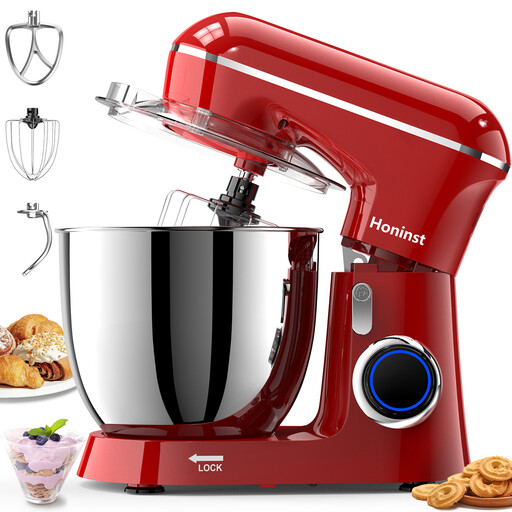
Why This Fits Their Persona: For when a hand mixer is no longer enough. This stand mixer is designed for the heavy lifting, like kneading large batches of bread or pizza dough, without you having to hold the appliance.
This isn't a hand mixer, but the logical next step. It completely avoids the ergonomics trap (pitfall #3) as it's a stable, stationary appliance. Its high power is functional here, not a marketing gimmick (pitfall #1).
Large 6.5 QT (approx. 6.2 litre) stainless steel bowl and a planetary mixing action for thorough kneading. The non-slip suction cups ensure stability, even with heavy dough.
We have compiled a complete, up-to-date list of products that fully meet these strict selection criteria and local safety regulations.
For most daily tasks like mixing batter or whipping cream, a hand mixer with a power rating between 300 and 400 watts is more than sufficient. If you plan to regularly knead heavy dough, look for a model around 500 watts or consider a stand mixer. The quality and efficiency of the motor are often more important than the raw wattage.
Yes, you can, provided you have a mixer with dough hooks and a motor of at least 450-500W. For occasional use and small quantities of dough, this is a perfectly fine solution. However, if you bake bread weekly, a stand mixer is a better investment. It is more stable, more powerful, and takes the strain off your arms and the mixer's motor.
A hand mixer uses two rotating beaters or dough hooks and is designed for mixing, whipping, and kneading in a bowl. It is ideal for baking recipes. An immersion blender has a long wand with a blade at the end and is meant for puréeing and blending ingredients, for example, directly in a pot for soup or in a beaker for smoothies. Some mixer sets combine both functions.
