
Baker making mini doughnut batter
You’re using a doughnut maker and want to mix smooth, lump-free batter. Beaters and a speed you can control matter more here than dough hooks. Jumbo’s recipe recommends using a whisk or mixer for this step.


For pourable doughnut batter, a hand mixer with beaters and adjustable speeds is a suitable choice. If you’re making yeast-raised doughnuts that you can roll out, follow your recipe’s method: the recipe we consulted recommends kneading by hand or using a stand mixer, and dough hooks alone don’t prove that a hand mixer can handle the quantity or kneading time. For a celebration with several batches, the model’s limits and how you work in batches matter too.
You’re using a doughnut maker and want to mix smooth, lump-free batter. Beaters and a speed you can control matter more here than dough hooks. Jumbo’s recipe recommends using a whisk or mixer for this step.
You’re making yeast dough that can be rolled out, and choosing between kneading by hand, using a stand mixer or using a hand mixer whose limits you’ve checked first. Rutger Bakt recommends kneading by hand or using a stand mixer with a dough hook.
You want to make batches one after another without overlooking the appliance’s capacity or a practical way of working. Compare your recipe’s quantities with the specifications for the exact model you’re considering.
Choose this if: your recipe calls for smooth batter for a doughnut maker and you’re mixing the ingredients with a whisk or mixer.
Bear in mind: starting gently helps reduce splashing; dough hooks or higher wattage aren’t an advantage for this mixing task in themselves.
Choose this if: your recipe calls for yeast-raised doughnuts that can be rolled out and you’re following the recommended kneading method.
Bear in mind: Rutger Bakt’s recipe recommends kneading by hand or using a stand mixer with a dough hook; if you’re using a hand mixer, first check the permitted quantity and operating time for the exact model.
| What to consider | What to look for | Who it matters to |
|---|---|---|
| Mixing batter evenly | Check whether beaters are included and how you adjust the speed. Start gently with runny batter. | If you mainly want to make smooth batter for a doughnut maker, beaters and control while mixing are top priorities for you. Around 42% of consumers put batter first. |
| Kneading yeast dough | Compare the flour and dough quantities in your recipe with the specifications for the exact model, and check the manual for its operating time. | If you’re making doughnuts that can be rolled out, you’ll want to know whether your chosen kneading method and equipment are suitable for the recipe. Around 33% of consumers prioritise suitability for yeast dough. |
| Making several batches | Check the limits for each mixing session and whether the weight, grip and storage suit the way you work. Don’t infer the permitted quantity from the wattage. | For a celebration with batches made one after another, a practical way to mix and, if needed, divide the dough into batches is important. Around 25% of consumers put making several batches first. |
Doughnuts made in a doughnut maker and yeast-raised doughnuts that can be rolled out call for different methods. A mixer that’s handy for runny batter isn’t automatically suitable for kneading yeast dough.
Choose your recipe first, then decide whether you need beaters or a suitable way to knead yeast dough.
A model may have separate maximum limits for flour and dough. The specifications for one mixer don’t apply to other models, and dough hooks alone don’t tell you whether it can handle a long kneading session.
Compare the quantity in your recipe with the specifications and operating time in the manual for the exact version you’re considering.
A title doesn’t always make the exact version and included accessories clear.
Check the full model code and see which attachments come with the version you’ve chosen.
The ErgoMixx MFQ36400 is worth considering if you want to compare a model that comes with both beaters and dough hooks. Bosch lists five speeds.
The MultiMix 5 HM 5137 WH is worth considering if you want to compare variable speeds and a model that comes with both beaters and dough hooks.
The QuickMix Go HMP40.000GY is worth considering if you want to store the mixer and accessories together after use.
The Daily Collection HR1560/40 is worth comparing if you’re looking at the beaters and dough hooks supplied.
These models are suitable for mixing pourable doughnut batter. If you want to make yeast dough that can be rolled out, first check the model’s limits and the recommended operating time in the manual.
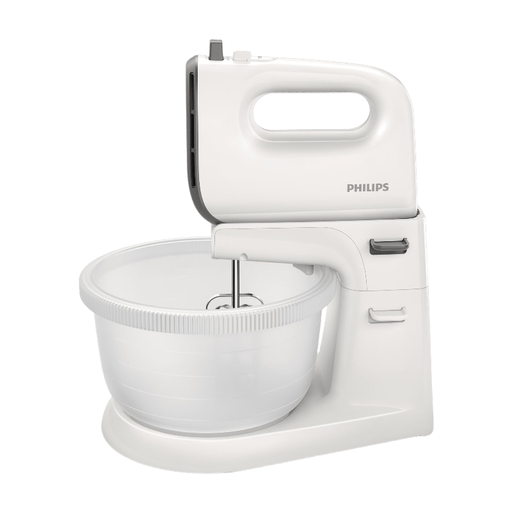 No image available
The beaters and six speeds are suitable for mixing batter; the product description also mentions a 3-litre automatically powered bowl.
450 W; six speeds; beaters and dough hook.
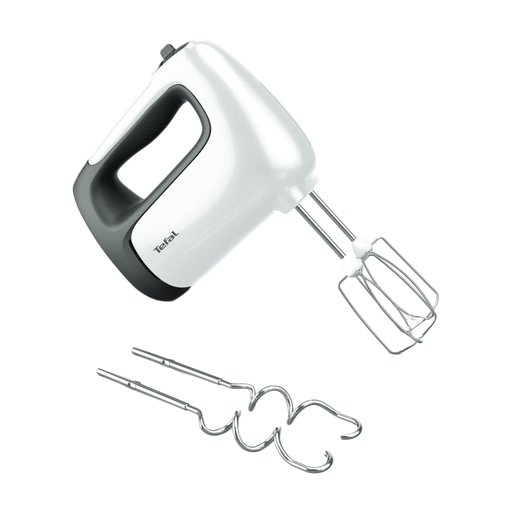 No image available
The supplied beaters and five speeds are suitable for mixing batter.
450 W; five speeds; stainless steel mixer foot.
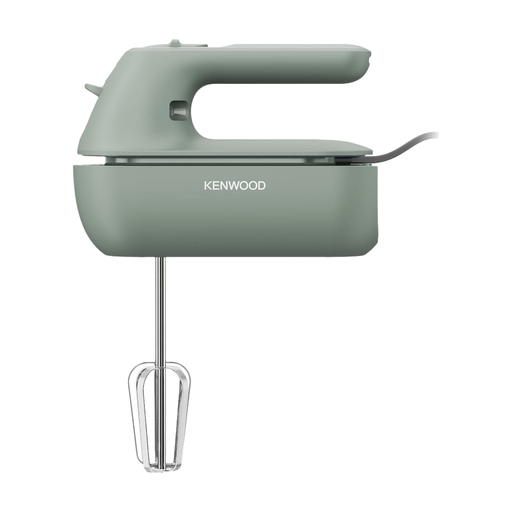 No image available
The beaters and five speeds are suitable for batter; the product description mentions a storage system for accessories and the cord.
400 W; five speeds; beaters and dough hooks.
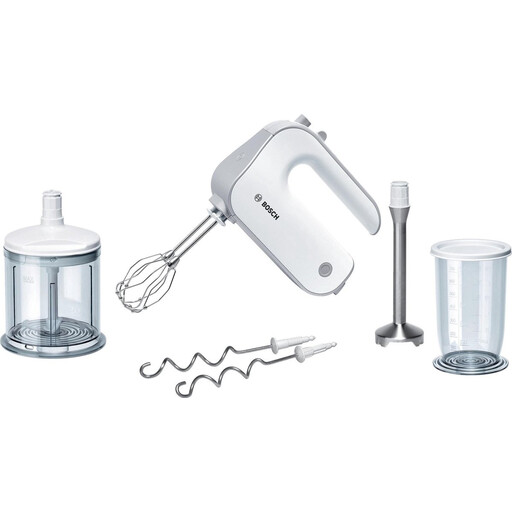 No image available
The beaters and low start speed are suitable for controlled batter mixing.
500 W; five speeds; soft-grip handle.
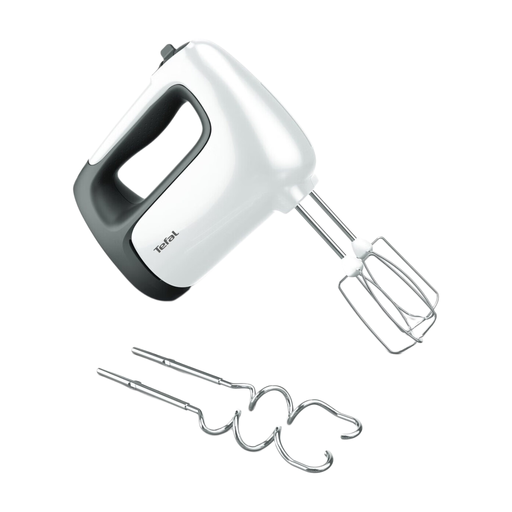 No image available
The supplied beaters, five speeds and soft-start function are useful if you want to adjust the speed gently while mixing.
500 W; five speeds; beaters and dough hooks.
Not always; it depends on your recipe. Jumbo’s recipe for doughnuts made in a doughnut maker calls for smooth batter mixed with a whisk or mixer. For yeast-raised doughnuts that can be rolled out, Rutger Bakt recommends kneading by hand or using a stand mixer with a dough hook. Follow your recipe and, if using a hand mixer, check the supplied attachments and the model’s limits.
It varies by model and recipe. Bosch specifies a maximum of 0.5 kg of flour and 1.0 kg of dough for the MFQ36400; these figures don’t automatically apply to other mixers. Before following a recipe that involves a long kneading time, also check the manual for the operating time.
The Netherlands Nutrition Centre advises against eating raw dough or batter, as raw eggs and flour can contain harmful bacteria. This is particularly relevant for young children, pregnant women, older people and anyone with a weakened immune system. Wash your hands before and after handling raw dough.
According to ACM ConsuWijzer, the retailer is responsible for the statutory guarantee if a product doesn’t perform as you could reasonably expect during normal use. A manufacturer’s guarantee doesn’t replace this right; the statutory guarantee isn’t simply a fixed two-year period.
Yes. The Netherlands Food and Consumer Product Safety Authority says CE marking is compulsory for electrical products. The marking is the manufacturer’s declaration that the product meets the applicable European requirements; check the marking and product information for the specific mixer you’re buying.