
Home bakers making runny batter
You mix batter at home and focus on keeping control while beating, choosing suitable beaters and attachments that are easy to clean afterwards.


For mixing runny doughnut batter at home, a hand mixer with beaters and adjustable speed is up to the task. If you’re making yeast dough, only use dough hooks if they’re suitable for your recipe and the mixer’s instructions. A cordless model is worth considering if you really need to mix somewhere without a socket, but check which accessories are included. You’ll also need to plan how to prepare the food hygienically and keep it chilled during transport.
You mix batter at home and focus on keeping control while beating, choosing suitable beaters and attachments that are easy to clean afterwards.
Your recipe makes kneadable dough that needs to rise. Check that dough hooks are included and that the instructions say you can use them for your recipe.
You want to mix on the spot without mains power, so you’re weighing up a cordless mixer against its included accessories, battery and ease of hygienic use.
First, work out whether your recipe makes runny batter or kneadable yeast dough. Rutger bakt’s yeast doughnut recipe calls for kneading and proving.
| What to consider | What to look for | Who will find this important? |
|---|---|---|
| Runny batter | Check that beaters are included and that the mixer has a low, adjustable speed. | When I make runny batter, I want to control the speed properly and remove the beaters easily. Around 42% of consumers give batter control top priority. |
| Kneading yeast dough | Check that dough hooks are included and what workload and usage time the instructions allow. | For kneadable doughnut dough, I focus on whether the mixer is suitable for kneading, rather than extra features for batter. Around 25% of consumers put this kneading task first. |
| Mixing without a socket | Check whether the battery is included and which attachments come with the exact model. | If there’s no socket where I’m preparing food, I still want to be able to mix there and know in advance which accessories are included. Around 17% of consumers prioritise being able to mix without mains power. |
| Handling and cleaning | Compare the model’s weight and grip, and check how to remove and clean its accessories. | When I’m making batter for other people, I want the mixer to feel comfortable to hold and the parts to be easy to clean properly. Around 16% of consumers make ease of use and cleaning their main concern. |
A yeast dough recipe calls for kneading and proving. A mixer with beaters for batter isn’t necessarily suitable for this.
Choose your recipe first, then decide whether you need beaters or a suitable way to knead dough. If you’re using dough hooks, check the instructions for the permitted workload and usage time.
A cordless mixer is designed for mixing without a socket. The listed contents of the KitchenAid Go 5KHMR762BM box include beaters, but not dough hooks.
Decide where you’ll actually be mixing and check the accessories included with the exact model before choosing a cordless mixer.
Mixing doesn’t change the storage guidance for products containing raw egg or other perishable ingredients.
Prepare food hygienically and cook dishes containing raw egg thoroughly. The Netherlands Nutrition Centre advises carrying chilled products in a cool bag.
You’ll also need to arrange chilled transport for products that must be kept cold.
The CleverMixx MFQ2420B is a hand mixer with beaters and dough hooks for home baking.
According to Tefal, the Prep'Mix HT450B comes with both beaters and dough hooks.
The MultiMix 3 HM 3105 WH is worth considering if controls and grip matter to you, as well as beaters and dough hooks.
The Go 5KHMR762BM is a cordless hand mixer for mixing somewhere without a socket.
These hand mixers are aimed at mixing batter at home; some models also list dough hooks for separate kneading tasks.
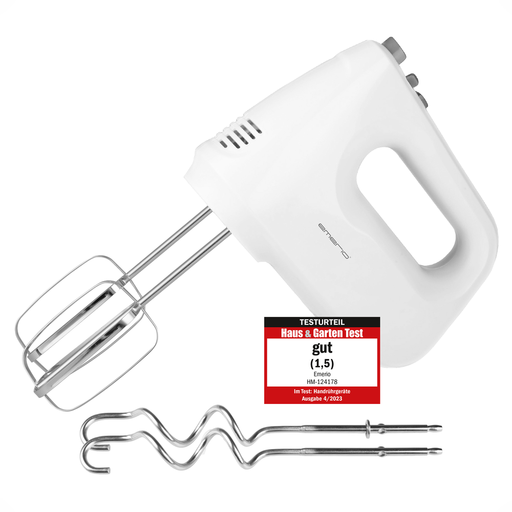 No image available
For runny batter at home: the description lists beaters and six speeds. Dough hooks, soft start, turbo and an eject button are also mentioned. Let the motor cool down between uses if you’re mixing for longer or working with heavier mixtures.
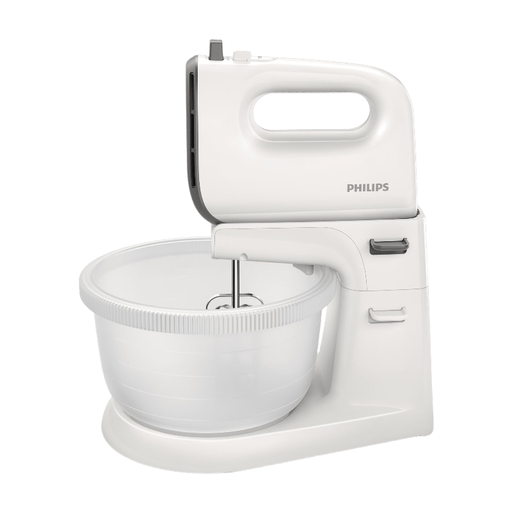 No image available
For mixing batter at home: the product name lists an automatic mixing bowl, six speeds and 450 W. The description mentions beaters, dough hooks, suction cups and a rotating mixing bowl.
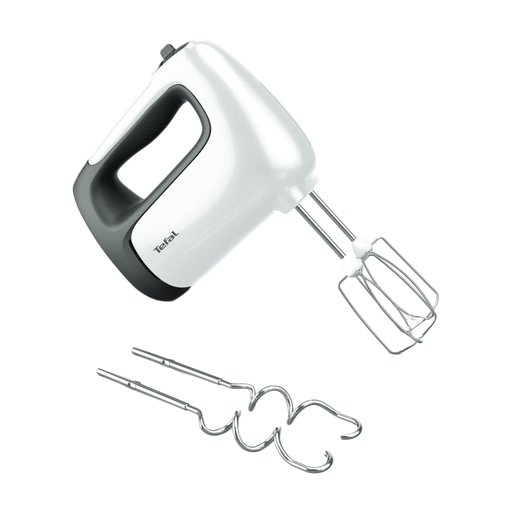 No image available
For mixing or beating batter: the description lists beaters and five speeds. It also mentions dough hooks, a soft-start function, dishwasher-safe accessories and a stainless-steel foot.
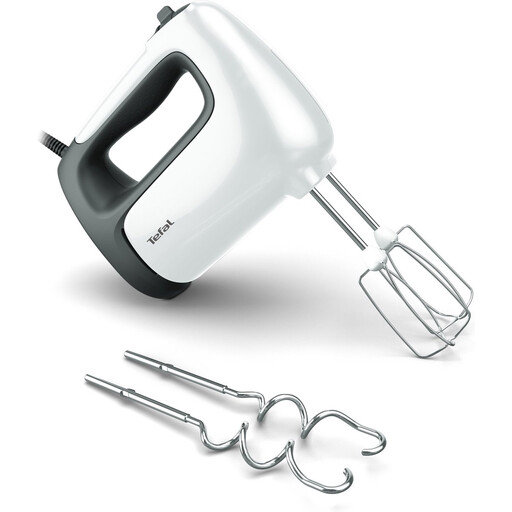 No image available
For mixing batter at home: the description lists beaters and five speeds. It also mentions dough hooks, a soft-start function, turbo and dishwasher-safe accessories.
 No image available
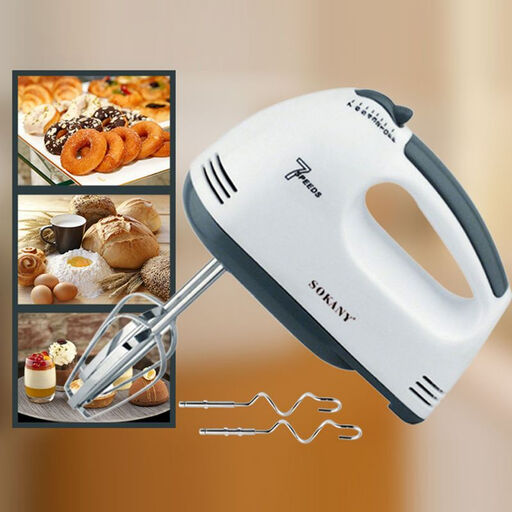
For beating and mixing at home: the product name lists a whisk and seven speeds. The description also mentions two dough hooks and an EU plug.
It depends on the recipe: use beaters for runny batter, and look for dough hooks if you’re making kneadable dough. Rutger bakt’s yeast dough recipe calls for kneading by hand or with a stand mixer. The fact that a hand mixer comes with dough hooks doesn’t prove it can handle the entire kneading task.
Check whether there’s a socket, or whether the cordless mixer’s battery is included and charged. Make sure you can work hygienically and that ingredients requiring refrigeration will be kept cool during transport.
Use clean, well-sealed containers and carry anything that needs to stay chilled in a cool bag. The Netherlands Nutrition Centre advises throwing away products that normally belong in the fridge if they’ve been kept unrefrigerated for more than two hours. According to the Netherlands Nutrition Centre, dishes containing raw egg must be cooked thoroughly and kept in the fridge.
If you’ve used it normally in the Netherlands, you can contact the retailer if the product doesn’t meet what you could reasonably expect. ACM ConsuWijzer lists repair, replacement or a refund as possible solutions; these are separate from any manufacturer’s warranty.
Electrical appliances placed on the market in the Netherlands must comply with the applicable European rules, as explained by the Dutch government. The EU Low Voltage rules apply to equipment with a rated voltage of 50 to 1,000 V AC or 75 to 1,500 V DC. Check which rules apply based on the exact model and its power specifications.