
Batter maker for the doughnut maker
You’re making pourable batter for doughnuts in a doughnut maker and want to mix it with beaters in a separate bowl.


For pourable batter, a standalone hand mixer with beaters and a manageable low speed is usually all you need. For yeast dough, compare the dough hooks and permitted dough capacity of the exact model with your recipe. A powered bowl can be handy for making batches repeatedly, but it needs extra storage space and doesn’t, on its own, tell you anything about the mixer’s kneading capacity.
You’re making pourable batter for doughnuts in a doughnut maker and want to mix it with beaters in a separate bowl.
Your recipe calls for kneading and proving. Rutger Bakt describes kneading by hand or with a stand mixer, so check that the dough hooks and dough limit of your exact hand mixer model are suitable for the recipe.
You want to mix batter repeatedly without having to hold the mixer all the time, and have space for a bowl and stand. Philips lists an automatically rotating 3.0-litre bowl for the HR3745/00.
First decide whether you’re making pourable batter or kneadable yeast dough. Then choose between holding a standalone mixer or using one with a powered bowl.
| What to consider | What should you check? | Who is this most relevant to? |
|---|---|---|
| Pourable batter | Check that beaters are included and that you can start on a low setting. | If you’re mixing batter for a doughnut maker in a separate bowl, you’ll want to be able to start gently. Around 40% of consumers prioritise mixing batter. |
| Kneading yeast dough | Compare the amount of flour and dough in your recipe with the limits and instructions for the exact model. Bosch lists a maximum of 0.5 kg of flour and 1.0 kg of dough for the MFQ36400. | If you’re following a recipe for traditional yeast doughnuts, you’ll want to know whether the mixer can handle the kneading. Around 30% of consumers prioritise suitability for yeast dough. |
| Making multiple batches | Check whether a powered bowl is included, how much space the set-up requires and what load the instructions allow. | If you’re making several batches, a rotating bowl can mean you don’t have to hold the mixer for as long. Around 20% of consumers prioritise mixing repeatedly. |
| Storage and cleaning | Check what’s included in the box and whether the supplied attachments can go in the dishwasher, according to the instructions. | If you have limited cupboard space or want fewer parts to wash after baking, a simple standalone mixer may be more appealing. Around 10% of consumers prioritise easy storage and cleaning. |
Pourable batter for a doughnut maker is different from the kneadable dough used for traditional yeast doughnuts. A mixer that can mix batter isn’t necessarily suitable for kneading an entire recipe.
Choose your recipe first, then check the attachments, permitted dough quantity and instructions for the exact model.
Bowl capacity and maximum dough load answer different questions. Philips lists a 3.0-litre bowl for the HR3745/00, while Bosch gives separate maximum amounts for flour and dough for the MFQ36400.
Compare the quantity in your recipe with the dough limit and instructions for your chosen model. You may need to make smaller batches or use a different kneading method.
The supplied attachments and cleaning instructions vary by model. Tomado says the attachments for the THM3001B are dishwasher-safe; Philips says the parts for the HR3740/00 are not dishwasher-safe.
Before buying, check the full model number, what’s included in the box and the cleaning instructions. Parts that aren’t dishwasher-safe need to be washed by hand.
The THM3001B is a standalone hand mixer with beaters and dough hooks, for anyone who doesn’t need a stand.
The ErgoMixx MFQ36400 comes with beaters and dough hooks. The MFQ36490 is a separate version with a powered bowl and extra accessories.
According to Philips, the HR3745/00 from the 5000 Series has an automatically rotating bowl; the HR3740/00 is a different model.
The MultiMix 3 HM3100WH is a standalone hand mixer with beaters and dough hooks.
The Princess 222206 comes with beaters, dough hooks and a storage box.
This selection includes standalone mixers for batter and a Philips hand mixer with a powered bowl for making multiple batches.
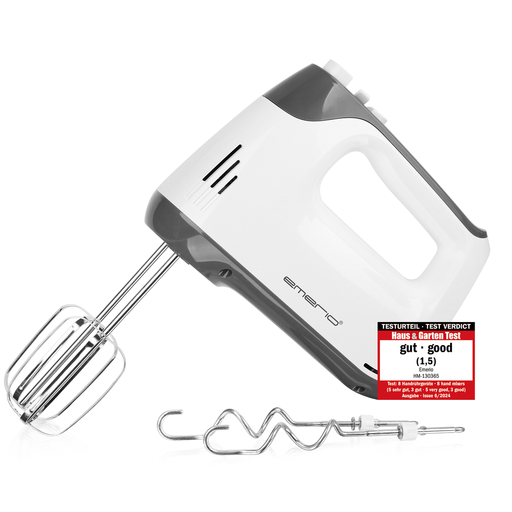 No image available
The included beaters make this a good option for mixing pourable batter in a separate bowl.
The product name lists five speeds and a turbo function. The product information recommends letting the motor cool down periodically during extended use.
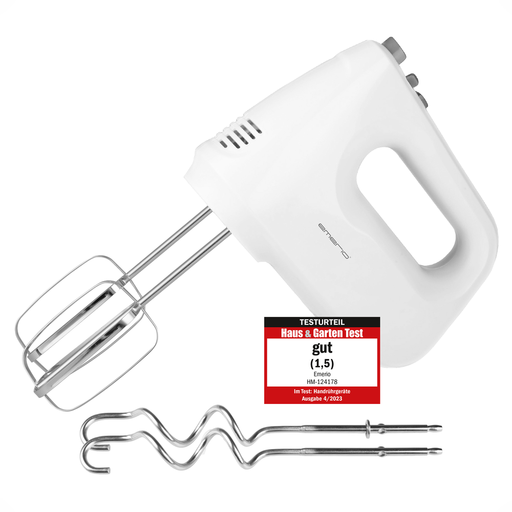 No image available
The included beaters are suitable for mixing pourable batter in a separate bowl.
The product name lists six speeds and a turbo function. The product information recommends letting the motor cool down periodically during extended use.
 No image available
The powered bowl can be handy when you’re mixing batter repeatedly and don’t want to hold the mixer all the time.
Philips lists a 3.0-litre bowl, six speeds and 450 W of power. Bowl capacity isn’t the same as dough capacity, so follow the model instructions.
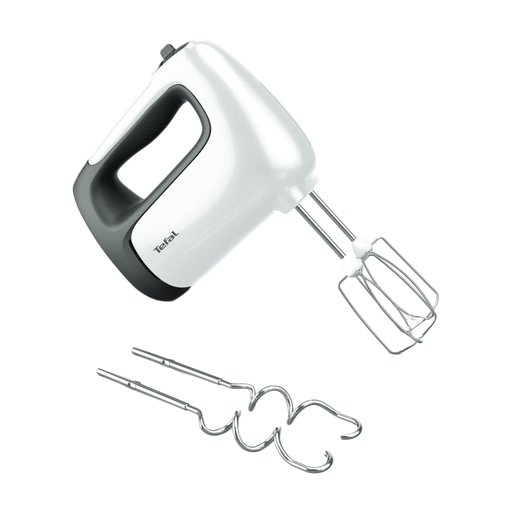 No image available
A standalone hand mixer for mixing batter in a separate bowl. Check that the supplied attachments are suitable for your recipe.
The product name lists a power rating of 450 W, five speeds and a stainless steel foot.
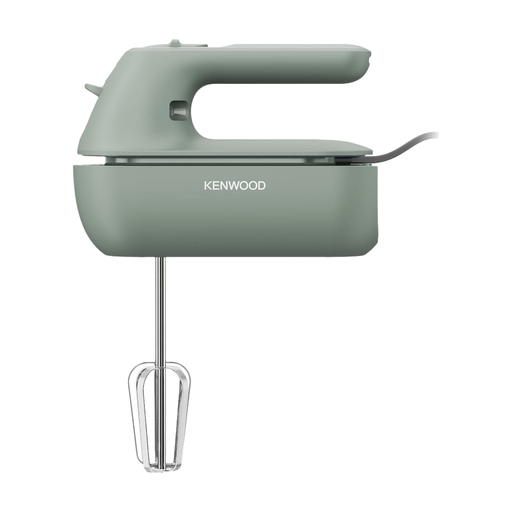 No image available
The product name lists beaters for batter and dough hooks. For yeast dough, check that the quantity and duration of use are within the model instructions.
The product name lists a power rating of 400 W, five speeds and the colour lime green.
Use beaters for pourable batter. Follow the recipe and start on a low speed if you want to mix the ingredients gently.
That depends on the exact model, its dough hooks, the amount of dough and the instructions. For its yeast doughnut recipe, Rutger Bakt recommends kneading by hand or with a stand mixer, so don’t assume every hand mixer can handle the job.
It’s best not to taste raw batter or dough: the Voedingscentrum warns that raw egg and flour can contain pathogens. Follow the cleaning instructions for the exact model; whether its attachments are dishwasher-safe varies between mixers.
No. According to the Dutch government, there’s no fixed legal guarantee period. You can expect a product to be of satisfactory quality for as long as you could reasonably expect it to last. Any manufacturer’s guarantee is in addition to this, and if there’s a problem, the retailer is your point of contact.
EU rules on CE marking apply to electrical equipment within the relevant voltage range. According to the European Union, the manufacturer uses the marking to indicate that the product meets the applicable product requirements; it isn’t a separate certificate issued by a central EU body. Also check the stated voltage and the instructions for use.