
Doughnut-maker batter baker
You want to mix smooth, lump-free batter before lunch. A recipe from Jumbo recommends mixing with a whisk or mixer; Laura’s Bakery describes beaters as a commonly used attachment.


For runny batter made in a doughnut maker, beaters and low-speed control are worth considering; for a small batch, a standard whisk may be enough. Traditional doughnuts are made with yeasted dough: follow your recipe and check that the kneading method and quantity are suitable for your appliance. So first decide which recipe you’re using and how many batches you’re making, then choose the attachments you actually need.
You want to mix smooth, lump-free batter before lunch. A recipe from Jumbo recommends mixing with a whisk or mixer; Laura’s Bakery describes beaters as a commonly used attachment.
You’re making batches of batter one after another for a group, so you’ll want to consider how the mixer feels in your hand, the bowl you’re working in and how the detachable attachments are cleaned.
You want to know whether dough hooks are suitable for the dough in your recipe. Rutger Bakt recommends kneading traditional doughnut dough by hand or in a stand mixer with a dough hook.
Suitable for: recipes where you mix ingredients into a smooth batter, such as batter for a doughnut maker.
Consider: the recipe also suggests using a standard whisk for a small batch.
Suitable for: dough that the recipe and the limits of the specific model allow you to make with a hand mixer.
Consider: having dough hooks doesn’t mean a hand mixer is suitable for every yeasted dough or kneading time.
Suitable for: a small quantity of batter you want to mix by hand, or traditional yeasted dough that you’ll make in a stand mixer.
Consider: mixing by hand takes effort; with yeasted dough, proving time is also part of the preparation.
Choose your method first, then your mixer: use beaters for runny batter and dough hooks only when the recipe and model specifications allow.
| What to consider | What to look for | Who should pay extra attention? |
|---|---|---|
| Smooth batter | Check whether beaters are included and how to select the lowest speed. | If I want to make smooth, lump-free batter, I’ll focus on using the right attachment and starting slowly. Around 36% of consumers prioritise smooth batter. |
| Multiple batches | Check the grip, controls, cord length and weight of the specific model. | If I’m using several bowls or making multiple batches, I want the mixer to feel comfortable to hold and easy to use. For around 29% of consumers, ease of handling is the priority. |
| Firmer yeasted dough | Read the recipe and check the permitted dough quantity and whether dough hooks can be used with the specific model. | If my recipe calls for traditional yeasted dough, I want to know whether a hand mixer is suitable or whether I should knead by hand or use a stand mixer. Around 21% of consumers prioritise suitability for this task. |
| Cleaning and aftercare | Check the cleaning instructions for the attachments and the terms for getting help if something goes wrong. | After baking, I want to know how to clean the accessories and where to turn if something goes wrong. Around 14% of consumers prioritise cleaning and aftercare. |
The recipes from Jumbo and Rutger Bakt show why choosing an attachment starts with the difference between runny doughnut-maker batter and traditional yeasted dough. For example, Bosch Nederland specifies a maximum of 0.6 kg of flour and 1.0 kg of dough for the MFQ22100; these limits don’t automatically apply to other models.
Batter for a doughnut maker is mixed until smooth, while traditional doughnut dough is yeasted dough that needs to be kneaded and left to rise. This means that the attachment you need and the best method can differ.
Choose your recipe first. Then decide whether you need beaters or want to knead the dough by hand or in a stand mixer.
The Tefal HT4621 product title states 450 W, while Tefal and the description on the same Joybuy product page state 500 W.
Before comparing models by power, check the full model number, the included accessories and the specifications for the exact version.
The Dutch government explains that statutory protection for faulty products applies alongside any manufacturer’s guarantee. If there’s a problem, the retailer is your point of contact.
First check what rights apply to the product, then read the terms of any additional guarantee.
The CleverMixx MFQ22100 comes with beaters and dough hooks; Bosch Nederland lists four speed settings and a turbo function.
According to Braun, the MultiMix 3 HM 3105 WH comes with beaters, dough hooks and a blending wand.
Tefal lists beaters, dough hooks and a blending wand for the Prep’Mix+ HT4621.
According to Kenwood, the QuickMix HMP30.A0SI has stainless steel beaters and kneaders, five speeds and turbo.
The HR3781/00R1 described here is explicitly a refurbished hand mixer with beaters and dough hooks.
These hand mixers are options for runny batter; check which accessories and functions suit your recipe and batch size for each model.
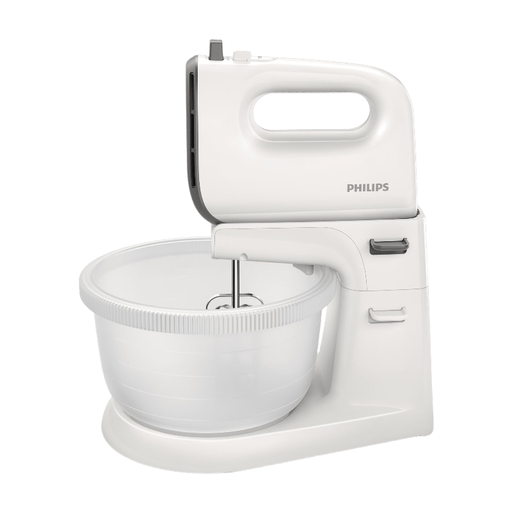 No image available
The beaters and six speed settings are well suited to mixing runny batter.
450 W; 3-litre mixing bowl; dough hooks.
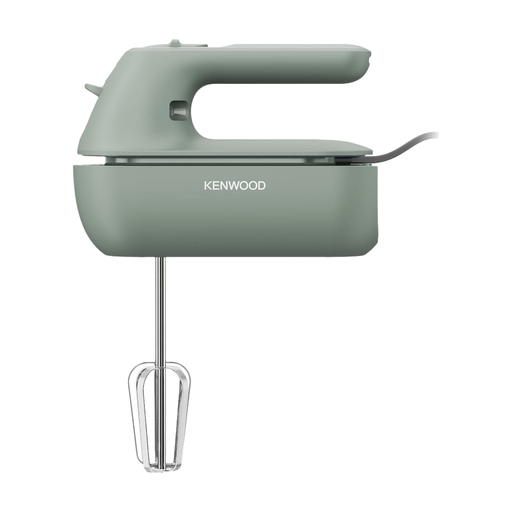 No image available
The beaters and five speed settings are suited to mixing batter; the product information also lists a slow-start function.
400 W; dough hooks; lime green. Do not immerse the motor unit, cord or plug in liquid.
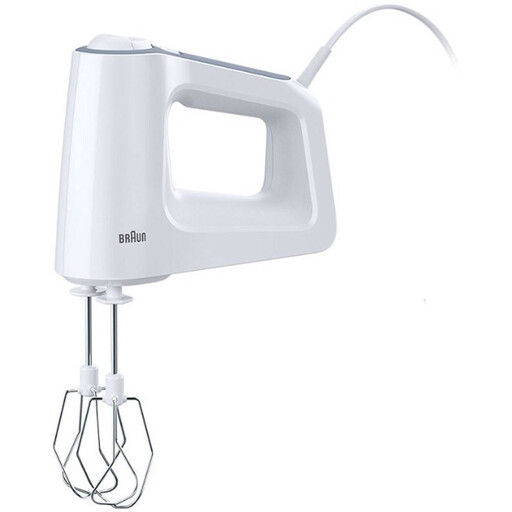 No image available
The five speed settings and instruction to start on setting 1 are useful when mixing batter.
220 V; 500 W; beaters, dough hooks, blending wand and chopper. The accessories are dishwasher-safe; do not immerse the motor unit.
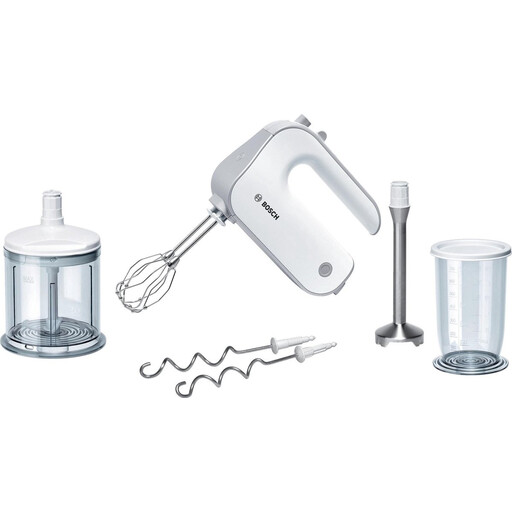 No image available
The product information lists beaters and recommends using the lowest speed to prevent splashing.
500 W; five speeds and turbo; blending wand and chopper. The stainless steel accessories are dishwasher-safe; do not immerse the motor unit or the chopper lid.
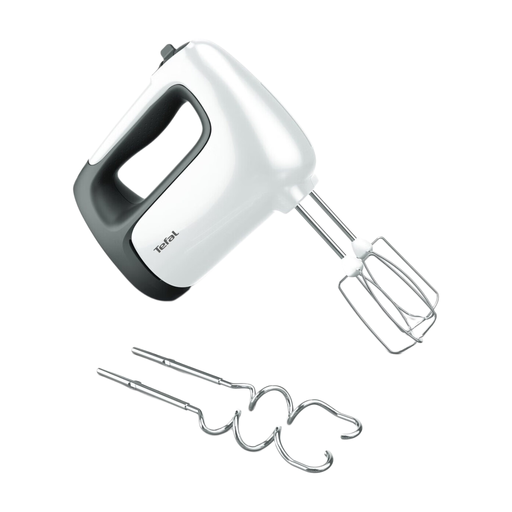 No image available
The beaters and five speed settings are suited to mixing runny batter.
500 W; dough hooks; blending wand and turbo. The product information lists dishwasher-safe accessories.
No, a whisk may be enough for a small batch. The Jumbo recipe consulted suggests using a whisk or mixer to blend the ingredients into a smooth batter; a hand mixer can be useful if you’re mixing batches repeatedly.
Beaters are designed for mixing, not as a substitute for the kneading method specified in your recipe. Rutger Bakt recommends kneading traditional doughnut dough by hand or in a stand mixer with a dough hook; if you’re using a hand mixer, check the limits of the specific model too.
Follow the cleaning instructions for the specific model and its detachable attachments. Bosch says that parts of the MFQ22100 are dishwasher-safe; that doesn’t mean you can put the motor unit in water.
The Netherlands Nutrition Centre advises against tasting raw batter or dough, as raw eggs and flour can contain harmful bacteria. This is particularly important if young children, pregnant women, older people or anyone with a weakened immune system will be eating it.
If the product is faulty, contact the retailer. According to the Dutch government, consumers in the Netherlands have the right to a product that works properly, and there is no fixed statutory guarantee period of two years; any manufacturer’s guarantee is in addition to this.