
Baking cheesecake for a group
You want to make a smooth filling and control the mixing speed. Check that the mixer has beaters and speed settings suited to the way you work, and that the cord reaches your workspace.


For cheesecake filling, a hand mixer with beaters included and a useful low speed is a sensible place to start. Also consider the cord length, weight and cleaning instructions. Extra attachments are worth paying for mainly if you’ll use them for other recipes too. Check the CE marking on the exact version before you buy.
You want to make a smooth filling and control the mixing speed. Check that the mixer has beaters and speed settings suited to the way you work, and that the cord reaches your workspace.
You mainly want to pay for the mixing function you need, rather than automatically opting for extra attachments. Compare what’s included in the box with what you’ll actually use after the potluck.
You share a small kitchen and want to store the mixer, cord and attachments easily. Check whether the storage solution will fit in the space you have available.
Start with the beaters and a speed setting that lets you stay in control as you mix. Then compare the cord length, storage and cleaning requirements with your kitchen and how you plan to use the mixer.
| What to consider | What should you check? | Who is this important for? |
|---|---|---|
| Control while mixing | Check whether beaters are included, which speeds are available and whether the cord is long enough for your mixing area. | If I’m making filling for a group, I want to control the speed and reach the bowl comfortably. Around 37% of consumers prioritise control while mixing for this task. |
| Cost versus extra features | Check which attachments are actually included in the box and whether you’ll use them after the potluck. | For a one-off baking session, I don’t want to choose features I won’t use afterwards. Around 27% of consumers prioritise the cost of the task. |
| Storage space | Compare the dimensions of the model with the cupboard or drawer space available, and check how the attachments are stored. | In a small or shared kitchen, I want to be able to put the mixer and attachments away without taking up too much space. Around 18% of consumers give storage space top priority. |
| Handling and cleaning | Check the stated weight and cleaning instructions for the exact model; don’t assume the parts are dishwasher-safe. | If I’m holding the mixer and cleaning it afterwards, I want its weight and cleaning requirements to suit the way I use it. Around 18% of consumers prioritise handling and cleaning. |
The stated power rating alone doesn’t tell you what kind of mixing result you’ll get with cheesecake filling.
First, choose suitable beaters and controls. Compare wattages as model specifications only, not as the result of a mixing test.
Cleaning instructions vary by model. For example, Philips states that the parts for the HR3740/00 are not dishwasher-safe.
Read the instructions for the full model number before putting attachments in the dishwasher.
An extra blending foot or other attachments only add value for cheesecake filling if you’ll use them for other recipes too.
Before comparing models, decide which features you’ll actually want to use after the potluck.
Philips describes the HR3740/00 from the 5000 Series as a hand mixer with beaters and five speeds.
Bosch describes the CleverMixx MFQ22100 as a hand mixer with beaters, dough hooks, four speeds and a turbo setting.
Kenwood describes the QuickMix Go HMP40.000GY as having five speeds, beaters, dough hooks and a clip-on storage solution.
Braun describes the MultiMix 3 HM3200WH as having five variable speeds, turbo and SmoothStart.
Tefal describes the Prep'Mix+ HT4611 as coming with beaters, dough hooks and a blending foot.
These product picks are suited to mixing cheesecake filling and offer different combinations of beaters, extra features and storage options. Check the CE marking on the exact model before you buy.
 Image unavailable
The product name mentions a whisk; check whether this hand blender set suits the way you mix cheesecake filling.
The product description lists six speeds, soft start and a 1,4 m cord. Check the CE marking on the exact model.
 Image unavailable
The included motorised 3-litre mixing bowl may be useful if you’re mixing for a group.
The product name lists beaters, a dough hook, six speeds and 450 W. Check the CE marking on the exact model.
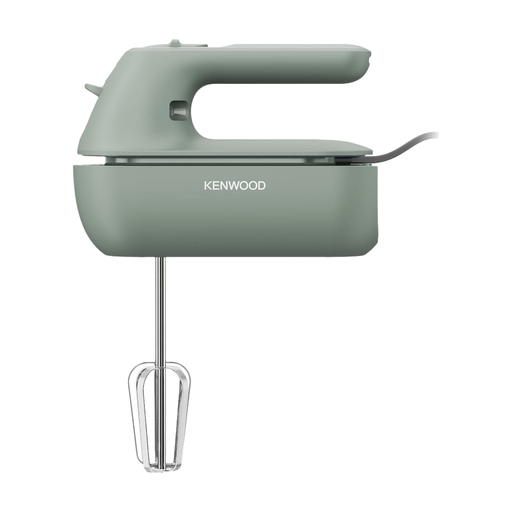 Image unavailable
The product description mentions a storage system for the accessories and cord, which may suit a kitchen with limited cupboard space.
The product name lists 400 W, five speeds, beaters and dough hooks. Check the CE marking on the exact model.
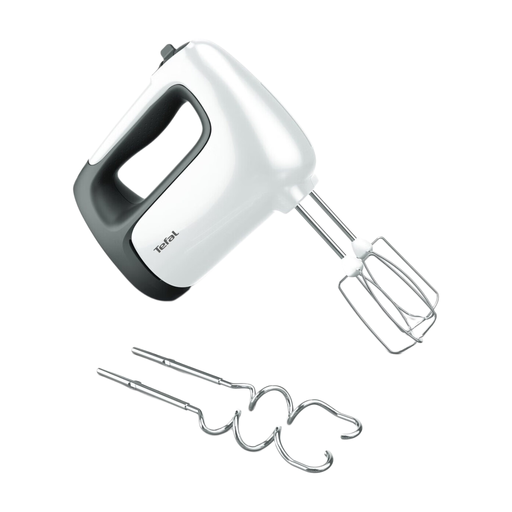 Image unavailable
The included beaters are suited to mixing; the blending foot is mainly useful if you want to make other recipes too.
The product name lists five speeds, 500 W, beaters and dough hooks. Check the CE marking on the exact model.
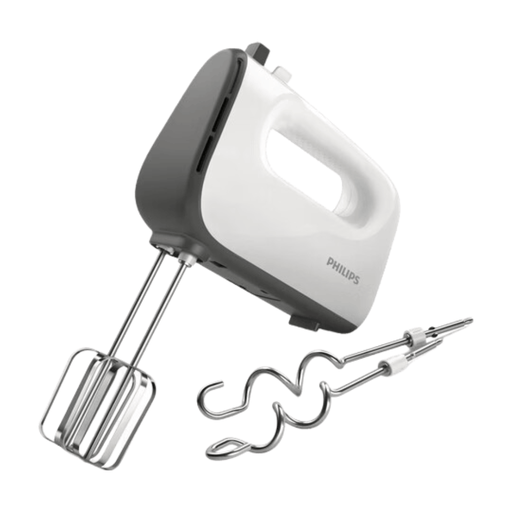 Image unavailable
The beaters and five speeds are suited to a mixing task where you want to be able to choose the speed.
Philips lists a power rating of 450 W and a 1,2 m cord for this model. Check the CE marking on the exact model.
Start with beaters: Philips and Tefal describe these as attachments for mixing and beating, while Tefal lists dough hooks for kneading. Albert Heijn Allerhande’s basic cheesecake recipe calls for a smooth filling, but uses a food processor and doesn’t compare hand mixer attachments.
For the Philips HR3740/00, follow the model-specific instructions and unplug it before removing the attachments. Then check the cleaning instructions for your full model number: Philips states that the HR3740/00 has no dishwasher-safe parts, while Tefal lists dishwasher-safe beaters and dough hooks for the HT4611.
Keep cheesecake chilled and, according to the Voedingscentrum, refrigerate leftovers within two hours of preparation. The Voedingscentrum recommends keeping opened cheesecake refrigerated for one day; also bear in mind how long it will be out of the fridge during transport and serving.
In the Netherlands, a product must do what you could reasonably expect when used normally. If a faulty product breaks too soon, the seller must offer an appropriate free solution, such as a repair or replacement, according to ACM ConsuWijzer; a manufacturer’s warranty does not replace this right. For online purchases, you’re usually also entitled to a 14-day cooling-off period.
CE marking is compulsory when selling electrical equipment covered by the Dutch Electrical Equipment Decree. For the Low Voltage Directive, the Netherlands Food and Consumer Product Safety Authority specifies a nominal AC voltage of 50 V to 1000 V. According to the Netherlands Enterprise Agency, the manufacturer declares through CE marking that the product meets the relevant EU legal requirements; check the marking on the exact model.