
Vandaag of morgen in huis

Kwaliteit gegarandeerd

Welkomstaanbiedingen ontgrendelen: GRATIS bezorging | Tot 80% korting | Gratis 30 dagen JoyPlus-proefperiode
Download de app
A hand mixer may seem like a simple purchase, but models can differ considerably. Will you only use it for whipping cream and making cake batter, or do you also want to knead bread dough, purée soup and chop ingredients? A budget electric hand mixer may be perfectly suitable for light tasks, while a more versatile model needs more storage space, accessories and maintenance.
Look out for these three common pitfalls:
For whipping cream, whisking egg whites and making cake batter, a hand mixer with beaters and four to six speed settings is usually enough. If you regularly make bread or pizza dough, it’s better to choose a hand mixer with dough hooks. Check that the hooks are included and whether the manufacturer sets any limits for heavy dough.
Would you also like to make sauces, soup or smoothies? A hand mixer with a blending shaft or a hand blender with extra beaters is more practical. Look at the difference in design:
A stand mixer with a fixed bowl is a different category. It’s a good choice if you often want to leave the mixer running unattended, but it usually takes up more space than a compact hand mixer.
The range includes hand mixers and hand blenders with power ratings from around 180 W to 800 W. A higher figure can be useful for thick mixtures, but check the recommended running time too. The motor can overheat if you knead heavy dough for too long.
For everyday baking, 300 to 500 W is often a useful starting point. For more demanding tasks, consider a more powerful model, but always start on a low setting. A turbo function is designed for short bursts of extra power, not continuous use without a time limit.
A model with five or six settings gives you enough choice for stirring, whisking and kneading. Twenty settings may sound impressive, but the practical difference between each setting can be small.
A soft-start function stops flour or icing sugar from flying straight out of the bowl. A pulse or turbo button can be useful when you need a brief boost of power. Also check whether you can reach the controls with one hand and whether the mixer can be set down securely while you add ingredients.
Before you buy, check:
Never immerse the motor housing, cord or plug in water. Take extra care with the sharp blades on a chopper or blending shaft. A CE marking is relevant to European conformity, but it isn’t a quality rating. Also check the manual, warranty terms and information about repairs or replacement parts.
Be aware that product specifications can vary between versions. For example, Tefal Prep’Mix+ listings show both 450 W and 500 W. Check the specifications for the exact version before you order.
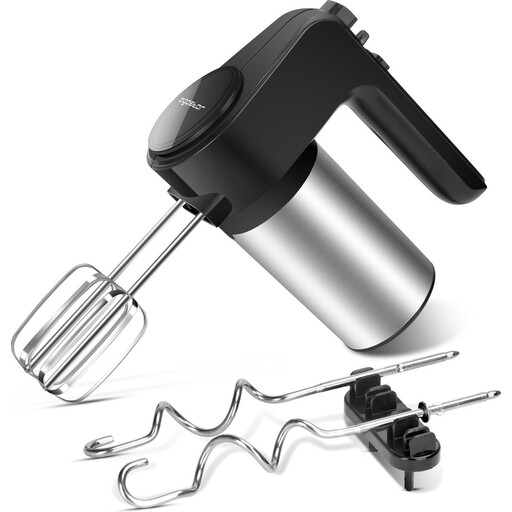
Why it suits this profile: The 300W motor, six speeds and four included accessories make this a straightforward choice for cake batter, whipped cream and light dough.
The specifications clearly state 300 W, six settings and a turbo button, so you don’t have to rely on a vague power rating alone.
Four stainless steel mixing accessories, six speeds and an accessory holder.
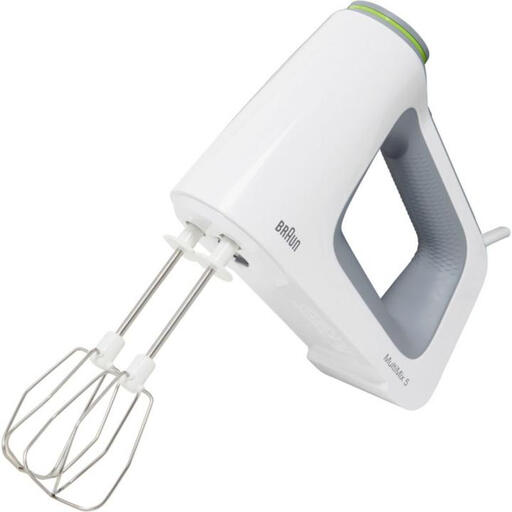
Why it suits this profile: For keen home bakers, the 750 W motor, variable settings from 1 to 9 and Softgrip handle are useful features to consider.
The product description covers more than just power: it also mentions VarioControl, EasyClick and a design that, according to Braun, places more of the weight over the bowl.
750 W, nine speed settings, a Softgrip handle and an extra-long cord.
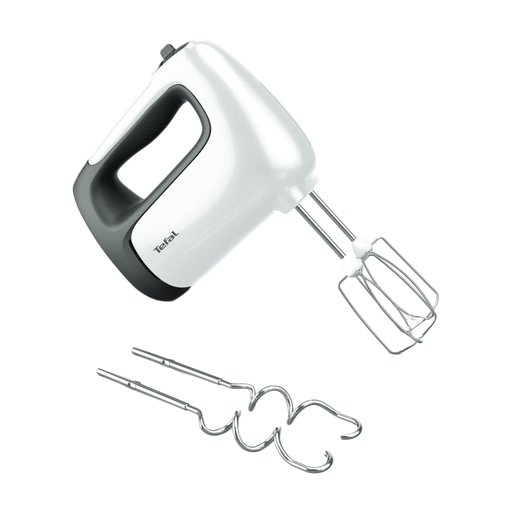
Why it suits this profile: This combi model is designed for anyone who wants to whisk, knead and use a blending shaft to make soups, sauces or smoothies.
Each task has its own accessory: beaters for light ingredients, dough hooks for heavy dough and a stainless steel blending shaft for liquid mixtures.
Five speeds, a turbo function, beaters, dough hooks and a blending shaft; according to the product information, the removable accessories are dishwasher-safe.
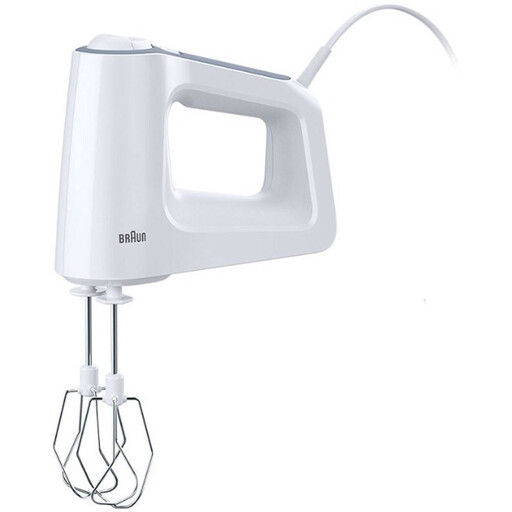
Why it suits this profile: The set combines a hand mixer, hand blender and chopper for households that regularly make a variety of recipes.
The product list spells out what’s included: two beaters, two dough hooks, a blending shaft, a 500 ml chopper and a measuring jug.
500 W, five speeds plus turbo, 3-in-1 use and, according to the product information, dishwasher-safe accessories.
We’ve put together a complete, up-to-date list of products that meet these strict selection criteria and current European safety requirements.
A model rated at around 300 to 500 W is often enough for whipping cream, whisking egg whites and making cake batter. A more powerful model may be more practical for heavy dough. Wattage doesn’t guarantee better performance: accessories, cooling, controls and running time all play a part.
You can if the model has dough hooks and the manual says it’s suitable for the job. Start on a low speed and stick to the maximum running time. A hand mixer is best suited to smaller quantities; if you regularly make heavy dough, a stand mixer with a fixed bowl may be a better choice.
The stated power is the maximum electrical power, not necessarily the amount of electricity used for each recipe. A 500 W mixer running for a few minutes will use less energy than the same model running for a long time. Choose a suitable power rating and avoid unnecessarily long mixing times.
