
Vandaag of morgen in huis

Kwaliteit gegarandeerd

Welkomstaanbiedingen ontgrendelen: GRATIS bezorging | Tot 80% korting | Gratis 30 dagen JoyPlus-proefperiode
Download de app
At first glance, a hand mixer seems simple: plug it in, attach the beaters and start mixing. However, models can vary considerably in power, accessories, controls and cleaning requirements. You often only notice you have made the wrong choice when tackling firm bread dough, a large bowl of batter or detachable parts that are difficult to clean.
For home bakers, keen cooks and families, there are three common pitfalls:
An electric hand mixer rated at 450 to 500 watts is generally suitable for batter, whipped cream, egg whites and light to medium doughs. If you regularly make bread or pizza dough, you may want to consider a more powerful model, such as a 500-watt hand mixer or a 750-watt model.
Also pay attention to the manufacturer's instructions. A powerful motor cannot run continuously without limits. Heavy dough may require a break to prevent overheating. So do not just look at the wattage; also check whether the package includes dough hooks for the hand mixer and what operating time is recommended.
A hand mixer with multiple speeds gives you more control than a device with just one or two settings. A low speed helps you mix in flour without creating a cloud of dust or excessive splashing. A higher setting is useful for cream, egg whites or thick batter.
A turbo setting can provide extra power for short periods. A Soft Start function gradually increases the speed. This is useful with deep bowls or icing sugar, as the product description says it can help reduce the risk of ingredients flying out.
Check in advance which accessories are actually included:
A hand mixer with beaters is sufficient if you mainly bake. A multifunctional mixer or hand mixer with a blender is better suited to families who want to use one appliance for several kitchen tasks. Pay attention to the capacity of the jug or chopper. A 600 ml mixing jug is suitable for smaller portions, while a 3-litre bowl provides more room for cake batter.
Finally, check which components are dishwasher-safe accessories. “Easy to clean” does not always mean that every part can go in the dishwasher. The motor unit should never be submerged in water.
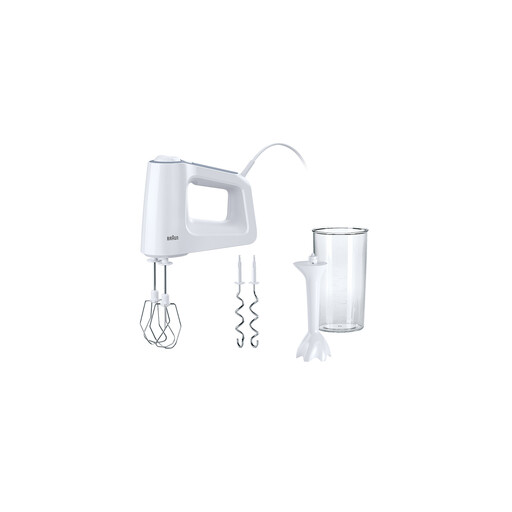
Why it suits this profile: This model is designed for everyday baking, with fingertip controls, a non-slip handle and several speed settings. According to the product information, SmartMix technology positions the weight above the accessories.
The product specifications list multiple speeds, so you are not limited to one fixed setting. The motor unit must still be removed and cleaned separately.
Ergonomic soft-grip handle, ComfortClick for accessories and speeds ranging from low to turbo, according to the product description.
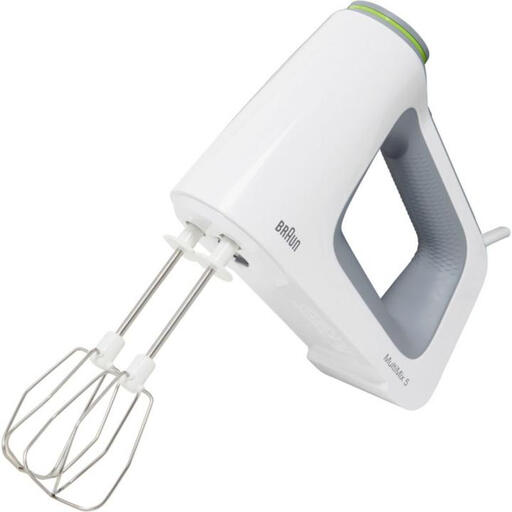
Why it suits this profile: The stated 750 watts, continuously variable speed control from 1 to 9 and Softgrip handle are ideal for users who bake frequently and want precise control.
The variable control means you are not restricted to choosing between just a few fixed settings. According to Braun, the EasyClean design is intended to make cleaning easier.
750 watts, nine speed levels and an extra-long cable according to the product details.
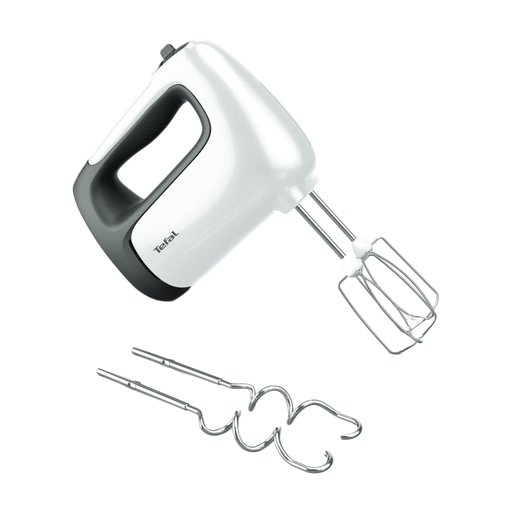
Why it suits this profile: This is a multifunctional mixer for anyone who wants to prepare soups, sauces and smoothies as well as bake. The set includes beaters, dough hooks and a stainless steel blending foot.
The accessories are clearly matched to specific tasks. According to the product details, the detachable accessories are dishwasher-safe; the motor unit still needs to be cleaned by hand.
500 watts, 5 speeds with turbo and a stainless steel blending foot according to the product description.
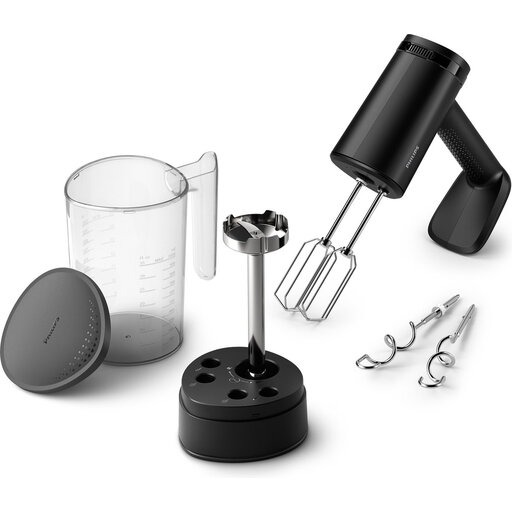
Why it suits this profile: The 2-in-1 design combines mixing and blending. This model has 5 speeds, turbo, a blending accessory and a storage cup.
According to Philips, the Soft Start function is designed to help reduce splashing. The product information also states that the accessories are dishwasher-safe.
500 watts, 5 speeds plus turbo and a storage cup for accessories according to the product specifications.
We have put together a complete, up-to-date list of products that fully meet these strict selection criteria and the applicable European safety regulations.
A standard hand mixer uses beaters and dough hooks and is primarily designed for baking. A hand blender or stick blender uses a blade attachment and is suitable for puréed soups, sauces and smoothies. Some models combine both functions.
When choosing a combination appliance, pay attention to the accessories rather than just the “3-in-1” or “4-in-1” label. A 350 or 500 ml chopper is practical for small portions, but is not designed for large quantities. A blender with a larger jug may be more useful for a family, while a compact hand blender saves space.
Always unplug the appliance before changing the beaters, dough hooks or blending foot. Keep fingers, spoons and clothing away from moving parts. Only process hot liquids as instructed in the manual; allow soup to cool sufficiently first if the product information requires this.
Energy consumption depends on the power rating and how long the appliance is used. A 500-watt model running for a few minutes will not automatically use a great deal of energy. Mixing briefly at a suitable speed is usually more practical than running the appliance on turbo for a prolonged period. After use, check the manual to see whether the accessories can go in the dishwasher.
For batter, cream and egg whites, 450 to 500 watts is often a useful starting point. For regularly preparing heavy dough, a 750-watt model may offer more power in reserve. Always compare the wattage with the accessories and operating restrictions.
You can if the appliance has dough hooks and the manufacturer permits this use. Start at a low speed, do not add more than the recommended quantity and take breaks when working with heavy dough to avoid putting unnecessary strain on the motor.
This varies by model. Beaters, dough hooks, mixing jugs and blending feet may be dishwasher-safe, but the motor unit and certain drive mechanisms are not. Check the manual before placing any components in the dishwasher.
