
Vandaag of morgen in huis

Kwaliteit gegarandeerd

Welkomstaanbiedingen ontgrendelen: GRATIS bezorging | Tot 80% korting | Gratis 30 dagen JoyPlus-proefperiode
Download de app
A hand mixer may seem simple at first glance: plug it in, attach the beaters and start mixing. However, models vary considerably in power, accessories, controls and cleaning requirements. A cheap purchase can quickly prove inconvenient if you regularly make bread dough or expect a blending function.
For home bakers and cooking enthusiasts, these are the main pitfalls to watch out for:
For whipped cream, egg whites and light cake batter, a hand mixer with beaters rated at around 200 to 300 watts is often sufficient, depending on the quantity and operating time. If you regularly make biscuit dough, bread dough or pizza dough, consider a 500-watt hand mixer or a model with a higher stated power rating.
Do watch out for conflicting information. The product description for the Tefal Prep’Mix+ HT4611 mentions 500 watts, while the technical specifications state 450 watts. If in doubt, check the latest product information and manual before making your choice.
A hand mixer with beaters is suitable for:
A hand mixer with dough hooks is more practical for heavier mixtures. Do not just check whether dough hooks are included; also look at whether they are made from stainless steel and can be removed easily.
Some models are more than just mixers. A hand mixer with a blender can also be used with a blending attachment or mini chopper to prepare smoothies, sauces and puréed ingredients, for example. The suitable container, maximum capacity and instructions remain important.
A hand mixer with a turbo function provides extra speed for short periods. This is useful when you need a little more power towards the end of mixing, but do not use the turbo unnecessarily for too long with heavy dough. A soft-start function brings the motor up to speed gradually, helping to reduce splashes and clouds of flour.
Also look out for:
More power does not usually make a hand mixer more comfortable to use. A heavier appliance may actually feel more tiring during prolonged mixing. Weight distribution and grip are therefore just as important.
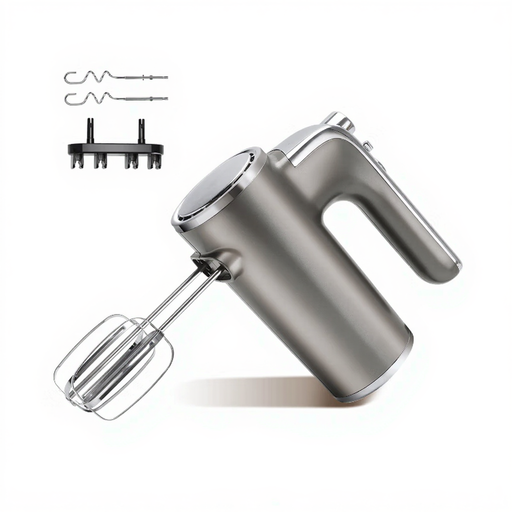
Why it suits this profile: This model offers five speeds, a turbo button and four mixing attachments for basic recipes without requiring a more advanced appliance.
The product information clearly states the power, number of settings and included accessories. However, check that the four attachments are suitable for the recipes you want to make.
400 watts, five speeds, turbo button and an accessory holder.
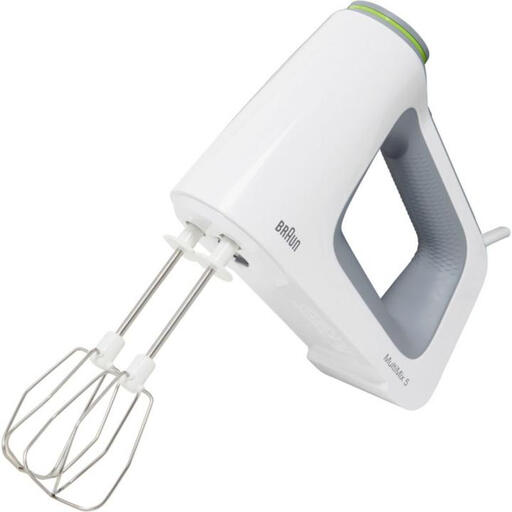
Why it suits this profile: For those who bake regularly and value precise control, this model offers a 750-watt motor and variable speed control from 1 to 9.
VarioControl means you are not limited to choosing between a few fixed settings. The product description also mentions EasyClean and an extra-long cable.
750 watts, nine speed settings, Softgrip handle and EasyClick for accessories.
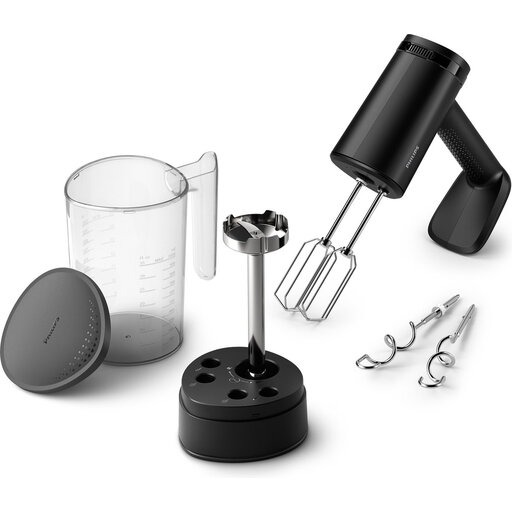
Why it suits this profile: This is a practical choice for households looking for one appliance that can handle both baking and blending.
The accessories are clearly specified: beaters, dough hooks, a blending attachment and a storage cup. You therefore do not have to assume that a blending function is included.
500 watts, five speeds plus turbo, Soft Start and dishwasher-safe accessories.
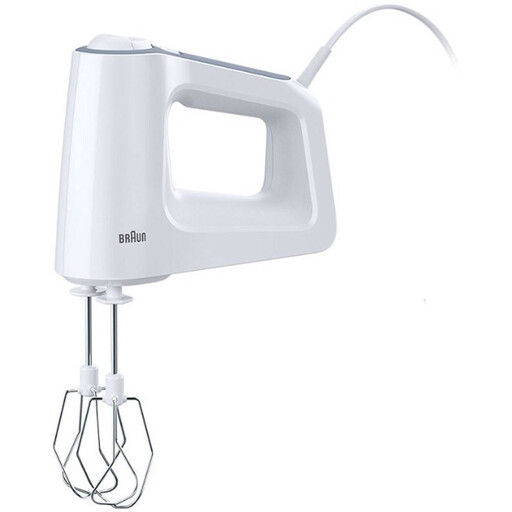
Why it suits this profile: This set combines mixing, blending and chopping. It is ideal for anyone who wants to carry out several kitchen tasks with a single motor unit.
The 3-in-1 function is linked to specific components: beaters, dough hooks, a blending foot, mini chopper and measuring jug. Check the mini chopper’s maximum capacity before use.
500 watts, five speeds, turbo function and a 500 ml mini chopper.
We have put together a complete, up-to-date list of products that fully meet these strict selection criteria and the applicable European safety regulations.
For light batter and whipped cream, a lower power rating is often sufficient. For thick biscuit dough or regular kneading, a model rated at around 400 to 500 watts is a more sensible choice. Also consider the dough hooks, recommended operating time and safety instructions. Wattage alone does not determine how comfortable an appliance is to use.
You can if the model has suitable dough hooks and the manufacturer states that it is designed for this purpose. Start at a low speed and do not add more dough than the manual allows. If the motor begins to struggle, stop and let the appliance cool down to prevent overheating.
First unplug the appliance and remove the beaters or dough hooks. Clean removable parts according to the product manual; dishwasher safety only applies when this is explicitly stated. Wipe the motor unit with a slightly damp cloth and never immerse it in water.
