
Vandaag of morgen in huis

Kwaliteit gegarandeerd

Welkomstaanbiedingen ontgrendelen: GRATIS bezorging | Tot 80% korting | Gratis 30 dagen JoyPlus-proefperiode
Download de app
A hand mixer may seem straightforward at first: plug it in, attach the beaters and start mixing. But models vary considerably in power, accessories, controls and ease of cleaning. If you focus only on the highest wattage or the number of speeds, you could end up with an appliance that’s awkward to use in practice.
For home bakers, keen cooks and families, these are the main pitfalls to watch out for:
An electric hand mixer with around 180 to 300 watts may be suitable for whipping cream, beating eggs and mixing light batter. If you regularly knead biscuit, bread or pizza dough, a model with 400 to 750 watts is often more practical, provided the manufacturer says it’s suitable for that use.
Look out for the difference between rated power and peak power. For example, the Russell Hobbs Desire is listed as having 185 watts of rated power and 350 watts of peak power. These two figures aren’t directly comparable. So, pay particular attention to:
A powerful hand mixer isn’t automatically the right choice. For thin batter, a lighter model may be more comfortable to use than a heavy, high-powered appliance.
A hand mixer with multiple speeds gives you more control over different ingredients. A low setting is useful for flour and liquids, while higher settings may be better for whipping cream or egg whites. A hand mixer with turbo can provide a temporary boost in speed, but use this function as directed in the manual and don’t run it for longer than recommended.
A soft-start function helps you mix ingredients gently. This reduces splashing and stops flour flying straight out of the bowl. A slider or buttons should also be easy to reach without changing your grip.
Before you order, check what’s actually included in the box. A hand mixer with beaters is suitable for whisking and mixing. A hand mixer with dough hooks can handle heavier mixtures, too. Check the fittings as well: accessories aren’t universally interchangeable.
A hand mixer set may include extra attachments, such as a stick blender, chopper or measuring jug. This can save space if you want to replace several kitchen appliances, but check:
An automatic bowl, like the one included with some Philips models, can be useful when you need both hands free while mixing. Just check that the bowl is large enough for your usual recipes.
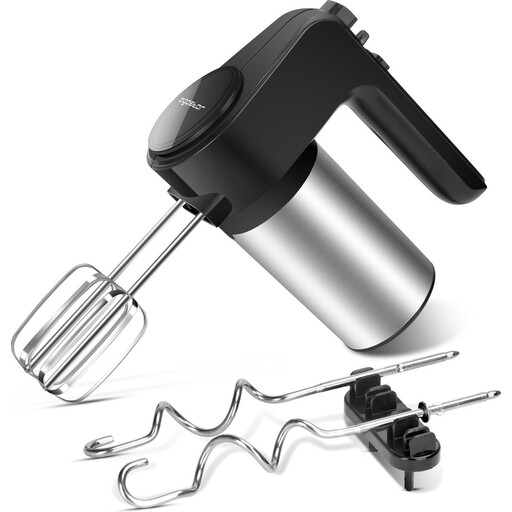
Why it suits this profile: This model is designed for everyday tasks such as mixing batter, whipping cream and preparing light dough. Its six speed settings, beaters and dough hooks offer practical control without the need for extra kitchen accessories.
The product description specifies the 300-watt power rating, six adjustable speeds and four mixing attachments. This means you can check what’s in the box before you buy.
300 watts, six speeds, turbo button and an accessory holder for compact storage.
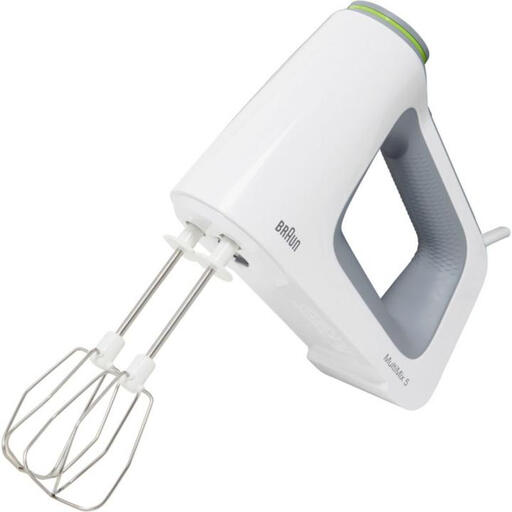
Why it suits this profile: Ideal for regular bakers who value control and a comfortable grip, as well as a motor with a higher stated power rating.
The specifications list 750 watts and variable speed control from 1 to 9. Braun says its SmartMix design places more of the weight directly above the bowl.
750 watts, nine speed settings, Softgrip and EasyClick for changing accessories.
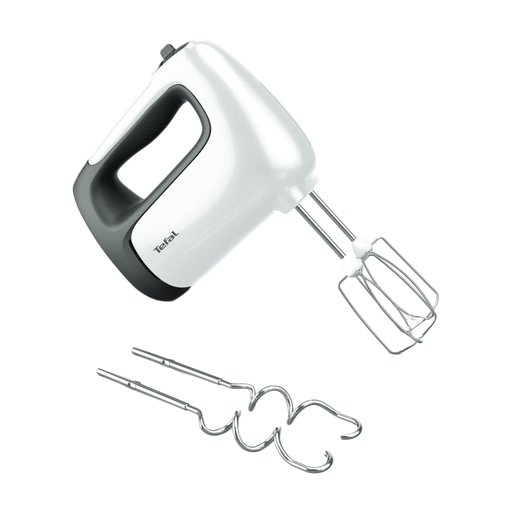
Why it suits this profile: A practical choice if you want to make soups, sauces and smoothies as well as bake, all with a single motor unit.
The product information lists the beaters, dough hooks and stainless steel blending foot separately. This makes it clear which functions are actually included.
500 watts, five speeds, turbo, dough hooks, beaters and a stainless steel blending foot.

Why it suits this profile: The 3-litre automatic mixing bowl is handy for families and larger batches of batter, while the mixer stays on a stable surface.
The bowl capacity, 450-watt power rating, six speeds, two beaters and dough hooks are all clearly listed.
450 watts, six speeds, an automatic rotating 3-litre bowl and suction feet for stability.
We’ve put together a complete, up-to-date list of products that meet these strict selection criteria and current European safety requirements.
Always attach the beaters or dough hooks before plugging the mixer in. When mixing a heavy batter, start on a low setting and increase the speed gradually. Keep the attachments clear of the side of the bowl while mixing to reduce wear and unnecessary strain.
Clean the motor housing with a slightly damp cloth only. Don’t immerse it in water. Remove the attachments only after switching off the mixer and unplugging it. Before each use, check the hooks, beaters, cord and connections for signs of damage.
Lifespan depends on the load, length of use and maintenance. A baking hand mixer used every day for heavy dough puts more strain on the motor than one used just occasionally to whip cream. Take breaks as instructed in the manual. For heavy mixtures, choose a suitable speed rather than relying on turbo every time.
Yes, if a blending foot is included and the manual says it’s suitable for this use. Allow hot ingredients to cool first, following the model’s safety instructions. Check that the blending foot can be fully immersed in the pan or bowl to help prevent splashing.
A lower power rating may be enough for light dough made occasionally. If you regularly make bread or pizza dough, it’s better to look for a model with dough hooks and around 400 watts or more. Wattage is only one factor: operating time, motor design and the manufacturer’s instructions matter too.
A hand mixer generally runs for short periods, so the total electricity used per recipe is usually limited. The exact amount depends on the power rating and how long you use it. A 500-watt appliance running for ten minutes would theoretically use around 0.083 kWh. Actual running time and the programme you choose determine the final cost.
