
Vandaag of morgen in huis

Kwaliteit gegarandeerd

Welkomstaanbiedingen ontgrendelen: GRATIS bezorging | Tot 80% korting | Gratis 30 dagen JoyPlus-proefperiode
Download de app
A hand mixer may seem simple at first: plug it in, choose a speed and start mixing. Yet many home bakers buy a model that disappoints later. The motor may not be powerful enough for stiff dough, the accessories can be awkward to clean, or an appliance may be sold as multifunctional when it is really only suited to one task.
This practical buying guide explains what to look for in a hand mixer. We also outline the difference between an electric hand mixer, a stick blender and a hand blender.
A higher wattage does not automatically mean a hand mixer will be easier to use. The power needs to match the design, accessories and type of mixture. Whipping cream and mixing cake batter call for a different level of performance from making bread or pizza dough.
So check the following too:
A powerful hand mixer is particularly useful if you regularly make thick mixtures or dough. A simpler model may be enough for occasional baking.
A hand mixer with beaters is designed for whipping, mixing and kneading. A stick blender or hand blender uses a blade to purée soup, sauce, smoothies or baby food. Some sets combine both functions, but always check which accessories are actually included in the box.
A hand blender therefore does not automatically replace a hand mixer with dough hooks. Likewise, a standard hand mixer is not suitable for puréeing hot soup.
Mixture can easily get stuck around the points where the beaters and dough hooks attach. Check whether the accessories can be removed and whether they are dishwasher-safe. The motor unit itself must not be submerged. Clean it with a slightly damp cloth, and always unplug it first.
Several speeds are useful for everyday baking. A low setting helps prevent splashes when mixing flour and liquid. A higher setting is useful for whipping cream or egg whites. A hand mixer with turbo can provide a brief boost of power, but it is no substitute for a motor that can handle demanding jobs over a longer period.
Pay attention to the controls too. A slider or variable-speed button can give you more control while mixing than a small number of fixed settings.
A hand mixer with beaters is suitable for cream, egg whites, cake batter and light mixtures. Search for a hand mixer with dough hooks if you want to make bread dough, pizza dough or other thick doughs. Check that both types of accessory are included and that they are made of stainless steel.
A model with a wide, well-shaped handle will generally feel more stable in your hand. A low centre of gravity can reduce strain while mixing, but overall comfort still depends on the weight and how you hold it.
A hand mixer with a bowl is useful if you want to keep both hands free. A bowl that rotates automatically can help feed ingredients more evenly into the beaters. Check the capacity: a 3-litre bowl gives you more room than a small mixing beaker, but it also takes up more cupboard space.
A cord of around 1.2 metres gives you plenty of room to move around in many Dutch kitchens. Also look for a stable base, a cord outlet that stays out of the way and a simple system for detaching the accessories.
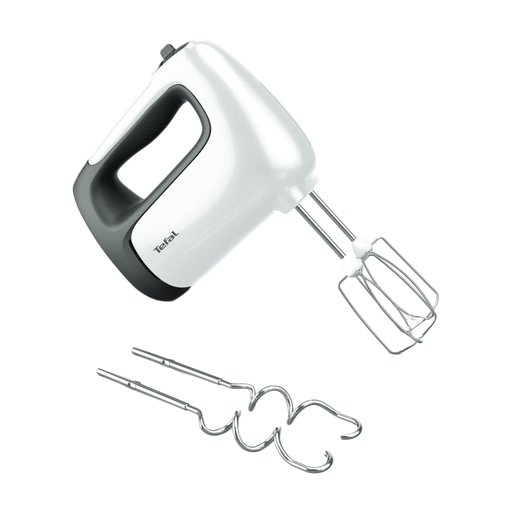
Why it suits this type of user: This model offers settings ranging from low speed to turbo and has an anti-slip handle. That makes it suitable for cake batter, whipped cream and straightforward baking recipes.
The product description mentions SmartMix technology, which places the centre of gravity above the accessories. The cord outlet is designed to keep the cord out of your way.
Multiple speeds, turbo, an anti-slip grip and ComfortClick for changing accessories.
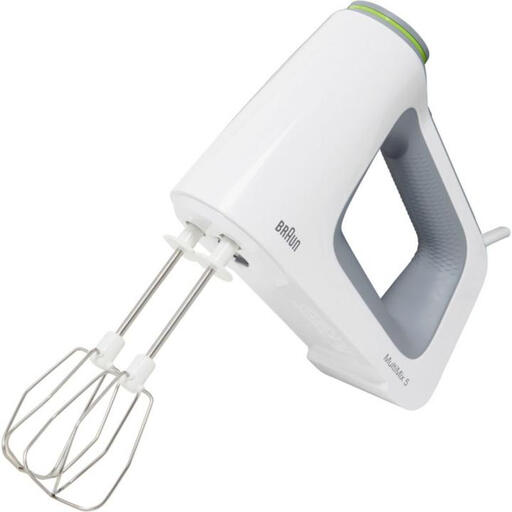
Why it suits this type of user: With 750 W, nine speeds and a soft-grip handle, this model is a good fit for frequent bakers who want more control over both light and thicker mixtures.
The specifications list variable speed settings from 1 to 9, so you are not limited to just a low and a high setting.
750 W motor, SmartMix technology, EasyClick accessories and an EasyClean design, according to the product information.
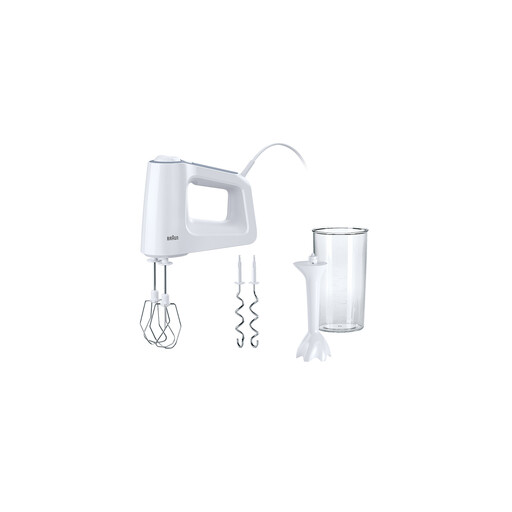
Why it suits this type of user: Alongside beaters and dough hooks, this model includes a stainless-steel blending foot. It is a good option if you want to combine baking with making soup, sauce or smoothies.
You may not need to buy a separate stick blender for these tasks. Just check which accessories are included before use.
500 W according to the product description, five speeds, turbo, beaters, dough hooks and a blending foot.
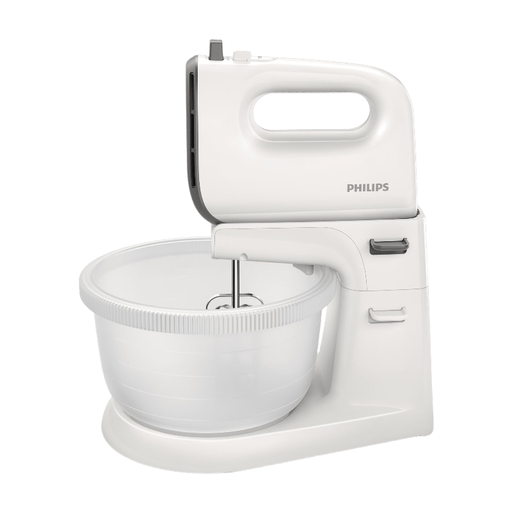
Why it suits this type of user: The 3-litre bowl rotates automatically, leaving your hands free while you mix. That is handy when making larger quantities of cake batter or whipped cream.
The included bowl means you do not have to hold one while mixing. Suction cups are designed to keep the set stable.
450 W, six speeds, a 3-litre bowl, two beaters and two dough hooks, according to the product specifications.
We’ve put together a complete, up-to-date list of products that meet these strict selection criteria and the applicable European safety regulations.
Choose a hand mixer for cake batter, whipped cream, egg whites and kneading. A hand blender is better suited to soup, sauces, smoothies and puréeing in a pan or beaker. A stand mixer with a fixed bowl makes more sense if you often prepare large quantities and can leave the appliance on the worktop.
A matcha set is designed for a different kind of preparation: a bamboo whisk is used to whisk matcha powder by hand, but it cannot replace an electric hand mixer for baking recipes.
That depends on how you use and clean it, and how hard you work the motor. Use dough hooks only for the types of dough they are designed for, avoid running the mixer on turbo for long periods, and let the motor cool down if the appliance has been working hard. Most of the models listed come with a minimum two-year legal guarantee in the EU; additional manufacturer terms may vary by brand.
A hand mixer generally uses relatively little electricity, as you usually only run it for a few minutes at a time. Consumption depends on the appliance’s power and how long you use it. A 500 W model running for ten minutes would theoretically use around 0.083 kWh. Actual consumption may be lower, as the motor is not under maximum load all the time.
Only if the model has dough hooks and the instruction manual says it is suitable. Bread dough puts more strain on the motor than cake batter. Work in short bursts, stick to the recommended quantity and stop if the motor is clearly struggling.
