
Vandaag of morgen in huis

Kwaliteit gegarandeerd

Welkomstaanbiedingen ontgrendelen: GRATIS bezorging | Tot 80% korting | Gratis 30 dagen JoyPlus-proefperiode
Download de app
A hand mixer may seem like a simple kitchen appliance, but models can differ considerably in power, attachments, controls and maintenance. If you focus only on the highest wattage, you could still end up with a mixer that feels heavy to hold, struggles with dough or is difficult to clean.
Home bakers, keen cooks and families commonly fall into three traps:
For whipping cream and egg whites, and making cake and pancake batter, a mid-range electric hand mixer is often enough. If you regularly make bread or pizza dough, look for a model with dough hooks, a sturdy housing and several speed settings.
On paper, a 500-watt hand mixer has more motor power than a 200- or 250-watt model. That doesn’t mean it can knead heavy dough indefinitely, though. Always follow the maximum running time in the manual, and take breaks if the motor is clearly working hard.
Also look out for conflicting information in product titles. Some models, for example, mention 500 watts in the name, while the technical specifications list a different power rating. So check the product specifications on the product page rather than relying on the marketing title alone.
A hand mixer with several speeds gives you more control for different recipes:
A soft-start function gradually increases the speed. This helps reduce splashing, particularly with runny mixtures. A turbo function is useful for short bursts, but it doesn’t replace suitable dough hooks or a motor designed for prolonged use.
A hand mixer with beaters is ideal for light mixtures, whipped cream and egg whites. For bread and pizza dough, metal dough hooks are more important. Also check that the attachments are easy to click into place and can be removed using an eject button.
A hand mixer with a blender or chopper can complement other kitchen appliances. Check what’s included in the box: some models come with a blending shaft only, while other sets also include a chopper and measuring jug.
For easier maintenance, it helps if the removable parts are dishwasher-safe. The motor unit, plug and cord must not be immersed in water. Before buying, also check whether attachments are available separately and how long the manufacturer’s warranty or statutory guarantee lasts.
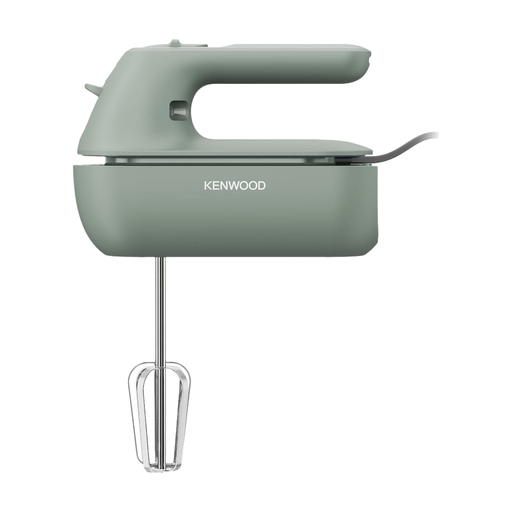
Why it suits this profile: This model has five speeds, a slow-start function and a compact storage system for the attachments and cord. It’s a good fit if you mainly make cake batter and cream, and only make dough occasionally.
The slow-start function helps prevent splashing, while the included beaters and dough hooks mean you won’t need to buy extra attachments straight away.
350 watts, five speed settings, stainless steel beaters and dough hooks, plus an integrated storage solution.
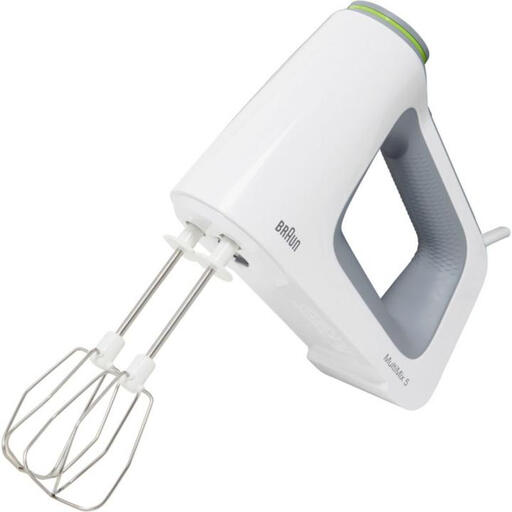
Why it suits this profile: The product information lists a 750-watt motor, variable control from settings 1 to 9 and a soft-grip handle. This makes it an interesting choice if you bake regularly and value ease of use and comfort.
The controls offer more intermediate settings than a fixed five-speed system. Do check the manual for the recommended running time when working with heavy dough.
750 watts, variable speed control, a SoftGrip handle and EasyClick for changing attachments.
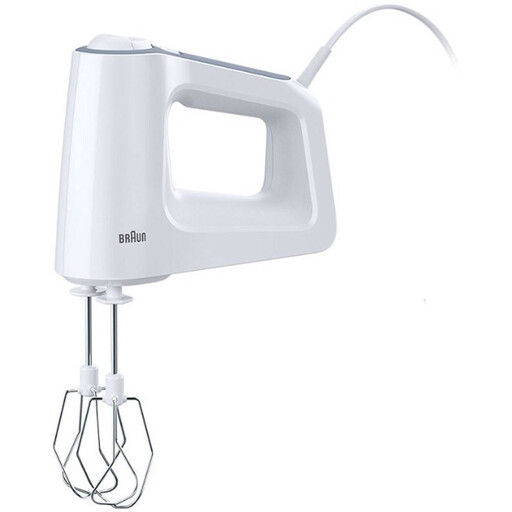
Why it suits this profile: This set combines a hand mixer with a blending shaft and chopper. It’s suited to anyone who wants to prepare soups, sauces and small quantities of ingredients as well as bake.
The set clearly lists the included attachments: beaters, dough hooks, blending shaft, chopper and measuring jug.
500 watts, five speeds with a turbo function, 3-in-1 use and dishwasher-safe attachments according to the product description.

Why it suits this profile: The 3-litre mixing bowl rotates automatically as you mix. This can be handy if you regularly make larger batches of batter and want to keep your hands free.
The included bowl saves you having to find a suitable mixing bowl yourself. Suction feet help keep the mixer stable during use.
450 watts, six speeds, a 3-litre bowl, and included beaters and dough hooks.
We’ve put together a complete, up-to-date list of products that meet these strict selection criteria and the applicable European safety regulations.
Check these points before placing your order:
Different power ratings are suitable for whipping cream and making batter. If you also make bread or pizza dough, look for a model rated at around 450 to 500 watts or higher, but the stated wattage doesn’t guarantee that the mixer can handle heavy loads indefinitely. Use the manual as your guide.
A hand mixer with a blending shaft may be suitable for making soup, sauce or a smoothie, depending on the attachment supplied. Check the maximum temperature, capacity and instructions for use. If you regularly blend large quantities, a separate stick blender may be more practical.
Its lifespan depends on how often you use it, how heavy the dough is, and how you clean and store it. Let the motor cool down when doing demanding work, use the right attachments and never immerse the motor unit in water. This will help avoid putting unnecessary strain on the appliance.
