
Vandaag of morgen in huis

Kwaliteit gegarandeerd

Welkomstaanbiedingen ontgrendelen: GRATIS bezorging | Tot 80% korting | Gratis 30 dagen JoyPlus-proefperiode
Download de app
A hand mixer seems simple enough: plug it in, attach the beaters and start mixing. Yet many people buy a model that disappoints after just a few weeks. A motor might sound powerful on the packaging, but the mixer can quickly get hot when tackling heavy dough. And a long list of accessories isn’t always useful if the parts are difficult to clean or store.
As a Joybuy Product Recommendation Officer, I focus on verifiable details: power, speed settings, accessories, weight, cleaning and warranty information. This helps you find an electric hand mixer that suits the way you bake and cook.
Higher wattage doesn’t automatically mean a mixer will perform every task better. The motor’s construction, the available speed settings and the type of attachment all play a part. For whipped cream and egg whites, you mainly need good beaters and a low start speed. For bread dough, sturdy dough hooks and a suitable operating time are important.
A hand mixer with a turbo function can provide extra speed or power for a short time. This is useful for brief bursts, such as when mixing a thick batter. However, don’t use turbo continuously for heavy dough. Follow the instructions and take breaks if the motor sounds like it’s under strain.
A hand mixer with accessories might include a whisk, dough hooks, a blending attachment or a chopper. That’s handy if you prepare a range of dishes, but check in advance whether the parts are dishwasher-safe and where you’ll store them. A storage box or compact design helps keep beaters and hooks together instead of loose in a kitchen cupboard.
When choosing a hand mixer for baking, it’s useful to distinguish between light and heavy ingredients:
A hand mixer for bread dough won’t automatically replace a stand mixer. Bread dough puts a lot of strain on the motor and gears. Use a spacious bowl, start slowly and don’t make a larger quantity than the instructions recommend.
Several speed settings give you more control. A low setting helps prevent splashing, while a higher setting is useful for whipping ingredients until fluffy or mixing thicker batter. A soft-start function gradually increases the speed. This is useful when working with flour, icing sugar and liquid ingredients.
Also consider the controls. A slider may be easy to reach while mixing, while a separate turbo button is designed for short bursts of extra power. More settings are only useful if the differences between them make a practical difference.
A hand mixer with beaters is suitable for cream, egg whites, batter and sauces. Dough hooks are designed for heavier mixtures such as pizza or bread dough. Check that the attachments lock firmly into place and can be removed using an eject button.
The motor housing shouldn’t be submerged in water. Removable accessories that are dishwasher-safe can make cleaning easier. Always check the product instructions, though, as cleaning guidance may vary between parts.
A stick blender uses blades and is designed for puréeing and blending foods such as soup, sauces, smoothies or baby food. A hand mixer uses beaters or dough hooks, making it better suited to whipping, batter and dough.
Some models combine both functions. This can save space, but check which parts are included. A blending attachment doesn’t automatically make a hand mixer suitable for every hard or hot ingredient. Check the temperature limits, maximum operating time and safety instructions.

Why it suits this profile: This model is designed for everyday baking, with a rotating bowl, six speed settings, and beaters and dough hooks included. According to the product specifications, the bowl has a 3-litre capacity.
The automatically rotating bowl helps save you from having to constantly adjust it yourself while mixing. The six settings give you more control than a basic mixer with just one or two speeds.
450 W power, six speed settings, a 3-litre bowl, and both beaters and dough hooks included.
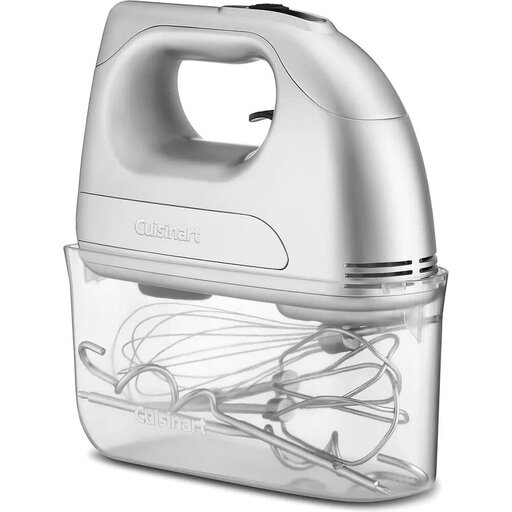
Why it suits this profile: The HM7E combines seven speed settings with an automatic boost function. It comes with beaters, a whisk and dough hooks.
The seven settings and boost function let you start slowly and adjust the speed to suit cream, batter or heavier mixtures.
200 W power, seven speed settings, automatic boost, ergonomic design and an accessory storage box.
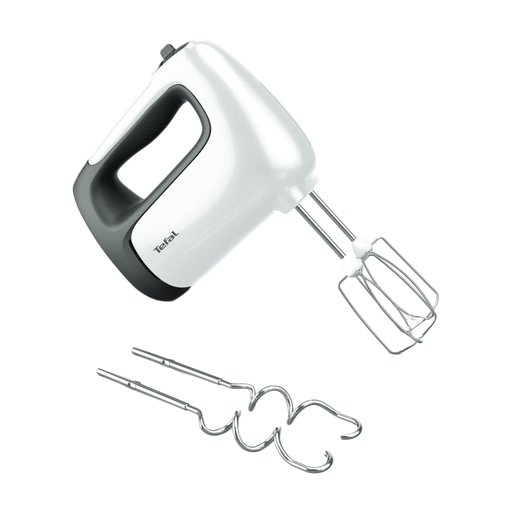
Why it suits this profile: This model combines beaters and dough hooks with a stainless steel blending attachment. That makes it suitable for batter, bread or pizza dough, and soups or sauces.
The accessories are designed for different types of preparation, so you don’t have to rely on a turbo setting alone. According to the product specifications, the removable accessories are dishwasher-safe.
500 W power, five speed settings, turbo, soft start, dough hooks, beaters and a blending attachment.
We’ve put together a complete, up-to-date list of products that meet these strict selection criteria and the applicable European safety regulations.
Lower power is often enough for cream, egg whites and light batter. If you regularly make thick batter or dough, consider models from around 450 W. Also check the dough hooks, speed control and recommended operating time. Wattage alone doesn’t tell you enough about real-world performance.
Its lifespan depends on use, maintenance and how hard you work it. Let the motor cool down after heavy mixing, use the right accessories and don’t exceed the maximum quantities. Many models in the range come with a manufacturer’s warranty or a statutory warranty of at least two years; check the terms for the specific product.
A hand mixer is usually used for just a few minutes at a time. Overall energy use therefore depends mainly on its power and how long you use it for. A higher-wattage model may use more electricity while running, but a short preparation time can limit the difference. Use the lowest suitable setting and avoid mixing for longer than necessary.
