
Vandaag of morgen in huis

Kwaliteit gegarandeerd

Welkomstaanbiedingen ontgrendelen: GRATIS bezorging | Tot 80% korting | Gratis 30 dagen JoyPlus-proefperiode
Download de app
A hand mixer might look simple at first glance: a motor, beaters and a few speed settings. But models can vary considerably in ease of use, accessories and performance. If you focus only on wattage or an attractive offer, you could end up with an appliance that splashes, heats up quickly or is difficult to clean.
For home bakers, keen cooks and families, these are the three main pitfalls to watch out for:
An electric hand mixer rated at around 250 to 350 watts may be suitable for whipping cream, making cake batter and mixing light ingredients. If you regularly knead bread or pizza dough, a model with a higher stated wattage and sturdy dough hooks is a more sensible choice. Check whether the manufacturer lists the rated or maximum power, though, as these figures aren’t always directly comparable.
A hand mixer for dough should also feel comfortable to hold. A heavier model may feel more stable, but can become tiring if you use it for long periods.
A hand mixer with beaters should be able to start gently as well as run quickly. With several speed settings, you can first mix flour and liquid, then turn up the speed. According to the product descriptions of several brands, a soft start function helps reduce splashing when you switch the mixer on.
A hand mixer with a turbo function gives you extra power when you need it. It’s best to use this setting for short periods and follow the maximum operating time in the manual. If you’re mixing thick dough, taking a break can help avoid putting unnecessary strain on the motor.
The standard set-up includes beaters for batter, cream and egg whites, plus dough hooks for heavier mixtures. Check whether the accessories are made from stainless steel and are dishwasher-safe. Never immerse the motor housing in water.
A hand mixer with a blender attachment or chopper can be useful for soup, sauce or small quantities of ingredients. Consider whether it would genuinely replace a separate hand blender or chopper, though. A hand mixer with a bowl takes up more space, but can be practical if you often want to mix hands-free.
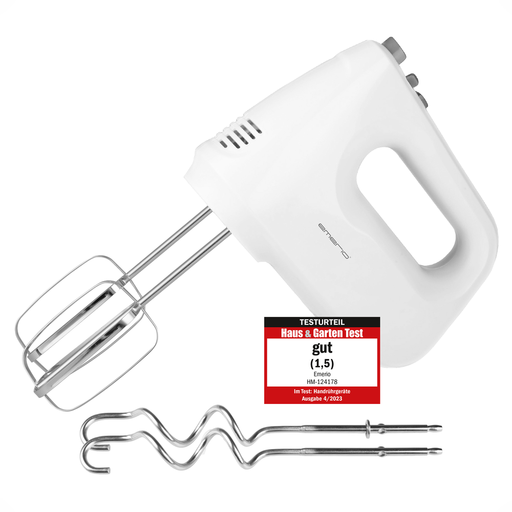
Why it suits this profile: This model has six speeds, a turbo function, beaters and dough hooks for everyday baking.
The soft start function is designed to help reduce splashing. The stated power of 250 W and six speed settings make the specifications easy to understand.
Stainless steel beaters and dough hooks, a 1.4-metre cable and an eject button for removing accessories.
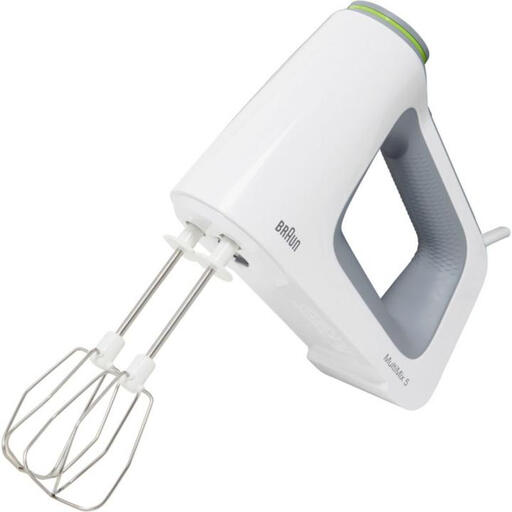
Why it suits this profile: With 750 W of power, variable speed control from 1 to 9 and an ergonomic handle, this model is well suited to frequent bakers.
The VarioControl setting offers more speed options than a simple five-speed control. EasyClick is designed to make it easier to change accessories.
Soft-grip handle, SmartMix technology according to the product description, and an extra-long cable. The statutory guarantee is at least two years.
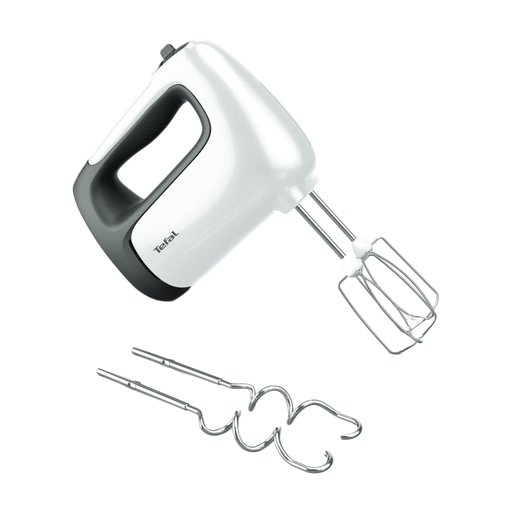
Why it suits this profile: This hand mixer comes with a blending wand, beaters and dough hooks, making it a versatile choice for anyone who wants to prepare different recipes with one appliance.
Five speeds, a turbo function and soft start offer more control than a simple on/off switch. According to the product specifications, the accessories are dishwasher-safe.
Rated at 500 W, with stainless steel beaters and dough hooks, plus a blending wand for soups, sauces and smoothies.
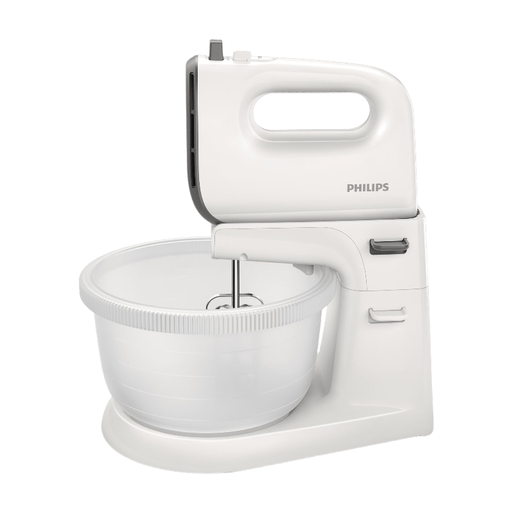
Why it suits this profile: The 3-litre bowl rotates automatically, making it practical if you regularly prepare batter or cream without having to keep moving the mixer around.
The bowl rotates automatically, while suction cups are designed to keep the set stable. This means you’re less likely to need extra bowls or hold the mixer while it’s running.
450 W, six speeds, two beaters and two dough hooks. The product information lists a bowl capacity of 3 litres.
We’ve put together a complete, up-to-date list of products that meet these strict selection criteria and current European safety requirements.
It depends on what you’ll use it for. Lower power may be enough for whipping cream and making cake batter. If you often make bread or pizza dough, look for a model with sturdy dough hooks and a higher stated wattage. Always compare the technical specifications, not just the marketing label.
You can with models that have suitable dough hooks, but follow the maximum operating time and preparation instructions. Start at a low speed, add ingredients gradually and stop if the motor starts to sound strained. A stand mixer is often a better choice for very large quantities of dough.
A hand mixer is usually only used for a few minutes at a time. Total energy use therefore depends mainly on its power rating and how long you use it. A higher wattage doesn’t automatically mean more energy use per recipe: an appliance that finishes the job faster may run for less time. Also make sure it’s switched off properly and unplug it after use.
