
Baking several batches
If you’re mixing several bowls of batter one after another, look beyond the controls and grip, and check the instructions for how long your specific mixer is designed to be used for.


For one or a few batches of brownie batter, a hand mixer with suitable beaters, a manageable low speed and a comfortable grip is a sensible starting point. A higher wattage alone doesn’t prove that you’ll make better brownies. If you’re making several batches in a row, pay extra attention to the weight, handling and instructions for your specific model. King Arthur Baking’s fudgy brownie recipe uses a hand mixer for an earlier mixing step, then folds in the flour by hand.
If you’re mixing several bowls of batter one after another, look beyond the controls and grip, and check the instructions for how long your specific mixer is designed to be used for.
For a smaller baking session, suitable beaters and the mixing steps in your recipe are practical starting points. In King Arthur Baking’s recipe, the flour is folded in by hand later on.
If you’d like to use your mixer for other batters or whisking after the bake sale, compare the speeds and attachments on the exact model, and think about which ones you’ll actually use.
Start with the amount of batter and the mixing steps in your recipe. Then compare the controls and attachments you really need for this baking session or for other uses.
| What to consider | What should you check? | Who will find this important? |
|---|---|---|
| Ease of handling for several batches | Compare the weight and grip of the exact model. Read the manual for guidance on making multiple batches. | If I’m mixing several bowls in a row, I want a mixer that’s comfortable to hold and whose instructions I can follow. Around 38% of consumers put ease of handling first. |
| Control while mixing | Check the lowest speed, the beaters and the mixing order in your recipe. | If I want to mix the batter step by step, I look for a speed and attachments that suit my recipe. Around 25% of consumers make mixing control their top priority. |
| A simple set and easy cleaning | Check which parts are included in the box, how to remove them and what the cleaning instructions are. | For a dedicated brownie session, I don’t want attachments I won’t use, and I want to know how to clean the parts afterwards. Simplicity comes first for around 25% of consumers. |
| Using it for other recipes | Compare the mixing and whisking tasks you do with the attachments and speeds on the exact model. | If I want to keep using the mixer after the bake sale, extra speeds or attachments could come in handy. Around 12% of consumers make this wider range of uses their top priority. |
Motor power ratings aren’t a comparative brownie test. Wattage alone won’t tell you what results you’ll get with your recipe.
Compare the controls, ease of handling and attachments too, and follow the mixing steps in your recipe.
The included parts vary by model. Attachments you don’t use still take up storage space.
Check the full model code and box contents. Choose extra parts only if they suit tasks you expect to do.
Unused accessories can take up space in your kitchen cupboard.
For sales at markets and events, the Netherlands Food and Consumer Product Safety Authority (NVWA) also advises working safely and hygienically with food. Allergen information may be important for unwrapped brownies.
Plan to use clean equipment and check which food safety and allergen rules apply to the way you’re selling your brownies.
These examples relate to specific models and versions. Their features don’t automatically apply to every product from the same brand, and don’t in themselves indicate availability at Joybuy.
The ErgoMixx MFQ36400 is an example of a hand mixer with five speeds and an eject button.
The MultiMix 5 HM5107WH is worth considering if you’d like to use a blending wand as well as beaters.
The QuickMix HMP30.A0SI is an example of a set with beaters and dough hooks.
The Artisan 5KHM9212EOB is worth considering if you want to make use of its nine speeds and various attachments.
These hand mixers are suitable for mixing brownie batter. Compare the specific model and attachments listed with the amount of batter you’re making and any other recipes you’d like to use the mixer for.
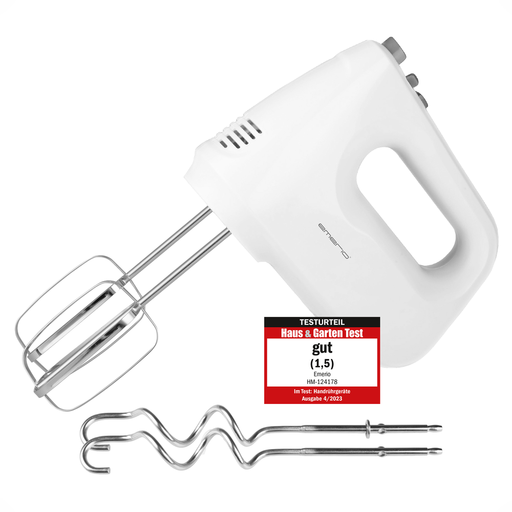 No image available
An option if you want to adjust the mixing speed for different recipe steps.
6 speeds and turbo function.
 No image available
An option if you want to mix batter in a bowl and use dough hooks too.
6 speeds, 450 W, automatic mixing bowl, beaters and dough hook.
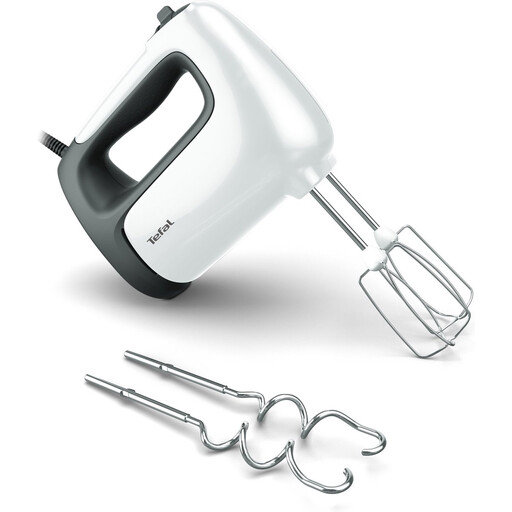 No image available
An option if you’re looking for a hand mixer for mixing batter.
500 W.
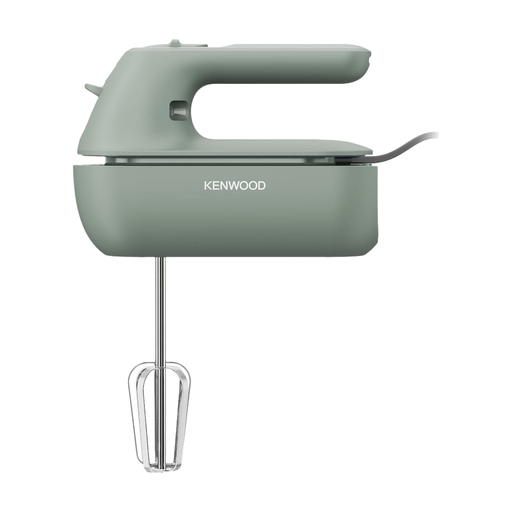 No image available
An option if you want to use dough hooks as well as beaters.
400 W, 5 speeds, beaters and dough hooks.
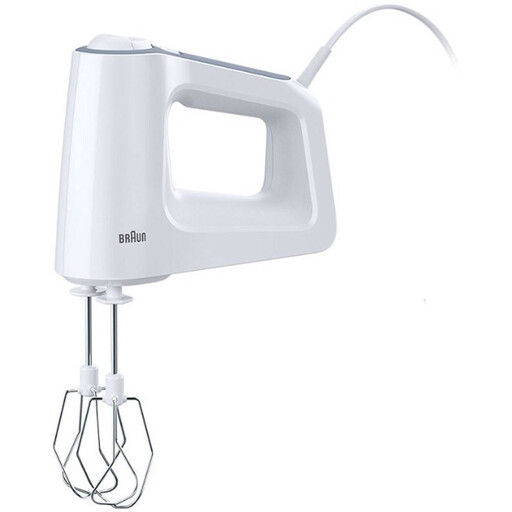 No image available
An option if you’re looking for a hand mixer that’s suitable for other mixing tasks as well as brownie batter.
220 V, 500 W.
Not necessarily; it depends on the steps in your recipe. In King Arthur Baking’s fudgy brownie recipe, eggs and cocoa are mixed with an electric hand mixer, then the flour and chocolate chunks are folded in by hand. Follow your own recipe, as this method won’t necessarily suit every brownie recipe.
Follow the manual for your specific mixer when attaching, removing and cleaning accessories, and check for any limits on continuous use. If you’re using the mixer to prepare food for sale, plan to use clean equipment too; the NVWA advises working hygienically and safely with food at markets and events.
The NVWA says food must be prepared, stored and sold safely and hygienically, whether the seller is a business or an individual. It also states that anyone who prepares and sells food several times a year needs an HACCP food safety plan. Any additional steps you need to take will depend in part on the details of your sale.
The NVWA explains that sellers of unwrapped food must tell customers about any allergens present, either in writing or, under certain conditions, verbally before purchase. Check the ingredients in your recipe and follow the requirements that apply to the way you’re selling the brownies.
In the Netherlands, what happens when a product develops a fault depends on what you could reasonably expect from it and on the circumstances, including whether it was used normally. The Government of the Netherlands says there is no fixed statutory guarantee period; if a product is faulty, repair, replacement or a refund may be possible. Any manufacturer’s guarantee is separate.