
Baker making several cakes
You make different batches to sell and want to mix the batter efficiently for each bake. Check the operating limits of your chosen model before deciding on batch sizes.


You don’t necessarily need a hand mixer to make one cake: in a banana bread recipe from the Voedingscentrum, mashed bananas and eggs are mixed with a whisk or fork. If you’re making several cakes or want to whisk other ingredients too, look for a hand mixer with beaters and useful speed settings. Wattage alone won’t tell you how much banana cake batter you can safely mix in one batch.
You make different batches to sell and want to mix the batter efficiently for each bake. Check the operating limits of your chosen model before deciding on batch sizes.
You want to adjust the speed as you add ingredients, without assuming that you need extra features for your recipe.
You’re looking for a compact appliance and attachments to suit your recipes, while weighing this against the extra space needed for a bowl or accessories.
Best for: making one cake when the recipe allows you to mix by hand.
Trade-off: you won’t need an appliance or attachments, but you’ll be doing the mixing yourself.
Best for: making batter more often or whisking ingredients, while handling the bowl yourself.
Trade-off: you’ll need to hold the hand mixer while mixing.
Best for: doing less hand-held mixing over several batches, if you have room for a bowl and stand.
Trade-off: the bowl and stand need storage space and must be cleaned.
| What to consider | What should you look for? | Who is this important for? |
|---|---|---|
| Mixing control | Check the speed settings and the beaters supplied with the exact model. | I want to adjust the speed as I add ingredients; around 36% of consumers say mixing control is their top priority. |
| Several batches | Check the manual to see how much you can mix with the model at a time and for how long. | If I’m making several cakes, I want to plan batch sizes around my mixer’s operating limits; around 29% of consumers prioritise making several batches. |
| Ease of handling | Compare the weight, grip and, where relevant, the design of the bowl-equipped model. | I want an appliance that suits the way I work while mixing; around 21% of consumers prioritise ease of handling. |
| Cleaning and storage | Check which parts are included and which ones the manufacturer says are dishwasher-safe. | If my kitchen has limited space, I want to take attachments and any extra bowls into account; around 14% of consumers prioritise cleaning and storage. |
A stated maximum dough quantity doesn’t automatically apply to banana cake batter or tell you how many cakes you can make in one batch.
Compare your recipe with the manual for the exact model and divide the batter into smaller batches if necessary.
A higher stated power rating doesn’t, by itself, prove that a mixer is better suited to your batter or baking routine.
Also consider the controls, beaters, ease of handling and the model’s operating limits.
Cleaning instructions vary by model and component. Philips, for example, says that the parts of the HR3740/00 are not dishwasher-safe.
Follow the instructions for the exact model and don’t immerse the motor housing in water.
Using a suitable mixer doesn’t automatically make cakes safe to sell. The NVWA advises sellers on hygienic preparation, storage and selling, as well as providing allergen information.
Make sure your working practices follow the NVWA guidelines. According to the NVWA, anyone who prepares and sells food several times a year must have a food safety plan.
Bosch describes the Styline MFQ4020 as a hand mixer with five speed settings, beaters and dough hooks.
Philips describes the HR3740/00 as a hand mixer with five speed settings and beaters for tasks including mixing cake batter.
Braun describes the MultiMix 3 HM 3100 WH as having five variable speeds, beaters and dough hooks.
Tefal describes the Prep’Mix HT450B38 as a hand mixer with five speed settings, two beaters and two dough hooks.
KitchenAid describes the 5KHM9212EAC as having nine speed settings and accessories including beaters, a wire whisk and dough hooks.
This selection includes hand mixers with beaters and a model with a bowl for mixing batter.
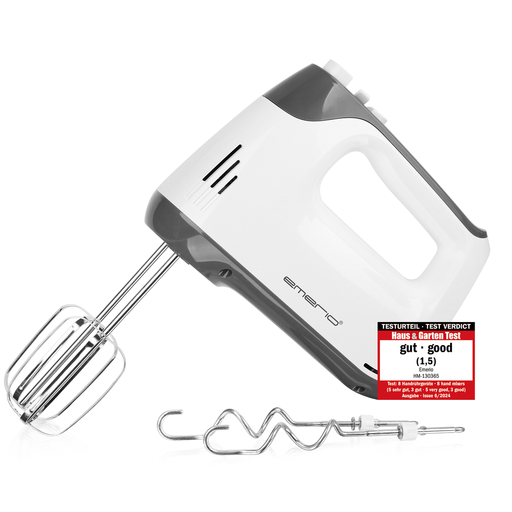 No image available
A hand mixer to consider if you want to adjust the speed as you mix.
Five speeds and a turbo function; white and grey.
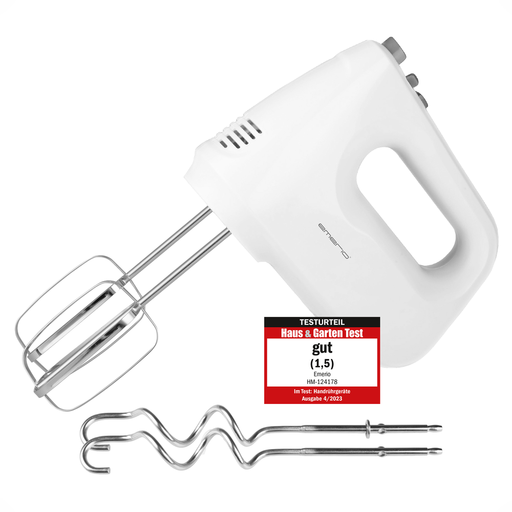 No image available
A hand mixer to consider if you want to adjust the speed to suit what you’re mixing.
Six speeds and a turbo function; white.
 No image available
This model has a motorised bowl and may suit you if you want to do less hand-held mixing; bear in mind that you’ll need room for the bowl.
Six speeds, 450 W, beaters and dough hook; white.
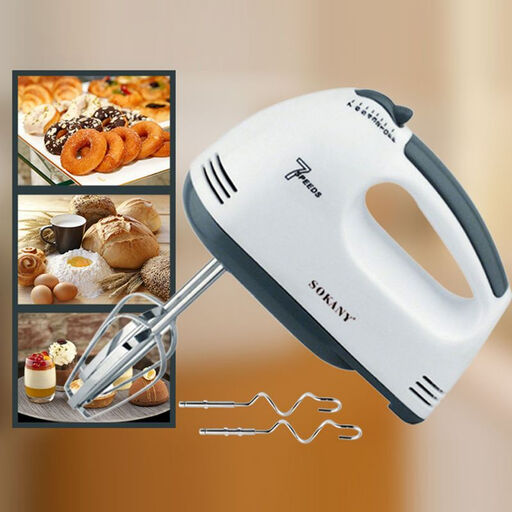 No image available
A hand mixer to consider if you want to whisk ingredients as well as mix them.
Seven speeds, 180 W and two beaters.
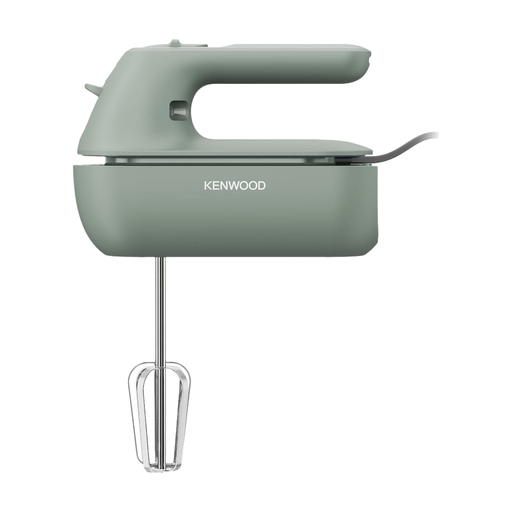 No image available
A hand mixer to consider if you want to mix and whisk ingredients, and keep the accessories together after use.
400 W, five speeds, beaters and dough hooks; lime green.
Not necessarily: in the banana bread recipe consulted from the Voedingscentrum, mashed bananas and eggs are mixed with a whisk or fork. Follow the method in your own cake recipe if it differs.
It depends on the recipe and the operating limits of the exact mixer. A stated maximum dough quantity isn’t a confirmed capacity for banana cake batter, so check the manual before combining batches.
Unplug the mixer before removing any attachments and keep the motor housing out of the water. Follow the cleaning instructions for your model, and thoroughly clean any surfaces and utensils that came into contact with raw batter.
According to the NVWA, even private individuals must prepare, store and sell food safely and hygienically at a market or event, and tell customers about allergens. The NVWA says a food safety plan is required for anyone who prepares and sells food several times a year; this requirement doesn’t automatically apply to a one-off bake sale.
The NVWA says that electrical products placed on the market in the Netherlands must carry CE marking. This marking is the manufacturer’s declaration that the product complies with the applicable European rules; it doesn’t mean that the NVWA has inspected each individual appliance in advance.