
Vandaag of morgen in huis

Kwaliteit gegarandeerd

Welkomstaanbiedingen ontgrendelen: GRATIS bezorging | Tot 80% korting | Gratis 30 dagen JoyPlus-proefperiode
Download de app
A hand luggage bag for flying seems easy to choose, until you reach the gate and discover it won’t fit under the seat. Budget travellers in particular can face extra charges if a bag is larger or heavier than the permitted dimensions. Even a roomy weekend bag can prove impractical if it’s difficult to organise or its shoulder strap becomes uncomfortable after a few trips.
Look out for these common pitfalls:
Always check the baggage rules of the airline you’re flying with. Rules can vary by ticket type, route and cabin. The following sizes are common:
Many travellers look for Ryanair hand luggage 40x20x25 cm when choosing a free underseat bag. A bag of these dimensions is compact enough for short trips, but its capacity is limited. Don’t overfill it: soft materials are easier to fit under a seat than a bulging bag.
An underseat bag is particularly useful for:
A 55x35x25 cm hand luggage bag offers considerably more space, but this size isn’t automatically permitted by every airline or on every ticket. Check the permitted weight as well as the length, width and depth. A soft cabin holdall may be a little more flexible than a hard suitcase, but it shouldn’t be packed so tightly that it loses its shape.
Compare the bag’s dimensions with your airline’s limits. Also consider its shape: a wide base or protruding handle could stop it fitting properly into a baggage sizer.
For example, a small hand luggage bag measuring 40 x 20 x 25 cm serves a different purpose from a weekend bag measuring 55 x 35 x 25 cm. Choose the former for a short flight without checked baggage, and the latter only if your cabin baggage allowance permits it.
A lightweight travel bag is useful if you have a lot of walking or connecting flights. Check its empty weight and how it can be carried. An adjustable shoulder strap is practical, while sturdy handles come in handy when boarding and leaving the aircraft.
A hand luggage bag with a trolley sleeve can also slide over a suitcase’s telescopic handle. This means you have fewer separate bags to manage when changing flights at the airport.
Oxford fabric, polyester and ABS all have different properties. Soft fabric is often lightweight and flexible, while ABS provides a hard outer shell that holds its shape. Check whether the product information describes the bag as water-resistant or simply as being made from easy-care fabric.
A hand luggage suitcase with a TSA lock may suit travellers looking for a lockable hard case. A TSA lock won’t prevent a bag from being opened, but it is designed to allow authorised inspection without forcing the lock. Keep the combination somewhere safe and test the lock before you travel.
The options below are based on verifiable details such as size, weight, capacity, material and carrying options. Check the airline’s current requirements before every flight.
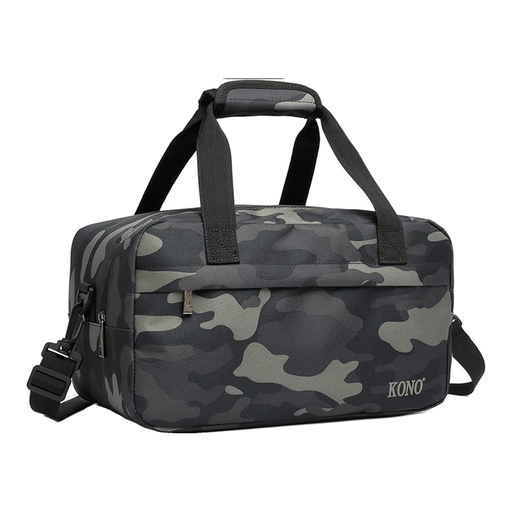
Why it suits this type of traveller: This compact bag is designed for short flights and weekend breaks when you want to take a bag under the seat. It has a capacity of 20 litres and a stated weight of 0.36 kg.
Its 40 x 20 x 25 cm dimensions make it an easy choice for travellers specifically looking for a Ryanair underseat bag. Do check your ticket conditions and airline’s requirements.
20-litre capacity, adjustable shoulder strap, handles and trolley sleeve. The product information specifies Oxford fabric but doesn’t mention water resistance.
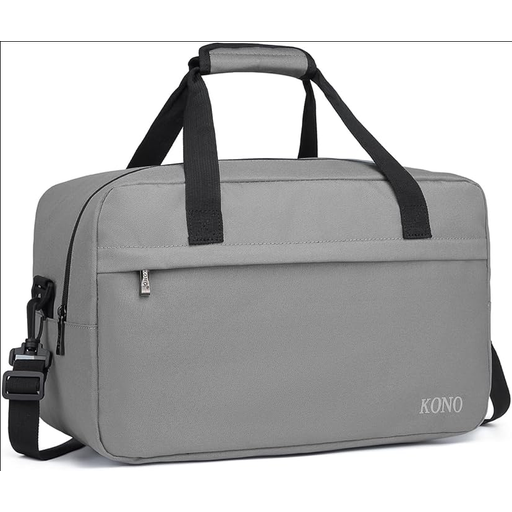
Why it suits this type of traveller: This spacious holdall is designed for weekend breaks, overnight stays and business trips when you need to pack more clothes and accessories.
The product page specifically advises checking airline rules. This makes it clear that 55 x 35 x 25 cm isn’t permitted everywhere.
Around 48 litres of capacity, a weight of 0.7 kg, multiple compartments and three carrying options. The product description says the Oxford fabric is water-resistant.
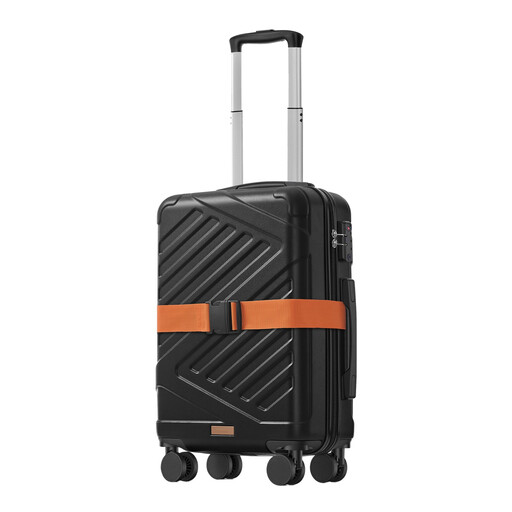
Why it suits this type of traveller: This hard-shell suitcase is a good choice for travellers who prefer a lockable case with wheels that holds its shape, whether for short trips or as cabin baggage, depending on the airline’s requirements.
The stated dimensions are 55 x 36 x 20 cm and the empty weight is 2.8 kg. Check these against your ticket, as a hard suitcase is less flexible than a soft bag.
ABS outer shell, 360-degree spinner wheels, TSA lock and a stated maximum static load of 8 kg.
We’ve put together a full, up-to-date list of products that meet these strict selection criteria and the applicable European safety regulations.
No. This size is often used for a small bag that fits under the seat, but requirements vary by airline and ticket. Check the dimensions, weight and placement rules before you travel.
A weekend bag for flying may be suitable if its size and weight fall within the cabin baggage allowance. A model measuring 55 x 35 x 25 cm offers more space, but it won’t automatically be accepted as free underseat baggage.
How long it lasts depends on how it’s used, as well as the zips, wheels, seams and how well it’s maintained. Avoid overpacking, distribute heavy items evenly and follow the care instructions. Oxford fabric can be wiped with a soft, damp cloth; don’t use harsh cleaners. For a hard-shell suitcase, it’s a good idea to check the lock and wheels before every trip.
