
Vandaag of morgen in huis

Kwaliteit gegarandeerd

Welkomstaanbiedingen ontgrendelen: GRATIS bezorging | Tot 80% korting | Gratis 30 dagen JoyPlus-proefperiode
Download de app
A hand blender may seem simple at first glance: plug it in, press a button and blend. However, models vary considerably in motor power, controls, accessories and ease of cleaning. A budget purchase may prove less practical later if you also want to chop nuts, whip cream or prepare large quantities of soup.
When comparing models, pay particular attention to these three common pitfalls:
For soup, sauces, soft vegetables and smoothies, a model with lower or medium power is often sufficient. A powerful hand blender is more appealing if you regularly prepare thick purées, hard vegetables or larger portions. The range includes power ratings from 150 W for the Nedis KAHB100CWT to 1,000 W for various Braun and Kenwood models.
However, power is not the only factor to consider. Also look at:
According to the product information, some models may be used continuously for approximately one minute. This is relevant when making a large pan of soup. A model with variable speed also gives you more control when preparing sauces and lighter mixtures.
A multi-function hand blender can combine several kitchen tools in one appliance. A whisk is suitable for whipping cream, egg whites or mixing batter. A chopper helps with herbs, onions, nuts or small portions of vegetables. A measuring jug is practical for smoothies and sauces.
Before buying, check:
A hand blender with whisk is useful for baking, while a hand blender with chopper offers more value if you often prepare ingredients in advance. For baby food, soup and purée, a well-designed blending foot is particularly important.
A stainless-steel blending foot can withstand daily contact with food and is generally easy to rinse clean. Also consider the shape of the guard around the blades. A splash guard can help reduce mess, but you should still immerse the blending foot fully in the ingredients before starting.
A BPA-free hand blender may be relevant when parts come into contact with food. Check whether this applies to all food-contact components or only the measuring jug. A “dishwasher-safe hand blender” usually means that only detachable parts may be placed in the dishwasher. The motor, plug and cable must not be immersed in water.
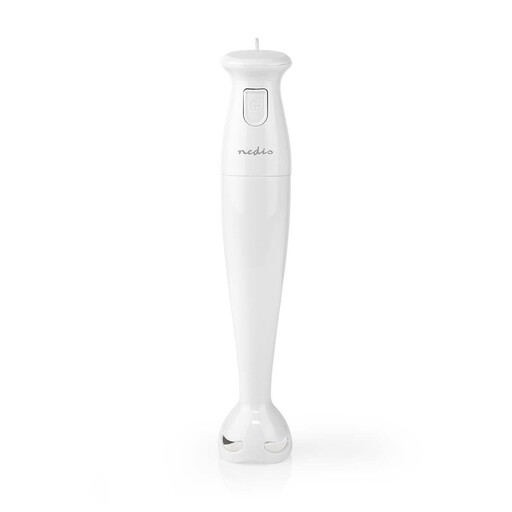
Why it suits this profile: This model is designed for simple tasks such as puréeing soup, blending sauces and processing soft fruit. One-button operation and its compact size keep things straightforward.
The product information clearly states that it has one speed, 150 W of power and no chopper or measuring jug. You therefore do not pay for accessories you do not need.
Compact design, a 1-metre cable and a simple handle for everyday use.
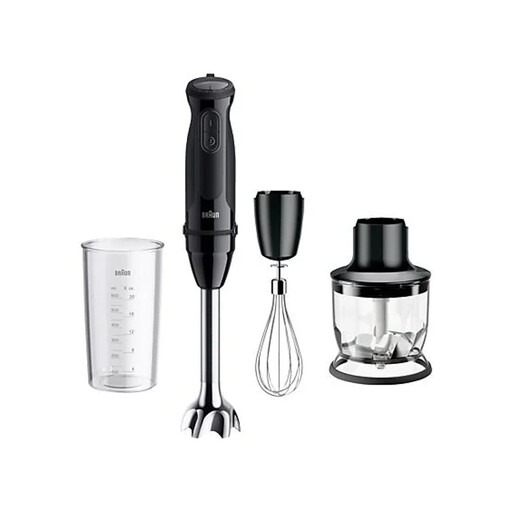
Why it suits this profile: For home cooks who regularly prepare a variety of dishes, this model offers a 1,000 W motor, 21 speeds, plus a whisk and beaker.
The difference between one fixed speed and 21 adjustable settings is clear. You can start gently with liquids and select a higher speed for thicker mixtures.
BPA-free food-contact parts, dishwasher-safe components and EasyClick Plus for changing accessories.
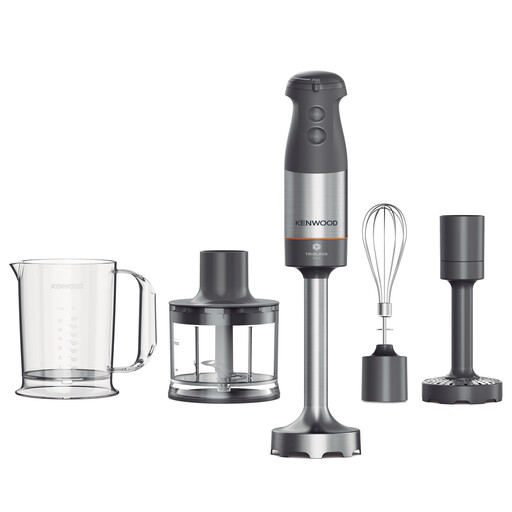
Why it suits this profile: The longer XL blending foot and included accessories are practical for larger portions of soup, purée and smoothies, as well as preparation work such as chopping.
The set specifically lists a whisk, measuring jug, mini chopper and masher. It also states that the accessories are dishwasher-safe.
1,000 W of power, two speeds and a wider Triblade XL blending foot, according to the product description.

Why it suits this profile: This model is aimed at users who want plenty of control when making sauces and purées, chopping ingredients and processing different textures.
The specifications list 25 speeds, a turbo function and a chopper with three texture settings. This makes its intended use clearer than a model described only with a marketing term such as “professional”.
1,000 W motor, 25 speeds, turbo function and dishwasher-safe parts, according to the product information.
We have put together a complete, up-to-date list of products that fully meet these strict selection criteria and the applicable European safety regulations.
Never use a hand blender without placing the blending foot in the ingredients first. Keep the blades away from spoons and spatulas, and unplug the appliance before changing accessories. Allow hot soup to cool first, following the manufacturer’s instructions; some models specify a maximum temperature of 80 °C.
Clean the blending foot immediately after use. Remove stuck-on residue before it dries and keep the motor unit dry. Also observe the recommended operating and resting times. This helps prevent unnecessary strain on the motor and keeps the appliance ready for everyday food preparation.
That depends on the model. A hand blender can often be used directly in a pan, but check the maximum temperature and operating time in the manual. If in doubt, allow boiling liquid to cool first to reduce the risk of splashing and burns.
For simple soups, sauces and smoothies, 150 to 450 W may be sufficient. For thick purées, larger portions and more intensive use, models rated at 800 to 1,000 W offer greater reserve power. Always compare the wattage with the speed control, accessories and permitted operating time.
Its lifespan depends on how it is used and maintained, as well as whether the instructions are followed. Do not run the motor for longer than specified, use the correct accessories and never immerse the motor unit in water. In the European Union, consumers also have a minimum two-year legal guarantee; additional rights may vary by country or manufacturer.
