
Vandaag of morgen in huis

Kwaliteit gegarandeerd

Welkomstaanbiedingen ontgrendelen: GRATIS bezorging | Tot 80% korting | Gratis 30 dagen JoyPlus-proefperiode
Download de app
A hand blender may seem like a simple purchase, but you’ll notice the differences between models in everyday use. A lightweight hand blender can be ideal for soups and sauces, while a more powerful electric hand blender is better suited to nuts, hard vegetables or larger portions.
When comparing models, don’t look only at the wattage or the number of accessories. The construction, controls and cleaning requirements often determine whether you’ll still use the appliance regularly after a few months.
Higher power doesn’t automatically mean every recipe will be blended more quickly or smoothly. The shape of the blending shaft, the blade, the drive mechanism and the recommended operating time all play a part. A 150-watt model may be suitable for soft vegetables and baby food, but less suited to thick hummus or hard ingredients.
Always check:
A hand blender with accessories may seem appealing, but a whisk, chopper or extra beaker takes up space. Choose a set that suits your cooking routine. For smoothies and soup, a blending shaft with a measuring beaker is often enough. For baking, a hand blender with whisk may be more useful. If you want to chop herbs, nuts or onions, a hand blender with chopper is a better choice.
Also check whether accessories are available separately and whether the instructions say they can go in the dishwasher.
A blending shaft that’s difficult to clean can put you off using your hand blender. Look for a detachable shaft, smooth surfaces and clear cleaning instructions. With a dishwasher-safe hand blender, usually only certain detachable parts are suitable for the dishwasher. The motor unit must not be immersed in water.
For lighter tasks such as milkshakes, sauces and soft vegetables, a compact model with one or two settings is often enough. For thicker mixtures, a powerful hand blender with multiple settings is more practical. Variable speed control gives you more control over the texture and can help reduce splashing when you start slowly.
Examples from the range:
Power and technology claims from brands, such as ‘up to four times finer’, should be understood as claims made in the brand’s product description. They don’t guarantee the same results in every kitchen.
A metal blending shaft can generally withstand everyday use and high temperatures, but always check whether the manufacturer says it can be used with hot liquids. It’s best to let boiling soup cool slightly first and to follow the instructions.
A BPA-free hand blender is worth considering if plastic parts come into contact with food. Check whether the claim applies to all food-contact parts or only to the supplied beaker. According to the product descriptions, various Braun models have BPA-free food-contact parts.
A 600 to 800 ml measuring beaker is handy for smoothies, dressings and small portions. A cord of around one metre gives you enough room to move around most worktops. A cordless hand blender offers more freedom, but check the charging time, battery life, weight and cleaning instructions.
A push button that you have to hold down helps prevent the appliance from running unintentionally. An ergonomic handle can make a difference if you use it frequently.
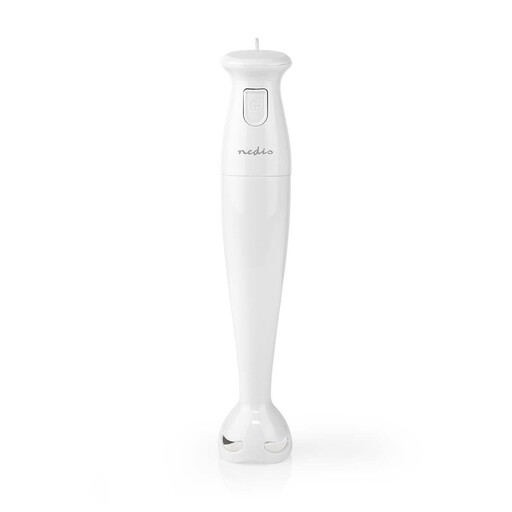
Why it suits this profile: This simple model is designed for everyday puréeing of vegetables, sauces, milkshakes and soft baby food. One-button operation keeps things straightforward.
The product description clearly states that it has one speed and 150 watts, and comes without a chopper or measuring beaker. That means you won’t pay for accessories you may not use.
Compact design, a 1-metre cord and easy blending straight into a bowl or pan.
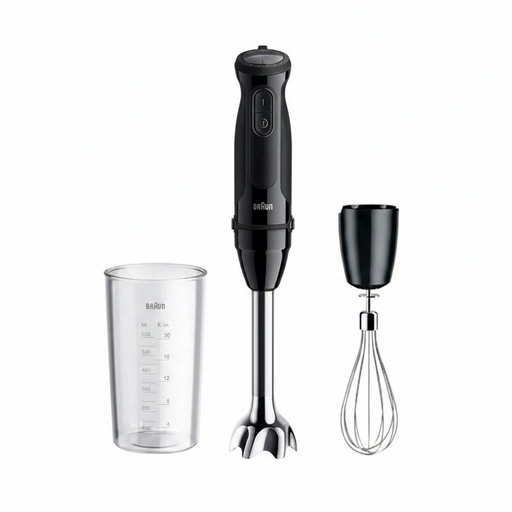
Why it suits this profile: The 1,000-watt motor, 21 speeds and whisk attachment give you control when preparing sauces, batter, soup and smoothies.
The specifications list the power, number of settings, BPA-free food-contact parts and dishwasher-safe detachable parts separately.
21 speeds, a 1.2-metre cord, whisk and EasyClick system, according to the product details.

Why it suits this profile: With 20 speeds, a turbo setting, whisk and chopper, this hand blender is a good fit for households that want to prepare a range of dishes with one appliance.
Variable speed control means you aren’t limited to choosing between on and off. The parts are detachable; check the exact dishwasher instructions before use.
800 watts, 20 speeds plus turbo, a BPA-free design and a two-year warranty, according to the product information.
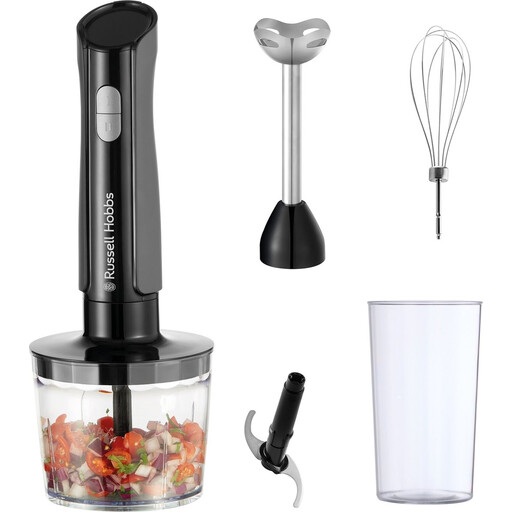
Why it suits this profile: The set combines blending, chopping and whisking. It’s handy if you cook regularly but don’t want to make space for a separate food processor.
The product details list two speeds, a 500 ml chopping bowl and a 600 ml blending beaker. This lets you check the capacity against your portion sizes in advance.
500 watts, whisk and chopping attachments, non-slip feet and dishwasher-safe detachable parts, according to the product description.
We’ve put together a complete, up-to-date list of products that meet these strict selection criteria and the applicable European safety regulations.
Your hand blender will stay in good working order for longer if you follow these basic rules:
Want to purée soup straight in the pan? Check that the manufacturer allows this and avoid contact with a hot base. For a hand blender for soup and smoothies, a splash guard and a sufficiently deep beaker are practical features.
Around 150 to 450 watts is often suitable for sauces, soft vegetables and milkshakes. If you make thicker mixtures, blend nuts or prepare larger quantities, look for a model with 600 watts or more. Wattage alone doesn’t determine the end result; blade shape and operating time matter too.
That depends on the manufacturer’s instructions. Don’t blend soup while it’s boiling, and take care to prevent hot liquid from splashing. A metal blending shaft isn’t automatically suitable for every temperature, so check the instructions for your chosen model.
Its lifespan depends on how often you use it, how hard you work it, how you clean it and whether you follow the recommended operating time. A detachable shaft, available accessories and clear warranty terms can make everyday use easier. When you buy, also check the statutory guarantee and the seller’s or manufacturer’s contact details.
