
Making small batches of dressing
You want to blend soft ingredients without using or washing lots of parts for a quick job. The Dutch Consumers’ Association discusses extra accessories as a way to use a hand blender for more kitchen tasks.


For small batches of yoghurt dressing, a simple hand blender with a suitable beaker and a detachable blending foot is often a sensible place to start; extra power or attachments are not automatically more useful. If you share a kitchen, also consider the speed settings, splash control and cleaning instructions for the parts. Choose a chopper or whisk mainly if you use those functions for other tasks too.
You want to blend soft ingredients without using or washing lots of parts for a quick job. The Dutch Consumers’ Association discusses extra accessories as a way to use a hand blender for more kitchen tasks.
You want to leave the worktop clean and wash any food-contact parts after use. The Netherlands Nutrition Centre recommends using clean utensils and equipment.
You also make recipes that call for a chopper or whisk, and you don’t mind having extra parts. The Dutch Consumers’ Association explains how accessories can expand the uses of a hand blender.
Start with the amount of dressing you’re making and the parts you’ll need to clean afterwards. Then consider whether speed control or extra attachments would be useful for the way you cook.
Best for: mainly blending yoghurt and soft flavourings, with few parts to store.
The trade-off: without extra accessories, you have fewer options for chopping or whisking ingredients separately.
Best for: anyone who wants to adjust the speed gradually while blending.
The trade-off: a speed control on its own doesn’t prove that the dressing will blend better; compare the controls and beaker for the exact model.
Best for: anyone who regularly chops ingredients or whisks mixtures as well as making dressing.
The trade-off: the extra parts take up storage space and need washing after use.
| What to consider | What to look for when buying | Who is this important for? |
|---|---|---|
| Small batches | Check whether the model comes with a beaker and whether you really need the extra accessories. | For a small bowl of dressing, I want my own mixing container and no more loose parts than necessary. Consumers who prioritise small portions and simplicity make up around 33%. |
| Cleaning | Check which parts detach and which are dishwasher-safe according to the instructions; wash food-contact parts after use. | In a shared kitchen, I want to be able to clean used parts easily before someone else uses the worktop. Consumers who prioritise cleaning and hygiene make up around 34%. |
| Splashes and speed | Compare the speed settings, the supplied beaker and the shape of the blending foot; treat splash-control claims as specific to the model. | When I’m blending runny dressing on a shared worktop, I want to adjust the controls and keep mess to a minimum. Consumers who focus mainly on splash and speed control make up around 25%. |
| Extra functions | Check the attachments for the full model number and think about where you’ll store them. | If I also want to chop herbs or whisk ingredients, a set can offer extra functions, but it also needs space and takes more work to clean. Consumers who prioritise several food-preparation functions make up around 8%. |
The Dutch Consumers’ Association recommends at least 600 W for heavier tasks such as puréeing and chopping, not specifically for blending yoghurt dressing. Wattage alone is therefore no proof of how well a blender will handle this recipe.
Start with what you’re making, the controls, the beaker and how easy it is to clean; don’t judge wattage in isolation.
A model with functions you don’t use still takes up storage space.
You don’t need a chopper or whisk to blend yoghurt with soft ingredients. They’re mainly useful for other recipes.
Choose extra attachments only if you’ll actually use them for chopping or whisking.
More parts mean more to clean and store after use.
The Braun MQ7000WH and MQ7000X have different model designations; the MQ7000X is described as having a different blending foot. So don’t assume they’re the same model just because their names are similar.
Compare the full model number, blending foot and box contents before choosing a model.
ErgoMixx models come with a range of controls and accessories; compare the exact models for a simple blending task.
MultiQuick models differ in their controls and accessories; the MQ7000WH is an option if you want stepless speed control.
The Quickchef+ HB67MB is designed for anyone who wants to use a chopper and whisk as well as blend.
Philips publishes cleaning instructions that may be useful if easy cleaning is a priority.
This selection includes hand blenders for small batches, models with splash or speed control features, and sets with extra attachments. Check the details of the model you’re considering.
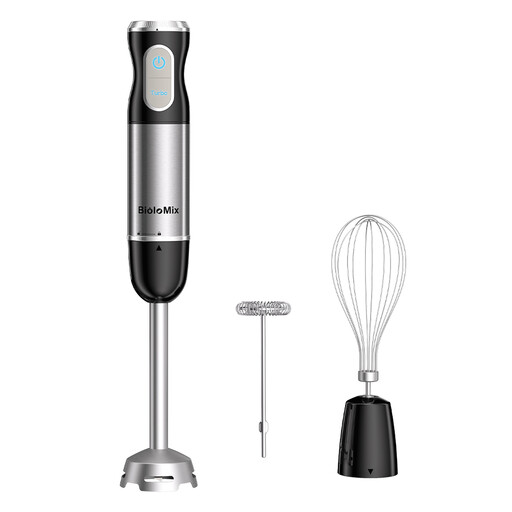 Image unavailable
The product title mentions a detachable design and splash protection, features to consider if you’ll be using it on a shared worktop.
The title also mentions 3-in-1 and TURBO; check which parts are included with this model.
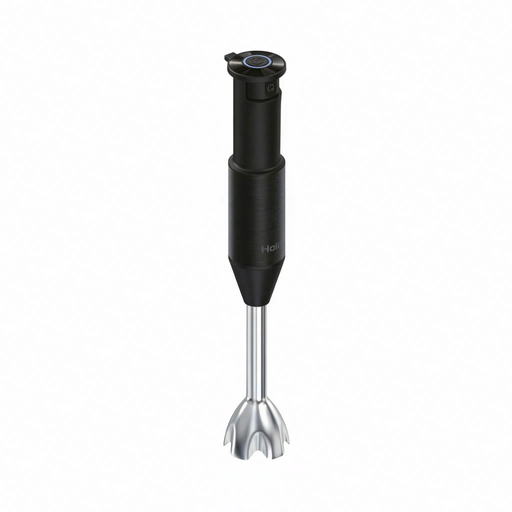 Image unavailable
The listed 0.9 l measuring beaker may suit anyone who wants a dedicated mixing container for dressing.
The product title also mentions three blades.
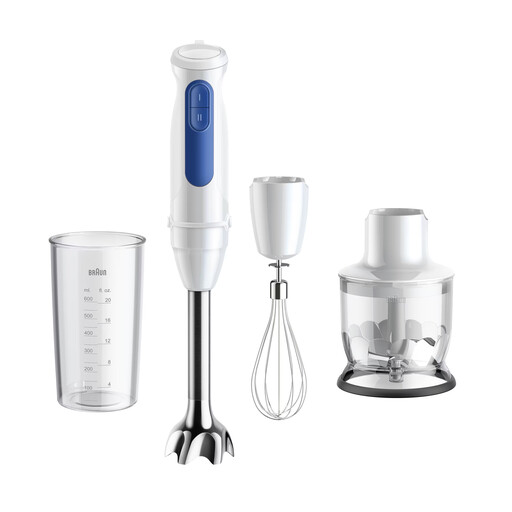 Image unavailable
A model to compare if you’re looking for a Braun MultiQuick 5; check the controls and parts included with this exact model before choosing.
 Image unavailable
A set with extra accessories may suit you if you make other recipes as well as dressing; bear in mind the space needed and the cleaning involved for loose parts.
The product is described as a MultiQuick 5 Pro; check which accessories are included with this model number.
 Image unavailable
The title lists a 700 ml measuring beaker, a 500 ml chopper and a whisk, so you can weigh up the extra functions against the storage space needed.
The title lists a maximum of 1200 W and 15,000 rpm. The product information recommends using it for no more than 1 minute at a time, followed by a 1-minute rest.
No, not for blending yoghurt with other soft ingredients. A chopper is mainly useful if you also want to chop ingredients separately; check whether one is included with the exact model.
Wash the food-contact parts you’ve used afterwards and use clean utensils. Philips describes an initial cleaning step for its hand blenders using warm water and washing-up liquid in a beaker; follow the instructions for your model when removing parts and cleaning it further.
After use, return opened yoghurt to the fridge promptly and store it at 4 °C. Use a clean spoon, as recommended by the Netherlands Nutrition Centre. Don’t assume that the storage life of packaged dressing also applies to homemade dressing made with a different recipe.
You don’t need extra cover to have your statutory rights. The Netherlands Authority for Consumers and Markets points out that the retailer is responsible if a consumer product doesn’t meet what you can reasonably expect under normal use; check any additional cover terms separately.
Businesses placing electrical appliances on the market in the Netherlands must meet European safety requirements. According to Business.gov.nl, CE marking is mandatory for products covered by an applicable product category; the mark is the manufacturer’s declaration of conformity, not an independent performance test of how well the product blends dressing.