
Cooking with a deep soup pan
If you’d rather blend the tomato soup in the pan, compare the pan’s height with the usable length of the blending foot and follow the instructions for the exact model.


For a deep soup pan, a hand blender with a longer blending shaft is a sensible option to look at first. For smaller portions, a standard hand blender with adjustable speed may be enough. Check the usable length of the blending foot, the instructions for the exact model and which attachments you’ll actually use. A hand blender won’t chill or store your soup, so plan separately for safe food storage.
If you’d rather blend the tomato soup in the pan, compare the pan’s height with the usable length of the blending foot and follow the instructions for the exact model.
If you want to blend the soup with control, pay attention to the controls. Wattage alone won’t tell you whether the soup will be smooth; look for relevant blending tests if that result is important to you.
If you want to minimise splashing and easily detach and clean the parts after use, check which parts are removable and what cleaning instructions apply to each model.
| What to consider | What should you check? | Who is this important for? |
|---|---|---|
| Reach in the pan | Compare the pan’s height with the usable length of the blending foot. Also check the operating time in the manual. | If I want to blend directly in a deep pan, the blending foot needs to reach the soup properly. Around 36% of consumers cite pan reach as their main consideration. |
| Control over texture | Check how to adjust the speed and look for relevant independent tests if a very smooth result is important to you. | If I want to decide how finely blended the soup is, controls I can adjust while blending are important. Around 29% of consumers put texture control first. |
| Splashing and cleaning | Place the blending foot in the soup before switching on the hand blender. Check the cleaning instructions for each part. | After blending for several guests, I want to minimise splashing and clean the parts quickly. An estimated 21% of consumers name splash control and cleaning as their top priorities. |
| Extra attachments | Decide whether you’ll use a chopper or whisk as well as the blending foot; the beaker capacity isn’t a measure of how much soup a whole pan can hold. | If I’ll use the extra parts for other recipes too, they may be worth making room for in the cupboard. Around 14% of consumers focus mainly on extra uses and the storage space they require. |
A mixing beaker or chopper is designed for a different way of working from blending directly in a pan. The capacity of an attachment doesn’t tell you how far the blending foot will reach into your pan.
Check the blending foot and the pan separately from the capacity of the supplied attachments.
Wattage isn’t an independent measure of texture or endurance. For the MQ50236M, Braun lists both 1000 W in the product description and 750 W in the technical specifications.
Compare the controls and relevant independent blending tests. Ask for clarification about any conflicting model specifications before using them to compare models.
A hand blender won’t chill or store your soup. For a community meal, you’ll need to plan preparation, chilling and serving separately.
Follow the food safety guidance that applies to the way the meal is being organised.
The Triblade XL+ HBM60.307GY is worth considering if reach in a larger pan is important to you.
The ErgoMaster MSM6M622 combines a removable metal blending foot with stepless speed control.
The Quickchef HB659838 is an option if you’re looking for adjustable speed and attachments.
The MultiQuick 5 MQ50236M is listed with speed settings and SplashControl.
The Philips 5000 Series is described by the manufacturer as featuring a ProMix design and splash protection.
These Joybuy products are hand blenders and sets for blending soup, with different features to consider, such as attachments, reach in the pan and controls.
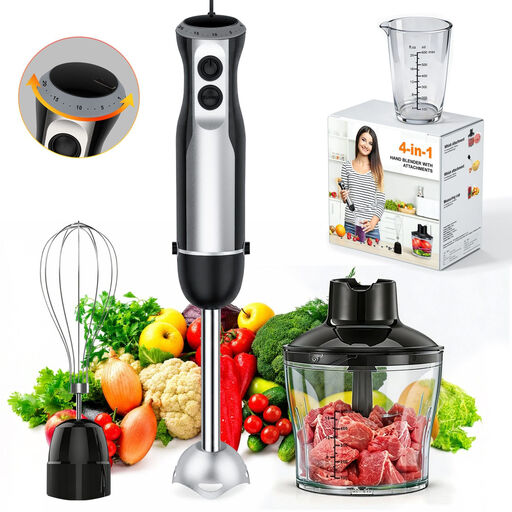 Image unavailable
A set for blending soup, with a chopper and whisk as well.
The product name lists 20 speeds, a turbo function and a power rating of 1000 W.
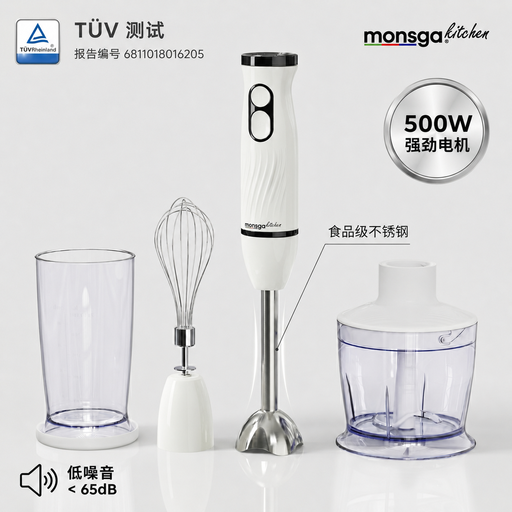 Image unavailable
An option to consider if you’d like a whisk and chopper as well as a blending foot.
The product name lists a 500 ml chopper and mixing beaker, a 1.5 m cable and a splash-resistant design.
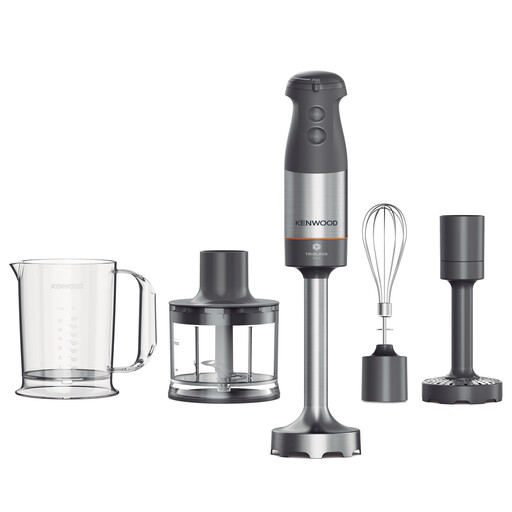 Image unavailable
An option if you’re looking for a longer XL blending foot for larger quantities; Kenwood describes this as a feature of the Triblade XL+.
Check that the blending foot suits your pan and follow the model instructions on operating time.
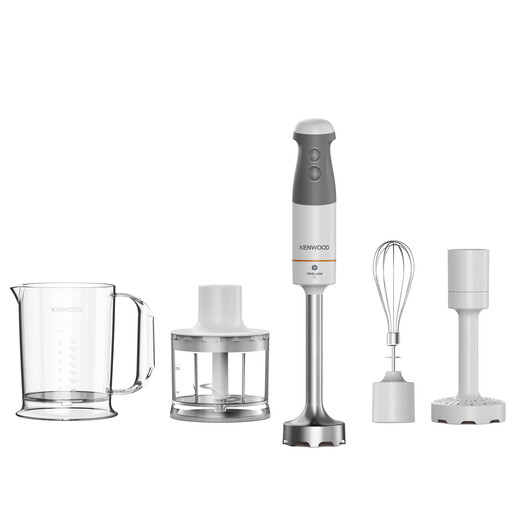 Image unavailable
A hand blender to compare if you’re mainly looking for a blending foot for puréeing ingredients.
Immerse the blending foot in the ingredients before switching on the hand blender.
 Image unavailable
A set with stepless speed control for anyone who wants to use attachments as well as blend.
The product name lists up to 1200 W, a 700 ml mixing beaker, a 500 ml chopper and a whisk. According to the stated duty cycle, the appliance can run for a maximum of 1 minute, followed by 1 minute of rest.
Place the blending foot in the pan before switching on the hand blender. Also check whether the model has a suitable speed control; a splash-resistant design alone can’t guarantee that splashing will be prevented.
This varies by model and part. Unplug the appliance first, detach the attachments and follow the cleaning instructions for the exact model.
The Netherlands Nutrition Centre (Voedingscentrum) recommends keeping your fridge at 4 °C. Keep leftovers covered, cooled and separate from raw products in the fridge, within two hours of preparation. Food sales and catering are also subject to applicable NVWA requirements; the NVWA specifies that perishable foods should be stored below 7 °C.
For a consumer purchase, the retailer must provide a solution if the product is faulty. According to the Dutch government, the Netherlands has no fixed statutory warranty period; a manufacturer’s guarantee is in addition to your statutory rights.