
The one-pan soup cook
You want to blend cooked sweet potato straight in the pan, and care most about texture and ease of use. Bosch describes its hand blenders as suitable for blending soup in the pan.


For cooked sweet potato soup, a hand blender with a detachable blending foot is a practical place to start. Extra speed settings are particularly useful if you want to adjust the texture as you blend. A splash-resistant foot can help, but the Consumentenbond also advises placing the foot in the soup before switching the blender on. Extra attachments are most useful if you’ll use them for other recipes too.
You want to blend cooked sweet potato straight in the pan, and care most about texture and ease of use. Bosch describes its hand blenders as suitable for blending soup in the pan.
You want to blend hot soup just before your guests arrive and are looking for a blender you can use with control. The Consumentenbond advises placing the foot in the pan or bowl before switching the blender on.
You want to keep washing-up to a minimum after blending, so look for a detachable blending foot and check which parts are dishwasher-safe.
Start by checking the controls and foot for blending in the pan, then consider cleaning and the included attachments. The wattage alone won’t tell you how smooth your soup will be.
| What to consider | What to look for | Who is this important for? |
|---|---|---|
| Soup texture | Check how many speed settings the model has and whether the manual covers using it for your recipe. | If I want to adjust the texture of cooked sweet potato as I blend, I pay particular attention to the controls; around 29% of consumers put their preferred soup texture first. |
| Controlling splashes | Look at the shape of the foot and the available controls; place the foot in the pan before switching the blender on, as the Consumentenbond advises. | When I want to blend hot soup just before guests arrive, I want to be able to start gently and keep splashes to a minimum; around 29% of consumers prioritise blending with control. |
| Cleaning | Check whether the foot is detachable and which removable parts the manual says are dishwasher-safe. | If I want to clear up quickly after cooking, I check which parts can be removed and how they can be cleaned; around 24% of consumers put ease of cleaning first. |
| Attachments | Compare what’s included in the box; a chopper or whisk is most useful if you’ll use it for other tasks too. | If I only want to blend soup, I’d rather keep the number of unused parts to a minimum; around 18% of consumers make a simple set-up their top priority. |
A splash-resistant foot won’t automatically stop hot soup from splashing. The position of the foot before you switch the blender on matters too.
Follow the manual for your chosen model and place the foot in the soup first. The Consumentenbond gives the same advice for using a blender in a pan or bowl.
Wattage is a product specification, not a measured result for your soup. The Consumentenbond recommends at least 600 W for heavier blending and chopping; this isn’t a general minimum for every pan of cooked soup.
Consider the wattage alongside the controls, blending foot and uses described in the manual.
A chopper and whisk are designed for kitchen jobs other than blending soup. Extra parts take up storage space and need washing if you use them.
Check exactly what’s included in the box and choose attachments only if you’ll use them for chopping or whisking too.
The ErgoMixx range includes models with straightforward controls as well as options with more speed settings.
The MultiQuick range includes models with different controls and accessories, so check each version individually.
The Quickchef+ HB67MB is a version with attachments for blending and other kitchen tasks.
Philips markets models including the 5000 Series for making creamy soup.
This selection focuses on hand blenders for soup, with speed control, splash management and cleaning in mind.
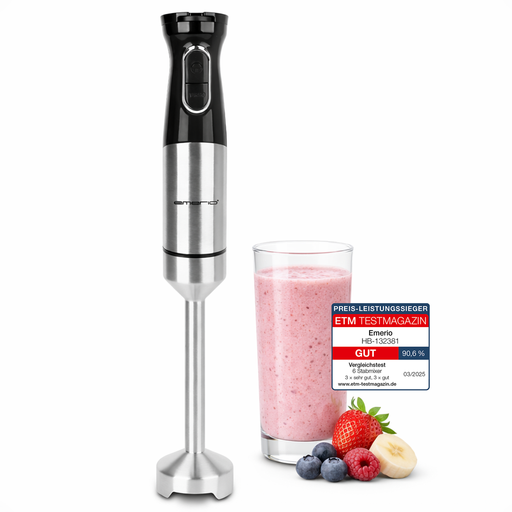 No image available
A good fit if you want to adjust the speed as you blend and are looking for a detachable blending foot.
The product information lists variable speed and a stainless steel blending foot. For hot liquids, the product description recommends using a heat-resistant bowl and blending in small batches.
 No image available
The product description lists thick soup as a suitable use and offers several speed settings to give you more control.
The description lists twenty speed settings, a turbo setting, splash protection and dishwasher-safe parts.
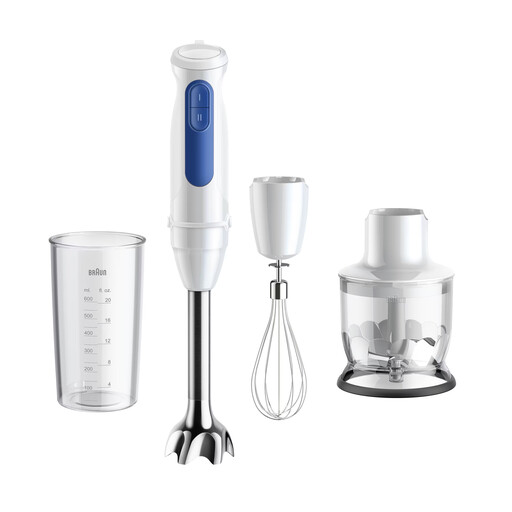 No image available
An option if you want to blend soup using two speed settings and remove parts for cleaning afterwards.
The product description lists two speed settings, SplashControl, a detachable blending foot and dishwasher-safe parts.
 No image available
Variable speed control is useful if you want to adjust the texture as you blend.
The product description lists 21 speed settings, SplashControl and dishwasher-safe parts. The product information also mentions a small-portion blending attachment and a beaker; bear in mind that you’ll have extra parts to store and clean.
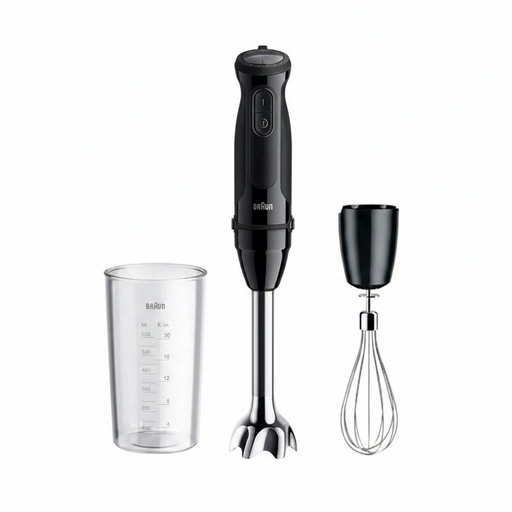 No image available
A good fit if you expect to use a whisk or chopper as well as blending.
The product description lists 21 speed settings, SplashControl and dishwasher-safe parts. The included whisk and chopper need extra storage space and cleaning.
No, not for blending cooked soup. The Consumentenbond describes a chopper as suitable for finely chopping foods such as onions, herbs and nuts; choose one if you want to do those jobs too.
The Consumentenbond advises placing the foot in the pan or bowl before switching the hand blender on. Also follow your model’s manual, especially when using hot ingredients.
Follow the manual for your hand blender. Braun recommends a maximum of two minutes at a time for light tasks such as blending soup; don’t assume this limit applies to models or versions from other brands.
According to ACM ConsuWijzer, online purchases in the Netherlands generally come with a 14-day cooling-off period after delivery, subject to legal exceptions. If a product is faulty, the seller must offer an appropriate solution under the terms of the statutory guarantee; a manufacturer’s guarantee doesn’t replace this right.
The Netherlands Food and Consumer Product Safety Authority states that CE marking is required for electrical products covered by the applicable regulations. The mark is the manufacturer’s declaration of conformity, not an independent test of splash control or blending performance.