
Small-batch maker
You make a few portions of coulis at a time and are mainly looking for a blending foot and beaker that work well with small amounts of fruit. Braun describes a mini blending foot with a 250 ml beaker for small portions.


Start by considering how the blending foot and beaker work together: the foot needs to stay submerged in your usual amount of fruit. A larger set isn’t automatically better suited to the job. For seedless coulis, strain the purée separately and check that the foot and accessories suit the way you’ll use them.
You make a few portions of coulis at a time and are mainly looking for a blending foot and beaker that work well with small amounts of fruit. Braun describes a mini blending foot with a 250 ml beaker for small portions.
You want to pour coulis over a dessert without noticeable raspberry seeds. As well as puréeing, you’ll need a fine sieve; a recipe by Emeril Lagasse describes straining puréed fruit.
You make other dishes too, so separate attachments such as a whisk or chopper could come in handy. Smeg describes these accessories for the HBF03BLEU set.
| What to consider | What should you check? | Who is this important for? |
|---|---|---|
| Puréeing small portions | Compare the shape and diameter of the foot with the beaker and the amount you usually make. The stated beaker capacity alone doesn’t tell you how much fruit the blades can reach. | If I’m only making a few spoonfuls of fruit, I want the blending foot to reach the whole portion. Around 36% of consumers say small portions are their top priority. |
| Keeping splashes to a minimum | Check the shape and height of the beaker, and whether the model has speed control. Bosch describes the MSM66110 as having AntiSplash, but this doesn’t prove that it will blend coulis without splashing. | If you’re blending in a small beaker, you’ll want to keep splashes under control without constantly scraping sauce off the sides. Around 29% of consumers rank this above other buying preferences. |
| Removing seeds from coulis | Treat puréeing and straining as two separate steps: after puréeing, use a fine sieve to remove the seeds. | If I want to serve a smooth sauce with a dessert, I also need a way to strain out the seeds. Around 21% of consumers put this texture preference first. |
| Cleaning | Check which parts can be detached and follow the cleaning instructions in the manual for each part. | If you want to avoid washing lots of separate parts after making a small batch, ease of cleaning is worth considering. It’s the top buying priority for around 14% of consumers. |
A beaker’s total capacity doesn’t tell you whether the blending foot will stay submerged when you’re only using a few spoonfuls of fruit.
Compare the shape of the foot and beaker with your usual portion. If you’re buying a separate mini foot, check that it fits your motor unit.
A narrower beaker or compatible mini foot may need to be bought separately.
Puréeing and removing seeds are two different steps. A raspberry coulis recipe strains the fruit after puréeing.
Choose a blender for puréeing, then use a fine sieve if you want a seedless sauce.
Straining adds an extra step to the process.
A whisk or chopper won’t replace a suitable blending foot or a sieve when making coulis.
Choose extra attachments only if you’ll also use them for other recipes.
Extra parts take up storage space and need cleaning after use.
Worth considering if a mini blending foot for small portions is important to you.
The ErgoMixx MSM66110 is an example of a hand blender that comes with a beaker described as suitable for small quantities.
The Daily Collection ProMix HR2535/00 is worth comparing if a beaker and chopper would also be useful for other recipes.
The HBF03BLEU is an extensive set to compare if you want to use other attachments as well as making coulis.
The Quickchef+ HB67G8 is worth comparing if you’re also looking for a whisk and chopping attachment.
Based on their product names or selection information, these Joybuy hand blenders are suited to puréeing and making sauces. Check that the foot and beaker of each model are suitable for the small portions you usually make.
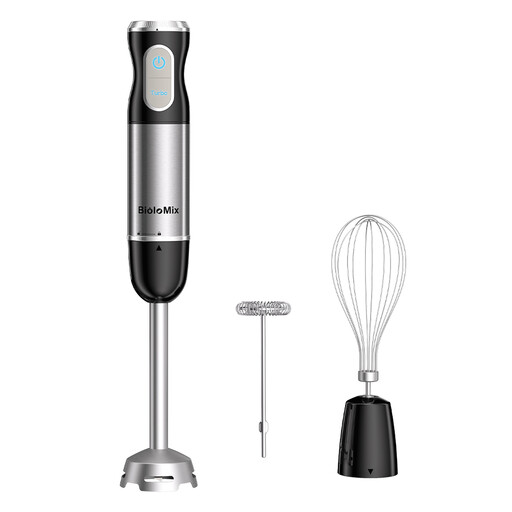 No image available
An option to compare if you’re looking for a hand blender with a detachable design for puréeing.
The product name specifies a 3-in-1 design and splash protection.
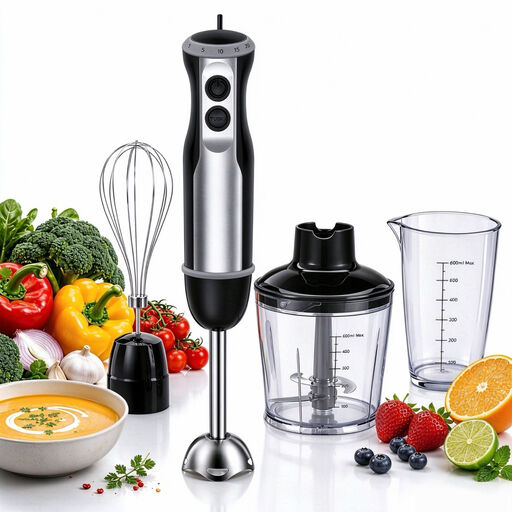 No image available
An option to compare if you want to purée sauces and are also looking for other kitchen functions.
The product name specifies 6 speeds and a turbo function.
 No image available
An option to compare if you’re looking for a Braun hand blender to purée fruit and make sauces.
 No image available
An option to compare if you’re looking for a model with variable speed for puréeing sauces.
The product name specifies 800 W and variable speed.
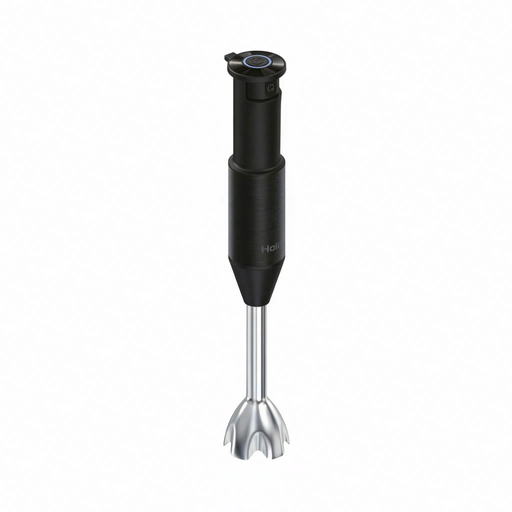 No image available
An option to compare if you’re looking for a hand blender with a beaker for puréeing and making sauces.
The product name specifies 3 blades and a 0.9-litre beaker. The capacity alone doesn’t tell you whether the beaker is suitable for your small portion.
No. Puréeing and removing the seeds are separate steps. Choose a foot that suits the amount you’re making and your beaker, then push the purée through a fine sieve.
Don’t assume that you can. Check the manual for the exact model to see which parts can be detached and how they should be cleaned.
The Netherlands Food and Consumer Product Safety Authority states that CE marking is mandatory for electrical products, and that parts intended to come into contact with food are covered by the applicable food contact materials rules. These general rules don’t confirm that a specific product on sale complies with them.
In the Netherlands, you can claim under the statutory guarantee from the seller. According to the Dutch Government, there’s no set statutory guarantee period of exactly two years; what you can expect from a product depends, among other things, on the product itself.
Wash the fruit thoroughly under running water. The Voedingscentrum recommends this for fruit to remove dirt and dust.