
Making peach purée
If you mainly want to purée soft fruit, a basic blending foot may be all you need. Consumentenbond lists puréeing as one of the uses for a hand blender.


For soft peaches, a basic hand blender with a blending foot is usually all you need; there’s no need for a chopper or whisk. In a shared kitchen, the cleaning instructions, measuring beaker and storage space for loose parts are the main things to consider. Choose a more comprehensive set only if you’ll actually use the extra attachments.
If you mainly want to purée soft fruit, a basic blending foot may be all you need. Consumentenbond lists puréeing as one of the uses for a hand blender.
If several people use the kitchen, the cleaning instructions and how you leave the foot and beaker clean are practical points to consider.
If you also want to chop or whisk, consider whether those attachments are worth the extra parts you’ll need to store and clean. Consumentenbond describes a chopper and whisk as attachments for other types of food preparation.
Suitable if: You mainly make peach purée and want to store or wash as few separate parts as possible.
Trade-off: A basic model offers fewer options for tasks such as chopping or whisking.
Suitable if: You want to adjust the speed and clean the foot separately; check the instructions for the exact model.
Trade-off: Detachable doesn’t automatically mean that every part is dishwasher-safe.
Suitable if: You also regularly use the shared kitchen to chop ingredients or whisk something.
Trade-off: Extra attachments need more storage space and cleaning; they aren’t necessary if you’re only making peach purée.
| What to consider | What should you check? | Who is this important for? |
|---|---|---|
| Desired texture | Check that a blending foot and a beaker suitable for your portion size are included; treat speed settings as a way to control the appliance, not as a guarantee of a particular result. | I want to purée peaches to the texture I’m looking for, without buying attachments for other jobs. Around 29% of consumers say texture is their top priority. |
| Leaving it clean | Read the instructions for the specific model on detaching and cleaning the foot and beaker, including any guidance on using a dishwasher. | I share the kitchen and want to leave the appliance clean for the next person. Around 36% of consumers put cleaning first when using a shared kitchen. |
| Space and controls | Compare the included parts with the worktop and cupboard space you have; check the full model code to confirm what’s included in the set. | I have little room for loose parts and want a simple model that suits the way I’ll use it. Around 21% of consumers name limited space as their main consideration. |
| Other types of food preparation | Check that the specific model includes the chopper, whisk and beaker you want. | I want to chop ingredients or whisk as well as make purée, and I have room for the extra parts. Around 14% of consumers prioritise these additional uses. |
A blending foot is the basic attachment for puréeing; a chopper and whisk are designed for other types of food preparation.
Start with what you actually want to make, then decide whether the extra attachments are worth the space.
Extra parts need storage space and must be cleaned after use.
Cleaning instructions can vary by part and model. So you shouldn’t assume that a detachable foot can go in the dishwasher.
Check the instructions for the full model code and each individual part.
Different versions in the same product range may come with different attachments.
Before deciding, compare the full model code and set contents with the product specifications.
The ErgoMixx MSM64110 is an example of a basic model with two settings and a detachable metal blending foot.
Braun says the MultiQuick 1 MQ10.201MWH is designed for simple, one-speed operation.
The Quickchef+ HB67MB is a comprehensive set that includes a whisk and a chopper-blender, among other attachments.
bamix describes how to clean the shaft under running water and offers its own repair service.
This selection includes hand blenders for making peach purée, with cleaning in mind and a choice of both basic and more comprehensive models.
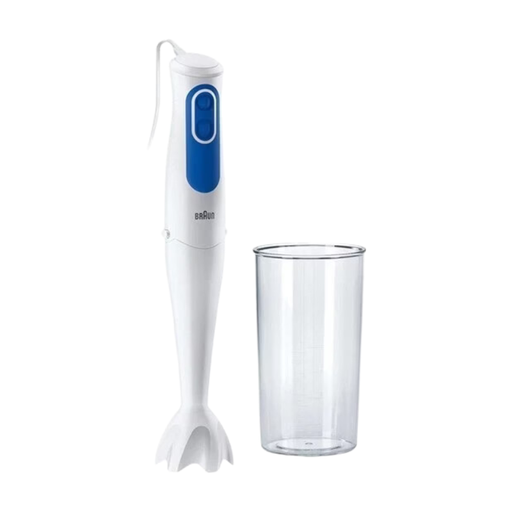 No image available
A hand blender for blending and puréeing, with detachable parts for cleaning.
Two speeds; 600 ml measuring beaker; detachable dishwasher-safe parts. Continuous use is limited to one minute.
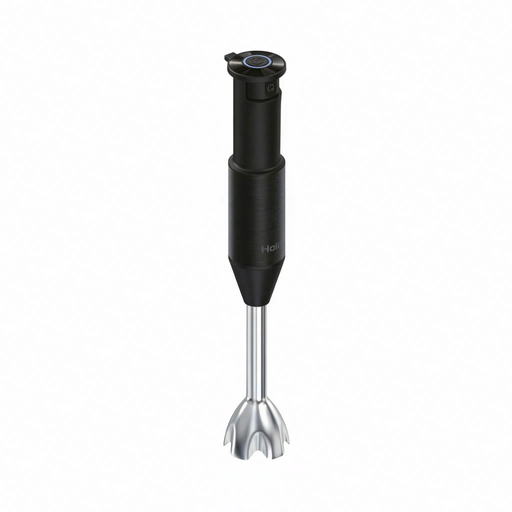 No image available
The product description lists puréeing as one of its uses and says the detachable arm and blades can be cleaned separately.
Three blades; 0.9 l beaker. The description recommends cleaning with warm, soapy water.
 No image available
The detachable stainless steel blending shaft is designed for blending; the set also includes a chopper and whisk.
700 ml measuring beaker. The extra parts need storage space and cleaning.
 No image available
The product title lists puréeing as one of its uses; the set includes several parts for other types of food preparation.
Two speeds; 800 ml beaker and 500 ml chopping bowl. The whisk, meat grinder and chopping bowl need extra storage space and cleaning.
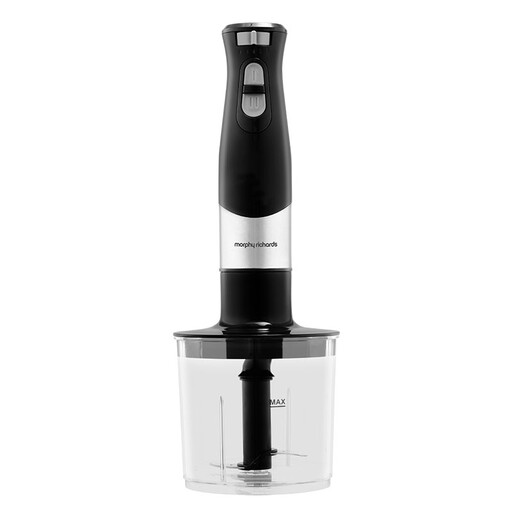 No image available
The detachable blending foot is designed for making smoothies, soups and sauces, among other things; the set also includes a whisk and chopping bowl.
Five speeds, turbo function and 700 ml measuring beaker. The whisk and chopping bowl need extra storage space and cleaning.
No. For puréeing fruit, a standard hand blender with a blending foot is the basic attachment you need. A chopper is for other chopping tasks; a special purée foot is designed for mashed potato.
Wash the peaches and use clean utensils. Put the blending foot into the ingredients before switching the appliance on to reduce splashing. Unplug it after use, then follow the manual for cleaning and any guidance on using a dishwasher.
Cover the purée, keep it separate from raw foods and put it in the fridge within two hours. Voedingscentrum recommends setting your fridge to 4 °C.
You don’t need an extended warranty to have legal protection. According to the Dutch government (Rijksoverheid), there is no fixed legal two-year warranty period for all products in the Netherlands; if a product is faulty, contact the seller. If you’re considering an additional warranty, check whether its terms actually give you extra rights.
Electrical appliances placed on the Dutch market must meet the applicable European requirements. After carrying out an assessment, the responsible manufacturer must affix a CE mark and draw up an EU declaration of conformity. A product listing doesn’t prove that an individual item has been checked.