What should you look for when buying?
For peach purée in a small kitchen, the key considerations are portion size, available storage space, cleaning and whether you also need a chopping function.
| What to consider |
What to look for |
Who is this important for? |
| Texture for small portions |
Check whether a beaker is included and how many speed settings the model has. Check the texture as you purée. |
If I make small portions, I want to purée the peach to the texture I’m after. Around 36% of consumers say texture when making small portions is their main consideration. |
| Storage space |
Check which parts are in the box and consider where you’ll store the motor, blender foot, beaker and any attachments. |
With limited cupboard space, I’d rather not store parts I don’t use. Around 29% of consumers make saving space their top priority. |
| Cleaning |
Read the manual for cleaning instructions and check which parts, if any, are dishwasher-safe. Unplug the appliance before cleaning. |
After puréeing, I want to be able to clean the parts easily. Around 21% of consumers prioritise easy cleaning. |
| Extra chopping function |
Check the full model code to confirm whether a chopper is included and what its capacity is. |
If I also want to chop other ingredients, an extra attachment could be useful. Around 14% of consumers say versatility is their main consideration. |
Hand blenders at Joybuy
This selection includes hand blenders for puréeing with a beaker, as well as sets with extra attachments. Choose a straightforward model if you mainly make peach purée; consider a set if you also want to chop or whisk and have room to store the extra parts.
 No image available
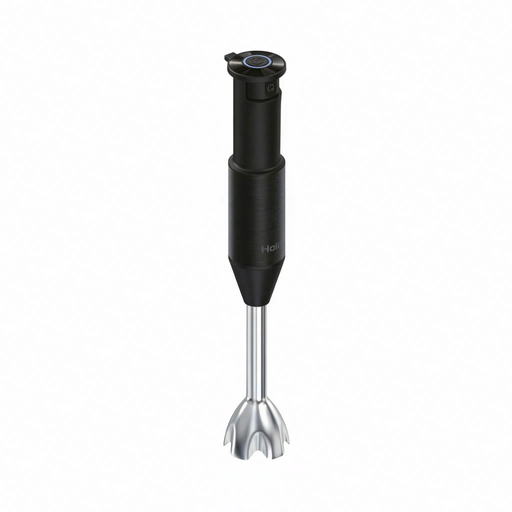
Haier I-Master HHB5B2011 hand blender
An option if you want to purée peaches with a hand blender and use the included beaker.
The product name lists three blades and a 0.9 l beaker.
View at Joybuy
 No image available
Emerio HB-130492 hand blender set
Ideal if you want to chop or whisk ingredients as well as purée peaches, and have room to store the extra parts.
The set includes a 700 ml measuring beaker, a chopper and a whisk.
View at Joybuy
 No image available
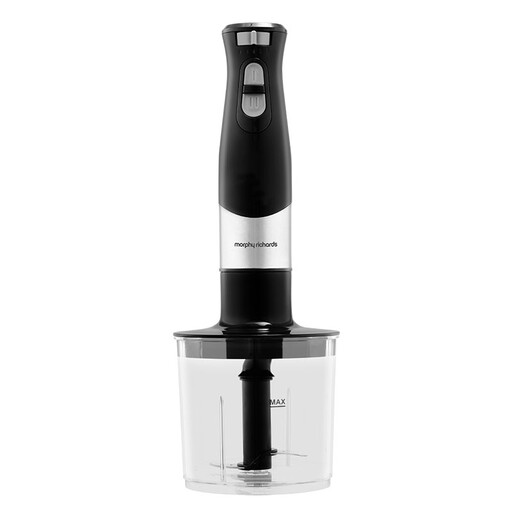
Morphy Richards Total Control MUC-HB64V
A set for anyone who wants to use a whisk and chopping bowl as well as purée food, and has room to store them.
The product name lists a 700 ml beaker, a whisk, a detachable blender foot, a chopping bowl and 600 W.
View at Joybuy
 No image available
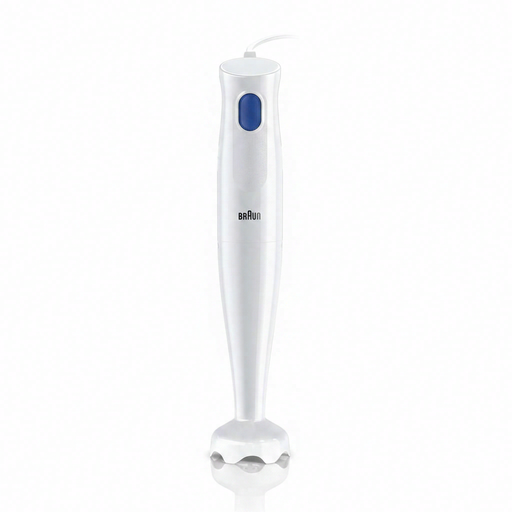
Braun MultiQuick MQ10.000PWH
A straightforward hand blender for anyone who wants to purée peaches and would rather not store lots of separate attachments.
View at Joybuy
 No image available
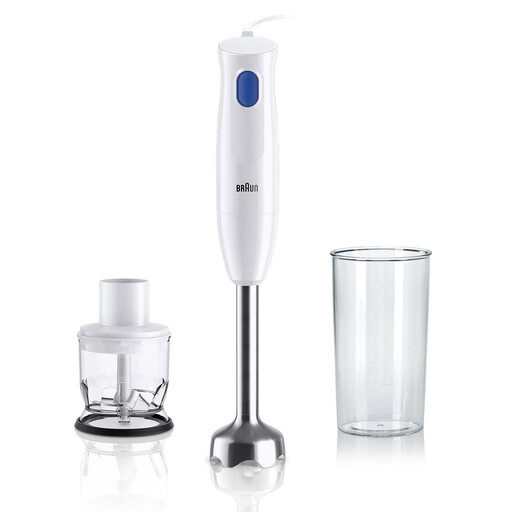
Braun MultiQuick 1 MQ10.201MWH
Worth considering if you want to use a chopper as well as purée peaches, and have room to store the extra parts.
Braun lists one speed and a 350 ml chopper for this model.
View at Joybuy
Frequently asked questions
Is a blender more convenient for a small portion of peach purée?
If you mainly make small portions and have limited space, a hand blender is the more obvious choice: the Consumers' Association considers hand blenders suitable for small portions. A blender may suit larger, more liquid quantities, or if you have space for the jug.
When is a hand blender set with a chopper worth the extra space?
A chopper is particularly useful if you want to chop other ingredients as well as peaches. Check the full model code to see whether a chopper is included, and consider where you’ll store and clean it after use.
How do you clean a hand blender after use?
Unplug it after use and detach the parts as instructed in the manual. Check which attachments are dishwasher-safe; this doesn’t automatically apply to every part.
How long can homemade fruit purée be kept?
The Netherlands Nutrition Centre advises keeping homemade fruit purée for two days in the fridge or three months in the freezer. This is storage advice for that food category, not a guarantee for every preparation.
What product safety rules apply to a mains-powered hand blender in the Netherlands?
For equipment within the scope of the EU Low Voltage Directive, with a nominal AC voltage of 50–1000 V, the manufacturer must assess its compliance with the applicable requirements, draw up an EU declaration of conformity and affix the required CE marking. The European Commission describes the scope of the directive; Business.gov.nl explains that CE marking is not a quality mark.


