
Workshop leader blending soup in the pan
Wants to control the texture of mushroom soup while cooking around the worktop. Look at the controls, blending foot and safe working space.


For mushroom soup that you blend in the pan, focus on variable speed control, a suitable blending foot and enough space around your worktop. A standalone hand blender is sufficient if the ingredients are already chopped; a set with a chopper is most useful if you also want to prepare ingredients. Always check the manual for the exact model before using it with hot ingredients: an anti-splash claim does not guarantee that soup won’t splash.
Wants to control the texture of mushroom soup while cooking around the worktop. Look at the controls, blending foot and safe working space.
Uses the blender repeatedly and wants to clean the foot easily between batches. Check the instructions for the model you choose.
May also want to chop onions, herbs or other ingredients, and is weighing up the benefits of a chopper against the extra parts to store and clean.
The Consumers’ Association highlights controls, cord length, cleaning and accessories among the points to consider. Measure your workspace and check the manual and included parts for the exact version.
| What to consider | What should you check? | Who should pay particular attention? |
|---|---|---|
| Blending in the pan | Controls and the shape of the blending foot; read the instructions for using the exact model with hot ingredients. | If I want to adjust the soup’s texture as I blend, I’ll focus on control and careful use. Around 33% of consumers in this workshop context give blending in the pan top priority. |
| Reach and ease of handling | Measure the distance to the socket and compare the cord length and weight of the version you’re considering. | When preparing several batches in a row, I want enough room to move and a blender that’s comfortable to use. Around 27% of consumers prioritise reach and ease of handling. |
| Cleaning between groups | Check whether the foot is detachable and what cleaning instructions apply to each part. | If I need to clean the blender between workshop groups, I want to know quickly which parts can be removed and how to clean them. Around 20% of consumers put ease of cleaning first. |
| Preparing ingredients | Check whether the version includes a chopper and whether it’s suitable for the ingredients and quantities in your recipe. | If I also want to chop onions or herbs, an extra attachment can be useful, as long as the additional cleaning and storage are manageable. Around 20% of consumers prioritise ingredient preparation. |
AntiSplash and similar terms are manufacturers’ claims. The amount of soup, the pan and how you use the blender can all affect splashing.
Check the manual for the exact model before using it with hot ingredients, and keep participants away from the work area while blending.
A chopper is designed for prep work; you don’t need one to blend soup with the blending foot.
Choose a set only if chopping or whisking is also part of the workshop, and check which accessories are included with that version.
Extra attachments need storage space and must be cleaned after use.
The power rating won’t tell you whether the cord can reach from the socket to the pan.
Measure your workspace first. The Consumers’ Association says a cord longer than 150 cm is useful when the socket is further away; compare this with the stated length for the exact version.
The ErgoMaster Series 4 range includes the standalone MSM4B610 and the MSM4B620, which comes with a chopper.
The MultiQuick 7 MQ7000X has pressure-sensitive speed control, ideal if you want to adjust the speed while blending.
The Intention HB46E8 is a straightforward model that comes with a beaker; the Quickchef+ HB67MB30 is a set with extra accessories.
Philips presents its 5000 Series as suitable for creamy soups, among other things; the product page for HR2685/00 mentions this use.
These Joybuy product picks are intended for blending soup, and include versions that also come with accessories for preparing ingredients. For each set, check which parts are included and what instructions apply when using it with hot ingredients.
 Image unavailable
A set for preparing ingredients as well as blending soup; the product information lists a chopper.
The product information warns against processing boiling liquids. Check the manual before blending soup and follow the temperature instructions.
 Image unavailable
A standalone hand blender for anyone who wants to adjust the speed while blending. Check the manual before using it with hot soup.
The product information lists a blending beaker for small portions; check that its capacity suits the amount you’re preparing for the workshop.
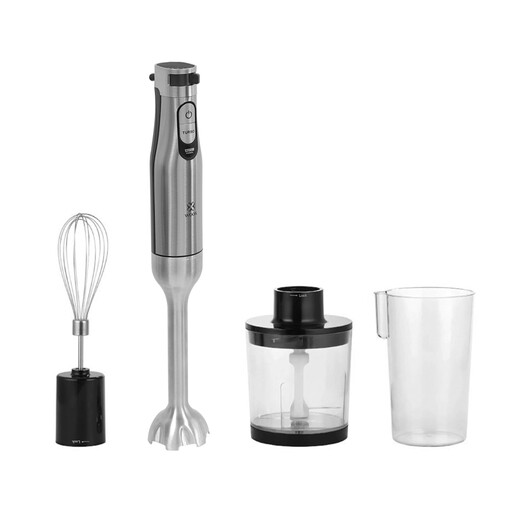 Image unavailable
The product title lists a 1,5 m cord and a set with a chopper and whisk; check that these suit your workspace and workshop recipes.
Before using this hand blender in hot soup, check the manual for this version.
 Image unavailable
The product title lists a 500 ml chopper and a 500 ml measuring beaker. This may be useful if you want to prepare ingredients as well as make soup.
The title mentions Normal and Turbo modes and a 1,5 m cord. Check the manual before using it with hot ingredients.
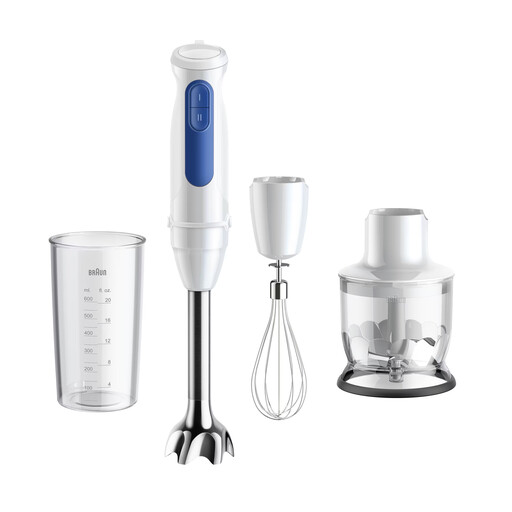 Image unavailable
A standalone hand blender for anyone who also wants to blend sauces and detach parts for cleaning between batches.
The product information states a maximum of one minute’s continuous use, followed by a cooling period. Bear this in mind when preparing successive pans, and check the instructions for using it with hot soup.
No, not for blending the soup itself. A chopper is an extra accessory for things such as onions or herbs; check that it’s included with your chosen version if you want to use it for preparation.
Don’t assume so. Check the manual for the exact model before using it with hot ingredients, and follow the temperature instructions. An anti-splash claim is not a safety guarantee.
Follow the cleaning instructions for your chosen model and check them for each part. A detachable foot can make that part easier to clean; check separately which parts are dishwasher-safe.
If the organiser prepares, handles or sells food as a catering or craft business, the NVWA says a HACCP food safety plan is required; an approved hygiene code can be used for this purpose. Whether a particular workshop falls under these business activities depends on how it is actually run.
If a business sells or supplies unpackaged soup to customers, the NVWA says it must provide information about the allergens present. Check the ingredients in the full recipe, including whether it contains milk or celery; mushroom soup does not automatically have a fixed allergen profile.