
Blend straight in the pan
For anyone who wants to blend hot, already-cooked tomato soup in the pan, without first pouring it into a separate jug. The Consumers’ Association recommends considering a removable blending foot to make cleaning easier.


For roasted tomato soup that’s already cooked, a hand blender is a good choice if participants want to blend it straight in the pan. A suitable blender jug works well if you’re making several portions at a time and want a smooth result. The Consumers’ Association says a heat-resistant jug is essential for hot soup. Choose a soup maker mainly if you also want to heat the soup as well as blend it, and check that its capacity, cleaning requirements and preparation instructions suit your workshop.
For anyone who wants to blend hot, already-cooked tomato soup in the pan, without first pouring it into a separate jug. The Consumers’ Association recommends considering a removable blending foot to make cleaning easier.
For anyone who wants to blend liquid soup in batches in a suitable blender jug and values an even texture. The Consumers’ Association points to blenders as a good option for dishes with plenty of liquid and larger quantities.
For anyone who wants to use a soup or heating programme and can fit the capacity and cleaning requirements into the workshop. Check whether the programme on each model is suitable for soup that has already been roasted and cooked.
First decide whether the group mainly wants to blend the soup straight in the pan, prepare portions in a jug, clean the appliance between batches, or heat the soup automatically as well.
A good choice if: participants want to blend the hot soup in the pan or in smaller batches.
Bear in mind: splashing, and that the result may sometimes be less even, according to the Consumers’ Association.
A good choice if: you want to blend liquid soup in portions in a jug designed for the purpose.
Bear in mind: transferring the soup, extra washing-up and the space the jug takes up. The total capacity doesn’t automatically tell you how much hot soup you can safely add.
A good choice if: you want to use a heating programme as well as blend the soup.
Bear in mind: the fixed jug capacity and model-specific cleaning requirements. A programme offers less benefit when the soup is already cooked and only needs blending.
| What to consider | What should you check? | Who is this important for? |
|---|---|---|
| Blending straight in the pan | Check that the pan, blending foot, speed control and cable suit the preparation method and workspace. | If I’d rather leave the hot soup in the pan, I want to transfer as little as possible and have good control over the appliance. Around 36% of consumers prioritise direct, controlled blending. |
| Texture and portions | Check that the jug is suitable for hot soup, what the instructions say about the lid and steam, and how much you can blend per batch. | If I want to prepare several portions in a jug, I look for an even result and a suitable quantity per batch. Around 29% of consumers prioritise smoothness and portion size. |
| Cleaning between batches | Check which parts are removable and which the manufacturer says are dishwasher-safe. | If participants take turns, I want to know how to clean the parts between batches. Around 21% of consumers make cleaning between batches their main priority. |
| Heating and blending | Check the programme, the quantity per batch and whether the manual allows for your planned preparation method. | If I want to combine heating and blending in one appliance, the programme matters more to me than blending alone. Around 14% of consumers prioritise this combined function. |
A jug’s total capacity doesn’t tell you whether its material or instructions make it suitable for hot ingredients. The recommended fill level may also be lower for hot contents.
Before buying, check that the jug is suitable for hot soup, and follow the instructions for the specific model on filling, the lid, steam and starting speed.
A heating programme may be unnecessary if the roasted tomato soup is already cooked and only needs blending. The Philips HR2203/80 has a 1.2-litre jug, and Philips says its parts are not dishwasher-safe.
Compare the programme and the quantity per workshop batch with blending the soup in the pan. Bear in mind that the HR2203/80 needs to be cleaned by hand; depending on the group size, you may also need an extra batch.
The length of a manufacturer’s guarantee doesn’t, on its own, determine what you’re entitled to expect from a product as a consumer. Your statutory rights apply alongside any manufacturer’s guarantee; the ACM points out that the seller is responsible for your statutory rights.
Keep your purchase and product information, and contact the seller if the product is faulty. If you’re buying for business use, check the relevant terms separately.
According to Bosch Netherlands, the Bosch MS6CB6110 is a hand blender with a removable metal blending foot, 12 speed settings and a 140 cm cable.
According to Braun Household Netherlands, the Braun MultiQuick MQ7000X is a hand blender with variable speed control and a metal blending foot.
The Philips HR2203/80 SoupMaker combines five pre-set programmes, manual blending and a 1.2-litre jug.
A jug blender may suit anyone who wants to blend hot soup in a jug designed for the purpose.
This selection includes hand blenders and blender jugs for soup, including models whose product information mentions a hot preparation function or a soup programme.
 No image available
The removable blending shaft is suitable for blending with a hand blender; the product description lists soup as one of its uses.
The description lists a 700 ml measuring beaker and dishwasher-safe accessories. According to the product description, blend hot ingredients in small batches in a heat-resistant bowl.
 No image available
The product description lists a heat-resistant glass jug for hot preparations, making it suitable for anyone who wants to blend soup in a jug.
According to the description, the jug has a total capacity of 2 litres and a usable capacity of 1.5 litres. The product description also says the jug is dishwasher-safe. It states that this model is designed for domestic use.
 No image available
The description lists low speeds for liquids, making it suitable for anyone who wants to blend soup with a hand blender.
According to the description, this model has 25 speeds and a turbo setting. Its parts are listed as dishwasher-safe; the user information advises against processing boiling liquids.
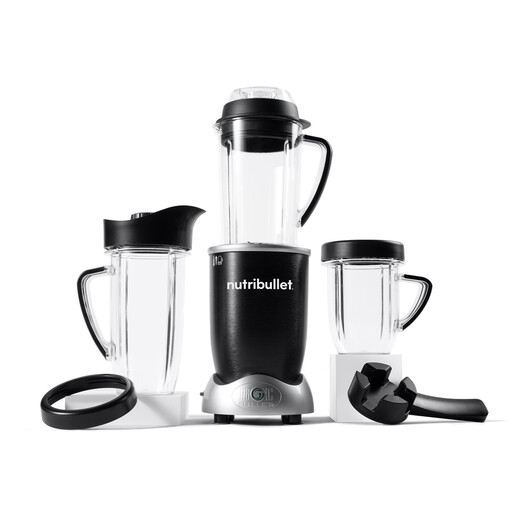 No image available
The product description lists a soup programme and the ability to blend hot ingredients, making it a good option if you’re looking for a dedicated soup programme.
According to the description, the jug has a 1-litre capacity and a vented lid. The same description says the base unit and blade are not dishwasher-safe.
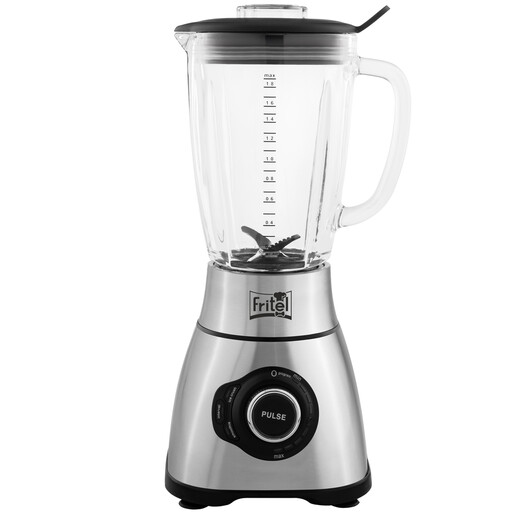 No image available
The product description lists soup as one of its uses and a 1.8-litre glass jug for anyone who wants to blend soup in a jug.
The name specifies 1800 W and 9 speeds. According to the description, the blade assembly, jug, lid and filling cap are dishwasher-safe.
No. Only use a jug that the manufacturer says is suitable for hot soup; the Consumers’ Association says a heat-resistant jug is essential. Follow the instructions for the specific model on filling, the lid and starting speed.
Compare the quantity per batch and the parts that need cleaning between preparations. A removable hand blender foot can make cleaning easier; check the model instructions before assuming that parts are dishwasher-safe.
If the organiser prepares, processes or sells food as a business, the NVWA requires a HACCP food safety plan. You can use an applicable approved hygiene code for this purpose; simply describing something as a cookery workshop doesn’t establish whether this business requirement applies.
For a consumer purchase, your statutory rights apply alongside any manufacturer’s guarantee. The ACM says the seller is responsible if, under normal use, the product doesn’t meet what you could reasonably expect from it. Check the terms for a business purchase separately.
The Netherlands Nutrition Centre recommends cooling leftovers quickly, storing them covered in the fridge and not leaving them out of the fridge for more than 2 hours. The storage-time example given is for thickened soup with meat and vegetables; don’t assume it applies to every tomato soup or commercial preparation.