
A small lunch portion
You want to purée a small amount of cooked peas straight in the pan, without having to wash up a large jug.


For a small, thick portion of pea purée made straight in the pan, a hand blender is generally the practical choice. For a larger portion with plenty of liquid, a jug blender is a better fit. The Dutch Consumers’ Association describes jug blenders as particularly suitable for larger quantities and dishes with more liquid. If you choose a jug blender, compare its effective capacity with the size of your portion, and always follow the instructions for the exact model when blending hot peas.
You want to purée a small amount of cooked peas straight in the pan, without having to wash up a large jug.
You’re making a larger portion, can add liquid if needed, and are comparing the jug’s effective capacity with the amount you want to prepare.
Your choice depends on the temperature limits and instructions for the appliance you plan to use.
Best for: a small portion that you want to purée directly in a suitable pan or mixing bowl.
Bear in mind: a thick mixture can be harder to purée, and the texture may be less even than with a jug blender.
Best for: several portions or a purée with plenty of liquid, provided the amount is within the effective capacity.
Bear in mind: you’ll need to transfer the mixture, make room on the worktop and do extra washing up; small or thick portions may be harder to blend.
| What to consider | What to look for when buying | Who is this important for? |
|---|---|---|
| Small portions and washing up | Check whether the blending foot is detachable and which parts the manual says are safe to clean. | If I’m only making a small portion, I want to purée it straight in the pan and avoid washing up a large jug; around 36% of consumers prioritise small portions and minimal washing up. |
| Several portions and texture | Compare the effective capacity, any pulse function, and the instructions on minimum quantities or the amount of liquid needed. According to Philips, the Philips HR2041/00 has an effective capacity of 1 l and a maximum jug capacity of 1,9 l. | For lunch with several people, I want to make a larger batch and consider the texture I’m after; around 28% of consumers prioritise several portions and texture. |
| Blending warm peas | Check the manual for the exact model for temperature limits, the fill line and how to use the lid. Philips recommends letting ingredients cool to below 60 °C before putting them in the blender jug in question. | If I want to purée peas shortly after cooking, the instructions need to clearly state the permitted temperature; around 18% of consumers prioritise blending warm peas safely. |
| Controls and aftercare | Check which accessories are actually included and which parts are available for the model you’ve chosen. | If I want to use the appliance for other recipes too, I consider the controls, accessories and maintenance; around 18% of consumers prioritise versatility and aftercare. |
The Philips HR2041/00 has a maximum jug capacity of 1,9 l, while its effective capacity is 1 l. That difference could determine whether your lunch portion fits in one go.
Compare the effective capacity with the amount you want to make, rather than looking only at the biggest number on the packaging.
According to the Dutch Consumers’ Association, a jug blender is less suitable for small portions and thick or dry ingredients. A hand blender lets you purée directly in the pan.
Choose based on portion size and the thickness you want, not just motor power.
Temperature guidance varies by model. Philips recommends letting ingredients cool to below 60 °C before putting them in the blender jug in question. Describing a jug as suitable for hot recipes does not, in itself, mean there is no temperature limit.
Follow the instructions for the exact model for temperature, maximum fill level and lid use.
Bosch hand blenders may be worth considering if you want to purée in a suitable pan and use accessories too.
The MultiQuick 5 range is worth a look if you’re considering variable speed control and interchangeable accessories.
The Philips 3000 Series HR2041/00 is a jug blender to consider if your portion fits within its effective capacity.
The Blendforce II BL435831 may be worth considering if you’re looking for a glass jug for hot recipes.
This selection includes hand blenders for puréeing in the pan and blenders for smaller or larger batches. Check that each model’s capacity and instructions suit the pea purée you want to make.
 No image available
A jug blender for larger batches; the product information lists soup and sauce among its uses.
1.5 l jug capacity, two speeds and a pulse function. According to the product information, hot liquids must not be above 60 °C.
 No image available
A hand blender set for puréeing, with a detachable blending foot; it also includes a chopper and a whisk.
The product information specifies a detachable stainless steel blending foot.
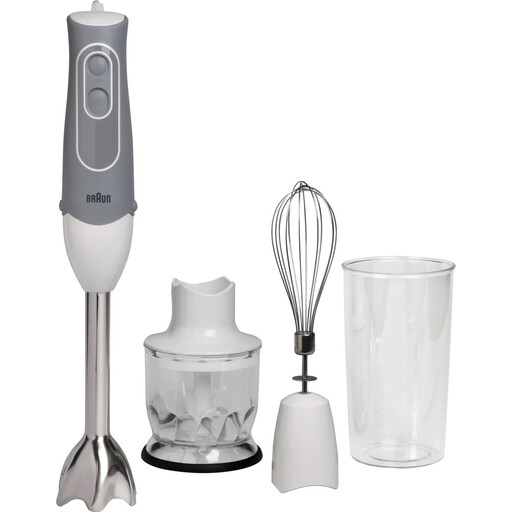 No image available
According to the product information, the blending foot is designed for puréeing directly in the pan, among other uses.
The product name lists 220 V, 600 W and two speeds. The description mentions a turbo button, a detachable stainless steel blending foot and a 350 ml chopper.
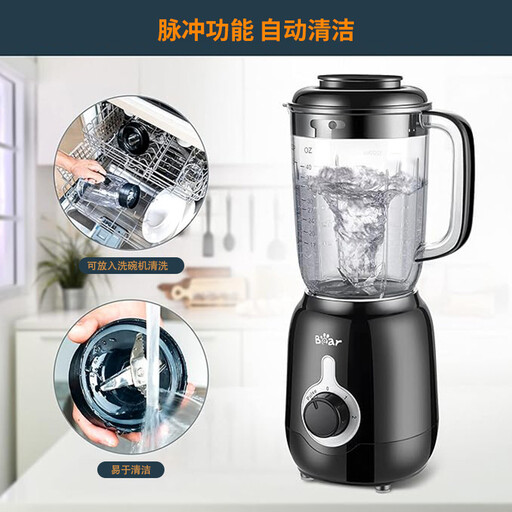 No image available
A jug blender for larger batches; the product information lists purée among its uses.
1.2 l jug capacity, 500 W, two speeds and a pulse function. The instructions say the jug must contain at least 300 ml of liquid.
 No image available
A compact blender for smaller batches; the product description mentions smoothies and shakes, so check that its capacity and instructions are suitable for pea purée.
The product name lists 250 W and a 500 ml glass jug.
Not necessarily: first decide how thick you want the purée to be. If the mixture is too dry to blend properly, the Dutch Consumers’ Association recommends adding a little liquid. A jug blender is particularly suitable for mixtures with plenty of liquid.
Check the instructions for the exact model first. Philips recommends letting ingredients cool to below 60 °C before putting them in the blender jug in question. Tefal describes the jug on the BL435831 as suitable for hot recipes, but that does not mean there is no temperature limit.
The NVWA states that electrical products must carry a CE mark. Check the appliance and its accompanying product information for the mark; the general requirement does not, in itself, tell you whether a specific model complies.
A paid commercial guarantee does not replace your statutory rights. According to ACM ConsuWijzer, the seller is responsible for providing a solution if a product breaks down too soon under normal use.
For a standard online purchase, you generally have a statutory cooling-off period of up to 14 days after delivery, according to ACM ConsuWijzer. Check whether an exception applies to your purchase.