
Vandaag of morgen in huis

Kwaliteit gegarandeerd

Welkomstaanbiedingen ontgrendelen: GRATIS bezorging | Tot 80% korting | Gratis 30 dagen JoyPlus-proefperiode
Download de app
A hand blender, also known as a stick blender, is handy for making soup, smoothies, sauces, baby food and desserts. However, it’s not wise to look only at the wattage or the number of accessories. A powerful model can be impractical, while a cheap stick blender may struggle with thick ingredients.
Three common pitfalls to watch out for:
A compact model may be enough for light tasks such as milkshakes, soft vegetables and sauces. If you regularly make thick soup, hummus or larger quantities, a powerful hand blender with around 600 watts or more is a better choice. Models rated at 900 to 1,000 watts generally offer more power for intensive kitchen tasks, but they may also be heavier.
Also check the instructions for continuous use. Some models can run for no more than one minute at a time and then need to cool down. This matters if you’re making several portions of soup or smoothies.
A hand blender with variable speed gives you more control over the texture. A low setting works well for delicate sauces or mixing liquids, while a higher setting is better for thick soups and firm ingredients. A hand blender with turbo provides a temporary power boost, but it doesn’t replace a suitable chopper for hard or large pieces.
A model with one speed is easier to use and may be enough for everyday blending. If you make a variety of recipes, two or more settings are more practical.
Think about which features you need before you buy:
Don’t use a hand blender directly in boiling-hot liquid when making soup. Let the food cool first, as instructed in the manual, to prevent splashes and burns.
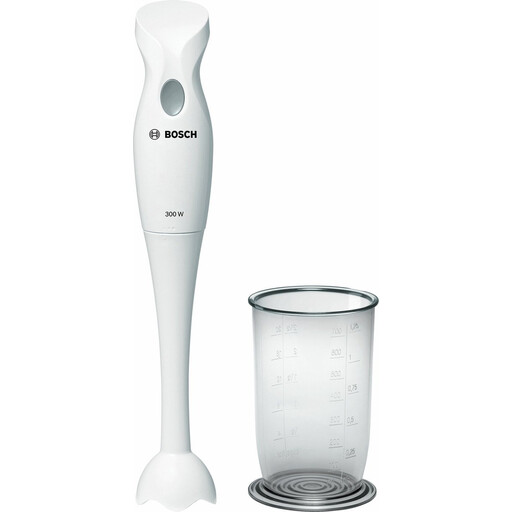
Why it suits this type of user: This model is designed for straightforward tasks such as blending and mixing. With 300 watts, one speed and a measuring jug included, it’s simple to use.
There are no unnecessary accessories to pay for. The product specifications also list detachable, dishwasher-safe parts and a turbo function.
300 watts, one speed, a measuring jug and a 1.5-metre cord.

Why it suits this type of user: If you prepare a variety of dishes, this model gives you a 1,000-watt motor, 25 speeds, turbo and a chopper with three texture settings.
Each accessory has a clear purpose. According to the product information, the detachable parts are dishwasher-safe; the motor unit should be cleaned with a cloth.
This model lists 25 speeds, a 1,000-watt motor, turbo and dishwasher-safe accessories.
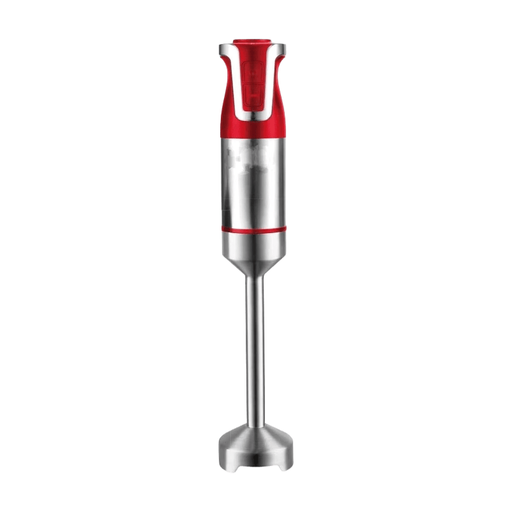
Why it suits this type of user: If you often make soup, pesto, batter or sauces, this model offers 800 watts, 20 speeds and a turbo setting.
The speed is adjustable, rather than limited to just high or low. The product description says the parts that come into contact with food are BPA-free and the detachable parts are dishwasher-safe.
800 watts, 20 speeds, turbo, stainless steel blades, a whisk and a chopper attachment.
Check the current contents of the box for each product. Product descriptions may vary by version, colour or bundle. Also check the stated capacity: a 600 or 700 ml blending jug is intended for portions, not necessarily for a large pan of soup.
We’ve put together a complete, up-to-date list of products that meet these strict selection criteria and the applicable European safety regulations.
That depends on the model and its manual. Let hot liquids cool first and take care to avoid splashes. Never use the blender above the stated temperature range. Keep the blade guard fully submerged before switching on the appliance.
Its lifespan depends on how it’s used, cleaned and stored. A model that processes thick mixtures every day is under more strain than a stick blender used occasionally to purée soft vegetables. Follow the recommended maximum running time, let the motor cool down, and regularly check the cord, couplings and blade guard.
A hand blender usually uses electricity for only a short time. The stated wattage is the maximum electrical power, not necessarily the energy used per recipe. A 1,000-watt appliance running for one minute may use less energy than a 300-watt model that needs much longer. So consider both the power rating and the preparation time.
