
One-pan soup maker
You want to blend cooked vegetables straight in the pan, without buying attachments you won’t use. The Consumers’ Association lists blending as one of the uses for a hand blender.


For fennel soup, a hand blender that lets you blend cooked vegetables directly in the pan is usually all you need; a chopper or whisk isn’t necessary. Choose extra attachments if you’ll use them for other kitchen tasks too, and check that the blending foot is long enough for a deep pan. Wattage and anti-splash features alone don’t tell you how smooth the soup will be or guarantee splash-free use.
You want to blend cooked vegetables straight in the pan, without buying attachments you won’t use. The Consumers’ Association lists blending as one of the uses for a hand blender.
When making a hot lunch soup, consider how the blender works and how you use it in the pan. The Consumers’ Association advises placing the foot on the bottom of the pan before switching the appliance on.
You want to chop ingredients or whisk other dishes as well as make soup. Check which attachments come with the version you’re considering by looking up its full model number.
Best for: mainly blending cooked fennel and other vegetables, with few loose parts.
Consider: you won’t have a separate chopper or whisk for other kitchen tasks.
Best for: regularly chopping ingredients or whisking other dishes too.
Consider: extra parts take up space and need cleaning after use.
Best for: often blending in a deep pan or making larger quantities of soup.
Consider: a longer foot isn’t automatically necessary for a standard lunch pan; check the model’s dimensions.
First, consider the texture you want and the pan you’ll be using; then decide whether you need any attachments. The Consumers’ Association treats blending results as a separate consideration from the stated wattage.
| What to consider | What to look for | Who is this important for? |
|---|---|---|
| Even blending | Compare blending results where possible; don’t treat the wattage as proof of how smooth the result will be. | I want to blend cooked fennel as smoothly as possible, so I focus on the result rather than just a number on the packaging. Around 42% of consumers give blending results top priority. |
| Splashes and control | Consider the controls and foot; the Consumers’ Association advises placing the foot in the pan before switching the blender on. | I want to blend soup in the pan with control, so I pay attention to where I start and how the blender is operated. Around 25% of consumers give splash control when making soup top priority. |
| Other kitchen tasks | Check the full model number to see whether a chopper or whisk is included. | I also want to chop ingredients or whisk things as well as make soup, so I check which attachments are actually included in the set. Around 17% of consumers give extra food preparation functions top priority. |
| Cleaning and reach | Check whether the blending foot is detachable, what the manual says about cleaning and whether the foot is suitable for your pan. | I want cleaning up after cooking to be easy, and I need to consider my pan and storage space. Around 16% of consumers give maintenance and practical reach top priority. |
The stated wattage isn’t the same as a measured result for smooth, even blending. The Consumers’ Association treats blending results as a separate consideration.
Use wattage as one specification and, where available, compare results from relevant blending tests.
A chopper and whisk are designed for tasks other than blending cooked soup.
Start by choosing the functions you’ll actually use, and check what’s included in the set for each model number.
More attachments also mean extra parts to clean and store.
Even a model with an anti-splash feature can splash if you don’t use it as instructed. The Consumers’ Association advises placing the foot in the pan before switching the blender on.
Follow the instructions for your chosen model, especially when blending hot contents.
On the same product page for the MQ50236M, Braun lists both 1000 W in the description and 750 W in the technical specifications.
Compare the full model number and check the technical details for the exact version you’re considering.
The ErgoMixx MS6CB6110 is an example of a model with a detachable blending foot, for anyone mainly looking to blend.
The Quickchef HB659838 is worth considering if you want to use a chopper as well as blend.
The Triblade XL+ HBM60.307GY is worth a look if you’re after a longer blending foot and several attachments.
The Daily HR1604/90R1 is an example of a basic version for soup; the version described is refurbished.
The MultiQuick 5 range includes versions with different attachments; the MQ50236M page lists a chopper and whisk.
These product choices are geared towards blending soup, with both basic options and versions that come with extra attachments.
 No image available
An option if you want to blend soup and also chop or whisk; the product title lists a chopper and whisk.
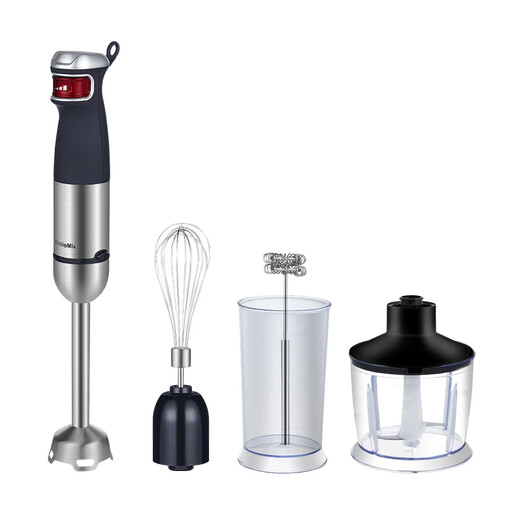 No image available
An option if you want to blend soup and adjust the speed while blending.
The product title lists 1200 W and stepless speed control.
 No image available
Worth considering if you want to blend soup and are also looking for features that help control splashes.
 No image available
An option if you want to chop or whisk ingredients as well as make soup; the product title lists a 700 ml measuring jug and a 500 ml chopper.
The product description advises against processing boiling liquids; let the soup cool first and follow the instructions for the version you choose.
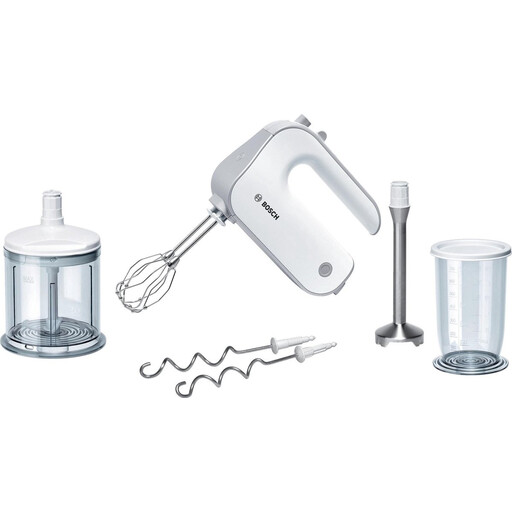 No image available
The product description lists a blender attachment for soup; consider this version if you’re also looking for a hand mixer set.
The product title lists 500 W and five speeds. The product description advises letting hot liquid cool to at least 80 °C first.
Yes, a hand blender is designed for blending soup. Follow the instructions for your chosen version, especially when blending hot contents; the Consumers’ Association advises placing the foot in the pan before switching the appliance on.
No, not for blending the soup itself. A chopper is for separate chopping tasks and a whisk is for whisking; only choose these attachments if you’ll use them for other recipes too.
After use, unplug the appliance and detach any attachments according to the manual. Check which parts are dishwasher-safe, as this can vary by version.
According to the Netherlands Food and Consumer Product Safety Authority, a CE marking is mandatory for a mains-powered hand blender covered by the rules for electrical equipment with a rated AC voltage of 50 V to 1000 V. Check the marking on the product you choose; it isn’t a rating of blending quality.
Contact the seller if there’s a problem. According to the Dutch government, the seller must provide a solution if a product isn’t working properly; an additional guarantee only matters if its terms offer more than your statutory rights.