
Soup maker with limited cupboard space
You mainly want to blend tomatoes and don’t need lots of separate attachments. The Consumentenbond lists models without a chopper or whisk as an option for anyone who only wants to blend.


For cold tomato soup, a simple hand blender without a chopper or whisk is a sensible choice if you mainly want to blend ingredients and have limited storage space. Also consider how to clean the blending foot, and use the blender in a way that minimises splashing. Extra attachments are mainly worthwhile if you’ll use them for other recipes too. Wattage alone doesn’t tell you how smoothly raw tomatoes will blend, and check the CE marking on the appliance itself before buying.
You mainly want to blend tomatoes and don’t need lots of separate attachments. The Consumentenbond lists models without a chopper or whisk as an option for anyone who only wants to blend.
You use a shared kitchen and want to be able to remove and clean the blending foot easily after use. According to the Consumentenbond, a detachable foot is easier to clean.
You want to use the same motor unit for soup and other recipes, and have room to store the attachments you need. The Consumentenbond lists chopping and whisking as functions for which extra attachments may be useful.
Start by asking whether you only want to blend ingredients or also make other recipes. Then compare how easy each blender is to clean and how much room it and any attachments will take up.
| What to consider | What should you look for? | Who is this most important for? |
|---|---|---|
| Soup texture | Compare reviews of blending performance for the exact model; wattage alone doesn’t prove how smoothly it will blend cold, raw tomatoes. | If a smooth soup is your priority, you’ll want to know how the exact model performs when blending. Around 36% of consumers put soup texture at the top of their list when buying. |
| Cleaning | Check whether the blending foot is detachable and which parts the manual says are dishwasher-safe. | If you use a shared kitchen, you’ll want to clean the parts quickly after cooking. Around 29% of consumers make ease of cleaning their top priority. |
| Space and use | Check how many parts are included and whether the cord is long enough for your workspace. | If you have limited cupboard space, you won’t want to store more separate parts than you use. Around 21% of consumers prioritise storage space and a suitable workspace. |
| Extra functions | Choose a set with a chopper or whisk only if you plan to use those functions; check what’s included in the exact version. | If you want to chop or whisk ingredients as well as make soup, extra attachments may be useful. Around 14% of consumers make extra functions their top priority. |
The stated motor power isn’t an independent measure of how smooth your cold tomato soup will be.
Compare information on blending performance for the exact model, and consider the controls and blending foot too. Don’t automatically apply advice for heavier chopping to cold soup.
Which parts are dishwasher-safe varies by model and version.
Check the manual, unplug the blender and detach the attachments before cleaning it.
A chopper or whisk adds extra functions, but according to the Consumentenbond, you don’t need them if you only want to blend.
Choose attachments for recipes you actually make, and check what’s included in the exact set.
The models reviewed range from a basic hand blender to a version with two speed settings.
The Turbomix HB1218 reviewed is a simple model; according to Tefal, the Quickchef HB65KD offers more speed settings.
According to Bosch, the ErgoMaster MSM4B610 reviewed is designed for one-handed operation and comes with a measuring beaker.
This selection includes hand blenders and sets to suit different preferences, from blending soup with just a few attachments to chopping or whisking too. Before buying, check the CE marking on the appliance itself, and review the accessories and cleaning instructions for the exact version.
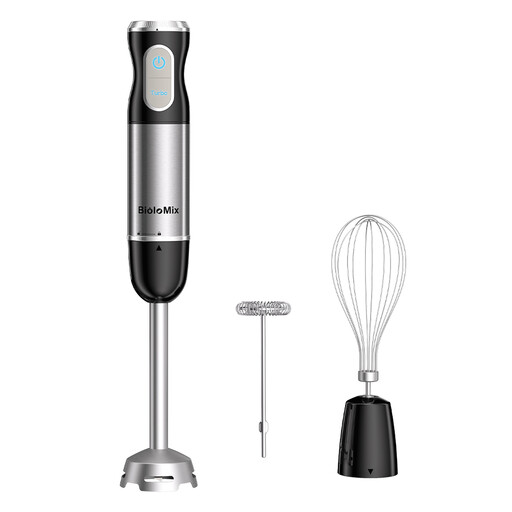 No image available
The product description mentions blending soup; the product name lists a detachable design and splash protection.
Check which parts are included with this version and how they should be cleaned.
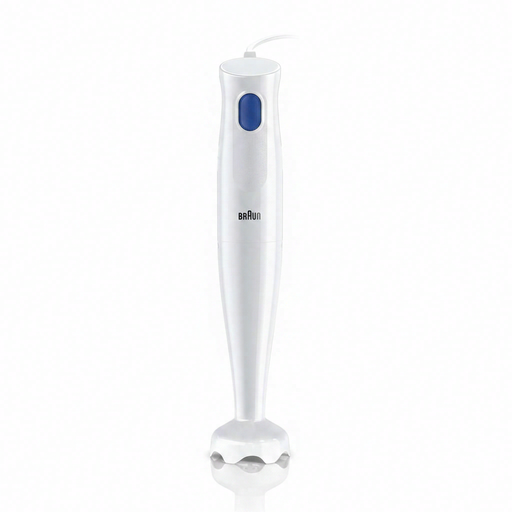 No image available
The product description mentions blending and making soup; according to the description, the blending foot is detachable.
The description says the blending shaft is dishwasher-safe; check the manual for cleaning instructions for all parts.
 No image available
The product name lists 800 W, stainless steel and an adjustable speed setting.
Check which parts are included with the exact version and which cleaning instructions apply.
 No image available
Worth considering if you want to chop or whisk as well as blend; the product name lists a chopper and whisk.
The extra attachments need storage space and cleaning. Check what’s included in the exact set.
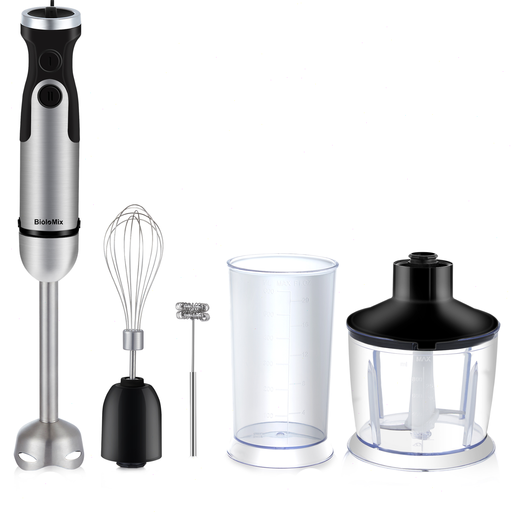 No image available
The product name lists 1200 W, six speed settings and a turbo function.
Check which accessories are included with this version; a more comprehensive set also means more parts to store and clean.
No, you don’t need those attachments if you only want to blend. The Consumentenbond lists hand blenders without a chopper or whisk as an option for anyone who only wants to blend; choose extra attachments if you also plan to use the functions they provide.
Put the blending foot in the bowl before switching on the blender, advises the Consumentenbond. After use, unplug it, detach the attachments and check the manual before putting any parts in the dishwasher.
According to the Voedingscentrum, put leftovers in the fridge within 2 hours and keep them chilled for no more than 2 days. The Voedingscentrum advises setting your fridge to 4 °C; this is guidance on storing soup, not a feature of the blender.
The Nederlandse Voedsel- en Warenautoriteit says that electrical products covered by the applicable CE rules must carry a CE marking. Check the marking on the specific appliance you want to buy.
According to ACM ConsuWijzer, the seller must offer a suitable solution if the product doesn’t meet what you could reasonably expect, such as a free repair, replacement or refund. In the Netherlands, statutory guarantee has no fixed time limit; a manufacturer’s guarantee doesn’t replace this right.