
Soup maker with limited space
Mostly blends cooked soup in the pan and doesn’t want to store a large jug or unused attachments. The Consumers' Association lists blending soup in the pan as a practical use for a hand blender.


For cooked cauliflower soup, a hand blender with a blending shaft and few accessories is a practical choice if you want to blend directly in the pan and have limited storage space. The Consumers' Association notes that a hand blender may not blend as evenly as a jug blender, so a jug blender could be a better fit if a very smooth result or larger quantities matter more than saving space. Before use, check the instructions for hot ingredients and your pan, and find out how to clean the blending shaft.
Mostly blends cooked soup in the pan and doesn’t want to store a large jug or unused attachments. The Consumers' Association lists blending soup in the pan as a practical use for a hand blender.
Wants to chop or whisk as well as make soup, and weighs up these functions against the extra storage space and washing up. The Consumers' Association describes chopping and whisking as uses for separate attachments.
If you blend regularly, look for a removable shaft, easy-to-use controls and clear cleaning instructions. The Consumers' Association advises removing the attachments and unplugging the appliance before cleaning.
| What to consider | What to look for | Who is this important for? |
|---|---|---|
| Space for the appliance and accessories | Check exactly what’s included in the box and choose only the attachments you’ll actually use. | If I mostly make soup, I don’t want to have to store unused parts. Around 40% of consumers prioritise a compact appliance with few accessories. |
| Blending soup evenly | Compare the speed controls and blending shaft; cook the cauliflower until tender and follow the instructions for hot preparations. | I care most about the consistency of cooked cauliflower soup, even if a jug blender takes up more space. Around 33% of consumers prioritise the result when making soup. |
| Splashes and cleaning | Check whether the blending shaft is removable and which parts are dishwasher-safe according to the manual. | With regular use, I want to clean the blender easily after blending and use it safely. Around 17% of consumers prioritise cleaning and ease of use. |
| Extra functions | Compare the accessories actually supplied with each model, rather than relying on the product range name. | If I want to chop or whisk as well as make soup, I can store and clean extra parts. Around 10% of consumers choose a hand blender mainly for this versatility. |
A chopper and whisk add other functions, but you don’t need them to blend soup. Attachments you don’t use take up space and still need to be stored and cleaned.
Choose accessories based on the dishes you actually make, and check exactly what’s included in the box.
A larger set means more parts to store and wash up.
Anti-splash claims are manufacturer features specific to each model and don’t guarantee that no splashes will occur while blending.
Only switch the blender on once the shaft is in the pan or bowl, and follow the model’s instructions.
Braun’s product page lists 750 W for the MQ50001M in the technical specifications and 1000 W in the descriptive text.
Don’t use power as a comparison point until you’ve confirmed the specification for the version you’re considering.
The ErgoMixx MSM66110 is an example of a hand blender with a removable metal shaft, two speeds and a measuring beaker, as described by Bosch Netherlands.
The MultiQuick 5 MQ50001M is described as having a metal blending shaft, measuring beaker and 21 speed settings, according to Braun Household Netherlands.
The Quickchef+ HB67G8 is an example of a set that includes a chopper, whisk and food processor attachment as well as a blending shaft, according to Tefal Netherlands.
These hand blenders are suitable for blending soup, with a focus on the blending shaft and practical considerations such as storage space, cleaning and extra accessories.
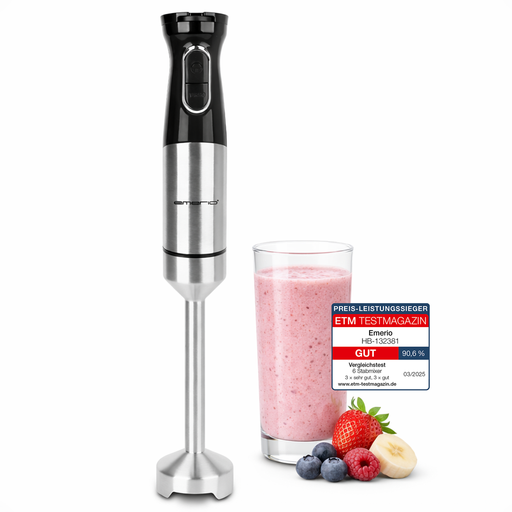 No image available
Suitable if you want to blend soup and adjust the speed.
The product description mentions variable speed and a removable blending shaft. For hot liquids, it recommends using a heat-resistant bowl and blending small quantities as precautions.
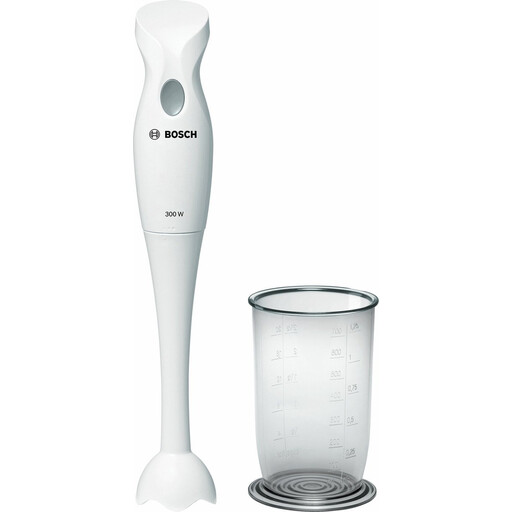 No image available
Worth considering if you’re looking for a compact hand blender for soups and sauces.
The product description lists a width of 6,1 cm, a measuring beaker and removable parts that are dishwasher-safe.
 No image available
Suitable if you’re looking for a hand blender for soups and sauces and care about easy cleaning.
The product description lists two speeds, SplashControl and dishwasher-safe parts.
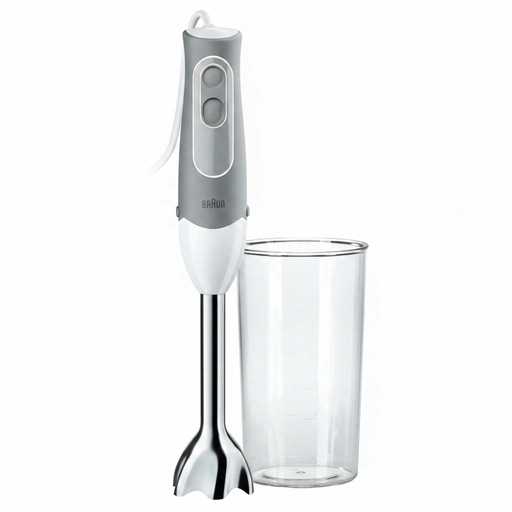 No image available
An option if you want to use a whisk as well as blend, and have room to store it.
The product description lists a removable stainless steel shaft, two speeds and an anti-splash shaft. The included whisk needs extra storage space and cleaning if you don’t use it.
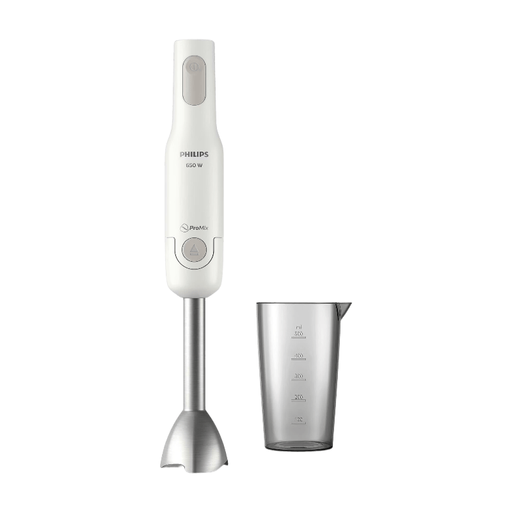 No image available
Suitable if you’re looking for a compact hand blender for soup and are happy with a simple speed control.
The product description lists one speed, a 1,2 m cord, a quick-release blending shaft and a measuring beaker.
Yes. The Consumers' Association describes a hand blender as a convenient way to blend soup directly in the pan. Cook hard vegetables until tender first, allow hot ingredients to cool slightly, and check the instructions for your blender and pan.
Following the Consumers' Association’s tips, only switch the blender on once the shaft is in the pan or bowl. Switch it off, unplug it and remove the attachments before cleaning; check the manual before putting any parts in the dishwasher.
No. ACM ConsuWijzer distinguishes between a manufacturer’s or seller’s guarantee and your statutory rights. If a product breaks sooner than you could reasonably expect under normal use, the seller is responsible for providing an appropriate solution free of charge; what is reasonable depends on the circumstances.
Yes. The Netherlands Food and Consumer Product Safety Authority states that a CE marking is required for electrical consumer products placed on the market in the Netherlands. The marking is a declaration by the manufacturer; it does not prove that an individual item for sale has been checked. A separate inspection is generally not required for this product category.