
Vandaag of morgen in huis

Kwaliteit gegarandeerd

Welkomstaanbiedingen ontgrendelen: GRATIS bezorging | Tot 80% korting | Gratis 30 dagen JoyPlus-proefperiode
Download de app
A hand blender, also known as a stick blender, may seem simple at first: switch on the motor, add your ingredients and blend. But models can vary widely in power, controls, accessories, cleaning and how well they work outside the kitchen. You may not realise you’ve made the wrong choice until you want to purée a pan of soup, make a thick sauce or clean the blender every day.
Before you buy a hand blender, look out for these common pitfalls:
The stated power of models available for smoothies, milkshakes, soups and sauces ranges from around 150 to 1000 watts. A powerful hand blender with 900 or 1000 watts will generally have more capacity for thick mixtures, nuts or larger quantities. That doesn’t mean you need to use the highest setting for every recipe.
A model with one speed is simple to use and often sufficient for soup or soft vegetables. With several speeds, you can start slowly with liquids and gradually increase the speed. A hand blender with a turbo function is useful when you need a brief boost of power, but check the standard speed settings too.
Also check the recommended operating time. Some models shouldn’t be run continuously for more than one minute. Let the motor cool down if the instructions tell you to.
The shape of the blending foot affects how ingredients move around the blade and how much splashes onto your worktop. A splash guard is especially useful for sauces, mayonnaise and thin soups.
Check whether the foot is detachable. This makes cleaning easier and means you don’t have to hold the motor unit under the tap. The metal blending foot on some models is suitable for use directly in a pan, but always follow the instructions for hot liquids. A blender for soups and sauces needs to suit the way you cook; portable models aren’t necessarily suitable.
A hand blender with accessories can replace several kitchen tools. These might include a measuring jug, whisk, chopper or masher. Don’t just look at the number of parts; consider what each one does:
Materials such as plastic and Tritan can be lightweight and practical. When choosing cups, it’s worth checking whether they’re BPA-free and have a clearly marked maximum fill line.
The recommendations below are based on verifiable product specifications. Manufacturer claims about finer results or reduced effort, for example, aren’t included as general guarantees.
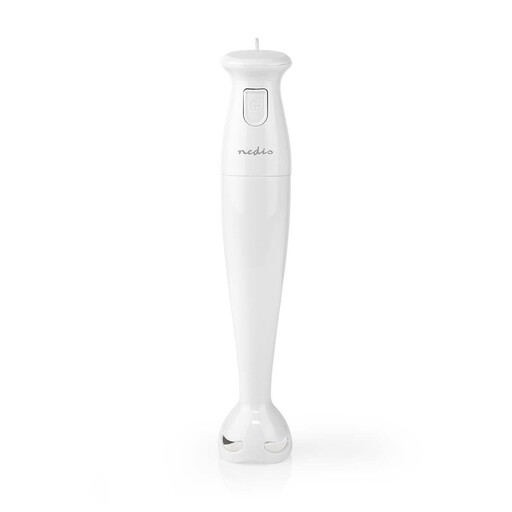
Why it suits this profile: This compact model is designed for simple preparations such as soup, sauce and milkshakes. The one-button control is easy to use if you’re new to hand blenders.
The specifications are clear: 150 watts, one speed, a 1-metre cord and no included accessories. So you’re not paying for features you may not use.
Compact design, 150-watt motor and straightforward controls. The manufacturer states that the blending foot can be rinsed under running water; the motor unit must not be immersed.

Why it suits this profile: If you cook regularly and want to create a range of textures, this model offers a wide choice of speeds and several functions in one appliance.
The 25 speeds and turbo setting give you more control than a model with just an on/off switch. According to the product information, the parts are dishwasher-safe.
1000 watts, 25 speeds, a turbo function and a 3-in-1 chopper. According to the product information, the chopper is suitable for fine, medium and coarse textures.
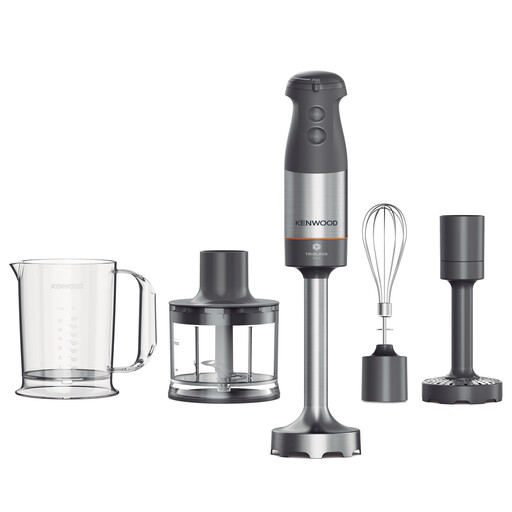
Why it suits this profile: This model is a good fit for families and home cooks who prepare larger quantities of soup, mash or other dishes and want to use extra accessories.
The XL blending foot and 1000-watt power rating are clearly listed in the product specifications. So you’re choosing this model specifically for larger portions, not just because of marketing claims.
Includes a whisk, measuring jug, mini chopper and masher. According to the product description, the accessories are dishwasher-safe.
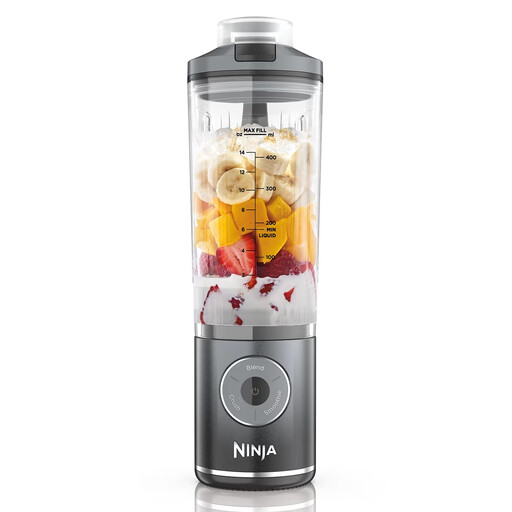
Why it suits this profile: If you’re busy and want to make a cold drink at work, on the go or after a workout, a cordless blender is more useful than a model with a cord.
Its portable design is backed up by a rechargeable battery, USB charging, leakproof lids and two 530 ml cups. Use it for cold preparations only.
150 watts, one-button control, two BPA-free Tritan cups and a compact design. According to the product information, the parts are dishwasher-safe.
We’ve put together a complete, up-to-date list of products that meet these strict selection criteria and current European safety regulations.
That depends on the model and its instructions. An electric stick blender with a suitable blending foot can often be used directly in a pan, but avoid contact with hot surfaces and keep the motor unit dry. A cordless or portable blender is usually designed for cold ingredients. Don’t use it for hot or carbonated liquids if the manufacturer advises against it.
Its lifespan depends on how often you use it, the load, how you clean it and how you store it. Don’t run the motor for longer than specified, and only process hard ingredients if the model is designed for them. In the Netherlands and the European Union, consumer products are covered by a minimum statutory guarantee of two years; additional manufacturer terms may vary.
A corded model uses electricity while it’s running, but each use is brief. For normal blending, you’ll usually only need a few minutes per preparation. A cordless blender needs to be charged; its electricity use is generally low, but the battery has a limited lifespan. So consider more than just the purchase price: think about how easy it is to clean, whether accessories are available and what kinds of preparations you’ll make with it.
